Table of Contents
- 1 Why Lobster Tail Is a Smart First Seafood Recipe
- 2 What Makes This Recipe Beginner-Friendly
- 3 Understanding Lobster Tail Before You Start
- 4 Choosing Lobster Tails Without Stress
- 5 How to Thaw Lobster Tails the Easy Way
- 6 Simple Tools You’ll Need
- 7 Preparing Lobster Tails Step by Step
- 8 Beginner-Friendly Baked Lobster Tail Recipe
- 9 How First-Time Cooks Can Tell Lobster Is Done
- 10 Simple Sides That Pair Well for Beginners
- 11 How to Serve Lobster Tail with Confidence
- 12 Common Beginner Mistakes and How to Avoid Them
- 13 Cooking Lobster Tail for One or Two People
- 14 Storing and Reheating for Beginners
- 15 Why This Recipe Builds Confidence
- 16 Frequently Asked Questions
- 17 Final Thoughts on Lobster Tail Recipe for First-Time Cooks
Why Lobster Tail Is a Smart First Seafood Recipe
Cooking lobster for the first time can feel overwhelming. It’s often associated with fine dining, high prices, and complicated techniques. But lobster tail is actually one of the most beginner-friendly seafood options when approached the right way.
Unlike whole lobster, lobster tail requires no boiling pots, no cracking tools, and no complicated preparation. It cooks quickly, responds well to gentle heat, and delivers clear visual cues when it’s done. That makes it ideal for first-time cooks who want something impressive without risking failure.
This recipe focuses on clarity, confidence, and simplicity. Every step is designed to reduce guesswork while still producing tender, flavorful lobster that feels special.
What Makes This Recipe Beginner-Friendly
A recipe for first-time cooks should remove pressure, not add to it. This lobster tail recipe is designed with that exact goal in mind.
Straightforward Steps
Each step has a clear purpose and builds on the one before it.
Forgiving Cooking Method
Baking is predictable and doesn’t require constant attention.
Minimal Ingredients
Simple ingredients allow you to focus on technique rather than complexity.
Visual Doneness Cues
You don’t need experience to know when the lobster is ready.
This approach lets you learn while succeeding.
Understanding Lobster Tail Before You Start
Knowing a few basics ahead of time helps calm nerves and sets expectations.
What Lobster Tail Tastes Like
Lobster meat is mildly sweet, tender, and delicate. It doesn’t need strong seasoning to taste good.
What Lobster Tail Texture Should Be
Properly cooked lobster is firm but springy, never rubbery or mushy.
Why Overcooking Is the Main Risk
Lobster becomes tough only when cooked too long. This recipe avoids that by using clear timing and temperature.
Choosing Lobster Tails Without Stress
Fresh vs Frozen Lobster Tails
Most first-time cooks use frozen lobster tails, and that’s perfectly fine. Frozen tails are widely available, affordable, and consistent.
Best Size for Beginners
6–8 ounce lobster tails are ideal
They cook evenly and are easy to monitor.
What to Look For
Choose tails with intact shells and no freezer burn. Once thawed, the meat should feel firm and look slightly translucent.
How to Thaw Lobster Tails the Easy Way
Thawing properly ensures even cooking and better texture.
Refrigerator Thawing
Place lobster tails on a plate in the refrigerator for 8–12 hours. This is the easiest and safest method.
Quick Cold-Water Thaw
Seal lobster tails in a bag and submerge in cold water for 30–45 minutes. Change the water once if needed.
Never use warm water, which can damage the meat.
Simple Tools You’ll Need
You don’t need special equipment.
Kitchen scissors
Baking dish
Small bowl
Spoon or pastry brush
That’s it.
Preparing Lobster Tails Step by Step
This preparation method is forgiving and improves both cooking and presentation.
Cutting the Shell
Use kitchen scissors to cut straight down the top of the shell, stopping before the tail fin.
Loosening the Meat
Slide your fingers or a spoon gently between the shell and the meat to loosen it.
Optional Presentation Lift
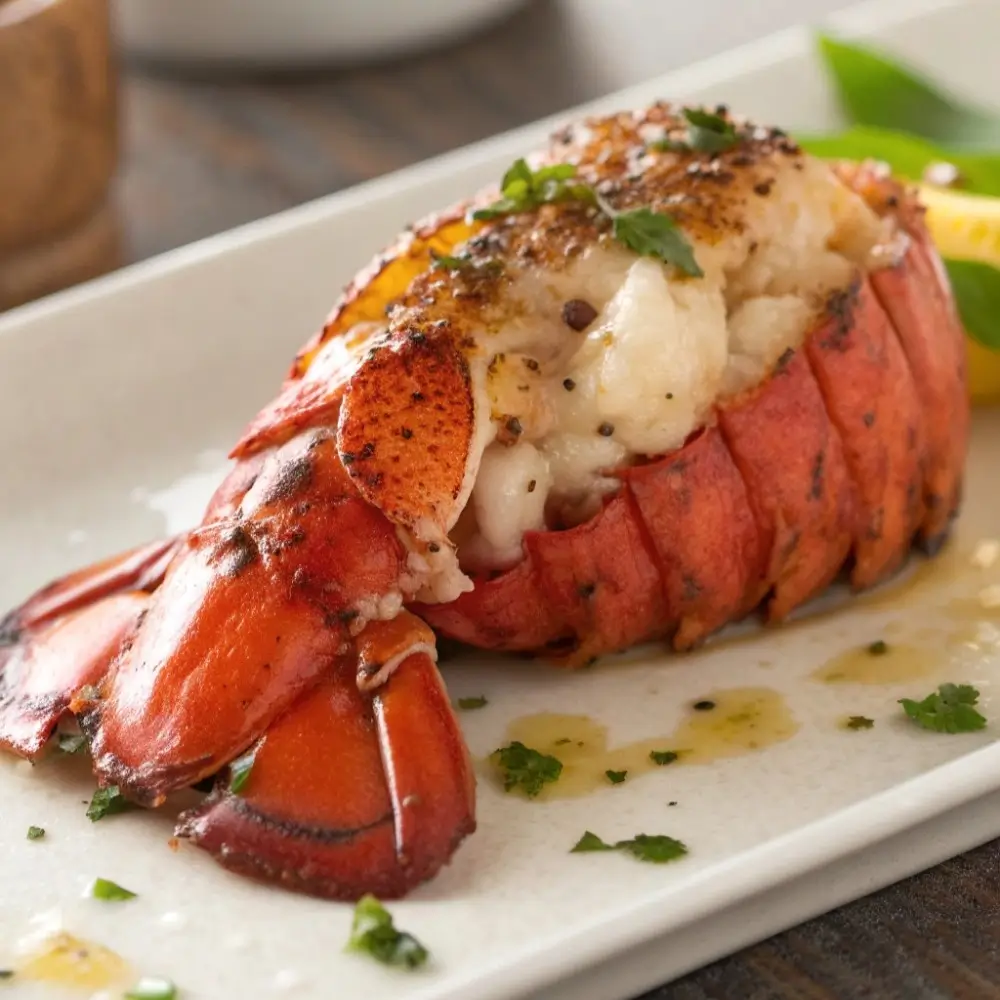
Lift the meat slightly and rest it on top of the shell. This helps it cook evenly and looks nice, but perfection is not required.
Beginner-Friendly Baked Lobster Tail Recipe
Ingredients
2 lobster tails (6–8 oz each)
3 tablespoons unsalted butter, melted
1 clove garlic, finely minced
1 tablespoon lemon juice
½ teaspoon salt
¼ teaspoon black pepper
Optional garnish: lemon wedges or chopped parsley
Instructions
Preheat the oven to 425°F (220°C).
Prepare lobster tails by cutting the shell and loosening the meat.
Place lobster tails in a baking dish.
In a small bowl, mix melted butter, garlic, lemon juice, salt, and pepper.
Spoon or brush the mixture evenly over the lobster meat.
Bake uncovered for 12–15 minutes, depending on size.
Remove from the oven when the meat turns opaque and feels firm but springy.
Let rest for 2 minutes before serving.
That’s all it takes.
How First-Time Cooks Can Tell Lobster Is Done
You don’t need experience or thermometers to succeed.
Meat turns opaque white
Texture feels firm, not rubbery
Lobster looks plump and glossy
If you’re unsure, slightly undercook rather than overcook.
Simple Sides That Pair Well for Beginners
Keep sides easy so the lobster stays the focus.
Steamed Vegetables
Green beans, broccoli, or carrots work well.
Mashed Potatoes
Comforting and forgiving.
Rice
Soaks up butter and lemon flavor.
Simple Salad
Fresh greens add balance.
How to Serve Lobster Tail with Confidence
Serve immediately after baking
Add lemon wedges on the plate
Keep plating clean and simple
Confidence comes from preparation, not perfection.
Common Beginner Mistakes and How to Avoid Them
Overcooking
Set a timer and trust it.
Overseasoning
Lobster needs very little.
Rushing Preparation
Take your time cutting the shell.
Waiting Too Long to Serve
Serve lobster fresh from the oven.
Cooking Lobster Tail for One or Two People
This recipe works perfectly for small portions. Bake tails in a single layer and avoid overcrowding.
Storing and Reheating for Beginners
Refrigeration
Store leftovers in an airtight container for up to 2 days.
Reheating
Reheat gently in the oven at low heat, covered with foil and a little butter. Avoid microwaving.
Why This Recipe Builds Confidence
First-time cooks succeed when recipes remove pressure. This lobster tail recipe gives you:
Clear visual cues
Simple steps
Minimal ingredients
Reliable results
Once you make it once, lobster will no longer feel intimidating.
Frequently Asked Questions
Is lobster tail really suitable for beginners?
Yes. It’s one of the easiest seafood dishes when baked.
Can I mess this up easily?
No. As long as you don’t overcook it, the recipe is forgiving.
Do I need special tools?
No. Kitchen scissors and a baking dish are enough.
How much lobster per person?
One 6–8 ounce tail per person is ideal.
Can I add other seasonings?
Yes, but keep them light so the lobster stays the focus.
What if I don’t lift the meat from the shell?
It will still cook properly. The lift is optional.
Final Thoughts on Lobster Tail Recipe for First-Time Cooks
Cooking lobster for the first time doesn’t need to feel intimidating. When you strip away the pressure and focus on simple steps, lobster tail becomes approachable, rewarding, and surprisingly easy.
This recipe is designed to build confidence. It teaches you how lobster behaves, how to recognize doneness, and how to trust your instincts in the kitchen. The result is tender, flavorful lobster that feels impressive without requiring experience.
Once you’ve made this recipe, lobster tail may no longer feel like a special-occasion-only dish. It becomes another reliable option in your kitchen—one that proves you can cook something elegant, even on your first try.