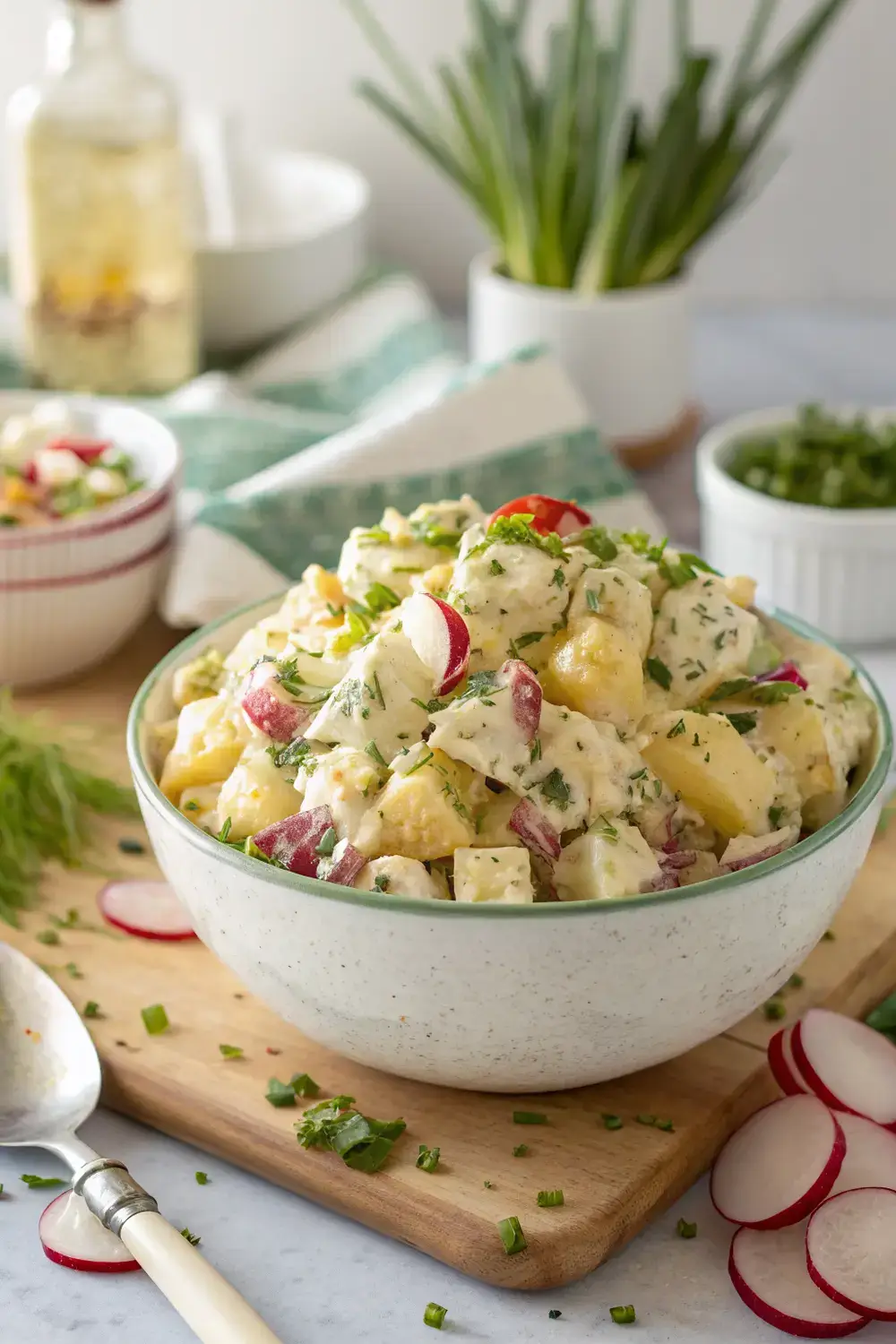
Introduction
There’s something truly special about a well-made potato salad that brings back memories of summer picnics, family reunions, and backyard barbecues. This Classic American Potato Salad has been a staple at gatherings across the country for generations, especially during patriotic celebrations like the 4th of July. The creamy, tangy combination of tender potatoes, crisp vegetables, and a perfectly balanced dressing creates a side dish that complements everything from grilled burgers to fried chicken.
What makes this recipe stand out is its authentic American flavors while adhering to dietary preferences that exclude pork, bacon, and all forms of alcohol. Whether you’re hosting a summer cookout, bringing a dish to a potluck, or simply craving comfort food, this potato salad delivers satisfaction in every bite. Let’s dive into the details of creating this timeless favorite that will have your guests coming back for seconds.
The Perfect American Potato Salad: A Timeless Tradition
Potato salad has a rich history in American cuisine, with roots tracing back to European immigrants who brought their potato-based dishes to the New World. Over time, these recipes evolved, incorporating local ingredients and American tastes. This classic version represents the heart of American home cooking—simple, comforting, and endlessly adaptable.
What sets this potato salad apart is the perfect balance of textures and flavors. The creamy dressing envelopes tender potato chunks while providing a refreshing counterpoint with crisp celery and onion. The secret lies in the quality of ingredients and the technique used to bring them together. This recipe avoids common pitfalls that can make potato salad soggy or bland, ensuring a consistently delicious result every time.
From coast to coast, American potato salad varies in style—some regions prefer it sweet with pickle relish and a hint of sugar, while others enjoy it tangy with vinegar and mustard. This recipe strikes a perfect middle ground, incorporating elements from various traditions while remaining true to the classic version most Americans know and love.
Ingredients You’ll Need
The Potatoes
– 2 pounds Yukon Gold potatoes: These are the gold standard for potato salad. Their waxy texture holds up well after boiling and they have a naturally buttery flavor that shines in this dish. Yukon Gold potatoes maintain their shape better than starchy varieties like Russets, which tend to fall apart.
– 1 tablespoon kosher salt: For boiling the potatoes. Salting the cooking water seasons the potatoes from the inside out, ensuring they’re flavorful all the way through.
The Creamy Base
– 1 cup mayonnaise: Use a high-quality full-fat mayonnaise for the best texture and flavor. The richness of good mayo creates the signature creamy texture of classic potato salad. Avoid low-fat versions as they can make the salad watery.
– 1/4 cup sour cream: Adds tanginess and lightens the texture of the mayonnaise. The slight acidity balances the richness of the mayo, creating a more complex flavor profile.
– 1 tablespoon yellow mustard: Provides a subtle tang and helps emulsify the dressing. Yellow mustard’s mild flavor won’t overpower the other ingredients while adding depth to the dressing.
– 1 tablespoon Dijon mustard: Offers a more sophisticated flavor than yellow mustard with a bit more complexity and spice. The combination of both mustards creates a balanced tanginess.
– 1 tablespoon apple cider vinegar: Adds brightness and cuts through the richness of the mayonnaise. The slight sweetness of apple cider vinegar complements the other flavors perfectly.
Fresh Vegetables
– 1/2 cup finely diced celery: Adds crunch and freshness. Celery’s crisp texture provides a nice contrast to the soft potatoes, while its mild flavor complements the creamy dressing.
– 1/4 cup finely diced red onion: Provides a sharp, sweet flavor that brightens the salad. Red onion’s color also adds visual appeal to the dish.
– 3 hard-boiled eggs, chopped: Adds richness, protein, and heartiness. The creamy yolks blend beautifully with the dressing, while the whites provide satisfying bites.
– 1/4 cup chopped fresh parsley: Adds color and a fresh herbal note. Parsley’s mild flavor enhances the other ingredients without overwhelming them.
Seasonings and Flavor Enhancers
– 1 teaspoon celery salt: Enhances the celery flavor and adds complexity. Celery salt is a blend of ground celery seeds and salt, which works particularly well in potato salad.
– 1/2 teaspoon black pepper: Adds warmth and depth. Freshly ground black pepper provides better flavor than pre-ground.
– 1/2 teaspoon paprika: Adds color and a subtle smoky note. Paprika also provides a visual pop against the creamy white background.
– 1/4 teaspoon garlic powder: Adds aromatic depth without being overpowering. Garlic powder blends smoothly into the dressing, unlike fresh garlic which can be too pungent in a cold salad.
– 1 teaspoon sugar: Balances the acidity and enhances the other flavors. Just a hint of sugar helps round out the flavor profile.
Step-by-Step Instructions
Preparing the Potatoes
1. Start by washing the potatoes thoroughly under running water. Use a vegetable brush to scrub the skins clean, as you’ll be leaving them on for this recipe. The skins add color, nutrients, and texture to the final dish.
2. Cut the potatoes into uniform 1-inch cubes. Consistency in size ensures even cooking, so some pieces don’t become mushy while others remain undercooked. Use a sharp knife for clean cuts that help the potatoes maintain their shape during boiling.
3. Place the cut potatoes in a large pot and cover with cold water. The water should be about 1-2 inches above the potatoes. Adding the potatoes to cold water rather than boiling water helps them cook more evenly.
4. Add the tablespoon of kosher salt to the water. This is crucial for seasoning the potatoes from the inside out. Don’t worry about using too much salt—most of it will remain in the cooking water, not the potatoes.
5. Bring the water to a boil over high heat, then reduce the heat to maintain a gentle simmer. Cook for 15-20 minutes, or until the potatoes are tender when pierced with a fork. You want them cooked through but not mushy, as they’ll continue to soften as they cool.
6. Drain the potatoes thoroughly in a colander. Let them sit for a few minutes to steam off excess moisture, then spread them on a baking sheet to cool completely. This step is important—adding warm potatoes to the dressing can make the salad greasy.
Making the Creamy Dressing
1. While the potatoes are cooling, prepare the dressing in a large bowl. This ensures you’ll have enough room to mix everything together later.
2. Combine the mayonnaise, sour cream, yellow mustard, Dijon mustard, and apple cider vinegar in the bowl. Whisk these ingredients together until smooth and well combined.
3. Add the celery salt, black pepper, paprika, garlic powder, and sugar to the dressing. Continue whisking until everything is incorporated and the dressing is uniform in color and consistency.
4. Taste the dressing and adjust the seasonings if necessary. You might want to add a bit more mustard for tanginess, a touch more vinegar for brightness, or additional salt for depth. Remember that the potatoes will absorb some of the flavors, so the dressing should taste slightly more intense than you want the final salad to be.
Adding the Fresh Ingredients
1. Once the potatoes have completely cooled to room temperature, add them to the bowl with the dressing. The cooling process is essential—adding hot potatoes will cause the mayonnaise to separate and create a greasy texture.
2. Gently fold the potatoes into the dressing using a rubber spatula. Be careful not to overmix, as this can break down the potatoes and create a mushy texture. You want the potatoes to be evenly coated but still maintain their shape.
3. Add the diced celery and red onion to the bowl. These ingredients provide crunch and freshness, so add them just before serving to maintain their texture. If you’re making the salad ahead, you can add them earlier, but they’ll be less crisp.
4. Fold in the chopped hard-boiled eggs. The eggs add richness and protein to the salad. If you prefer larger chunks of egg, you can quarter or halve the eggs instead of chopping them finely.
The Final Touches
1. Add the chopped fresh parsley to the salad and give it one final gentle fold. The parsley adds color and a fresh herbal note that brightens the entire dish.
2. Taste the salad once more and adjust the seasonings if needed. This is your last chance to perfect the flavor balance before serving.
3. For the best flavor, cover the salad and refrigerate for at least 1 hour before serving. This allows the flavors to meld together and develop, making the salad even more delicious. The salad can be made up to 2 days ahead, which actually allows the flavors to develop more fully.
4. Before serving, give the salad a gentle stir and garnish with an extra sprinkle of paprika and some fresh parsley leaves for visual appeal. The vibrant colors will make the salad even more inviting on your serving table.
Variations and Substitutions
Creamy vs. Classic
While this recipe uses a creamy base with mayonnaise and sour cream, some American potato salad traditions call for a vinegar-based dressing. If you prefer a tangier, more traditional style, you can substitute the mayonnaise mixture with:
– 1/2 cup apple cider vinegar
– 1/2 cup water
– 2 tablespoons sugar
– 1 tablespoon salt
– 1 teaspoon celery seeds
– 1/4 cup olive oil (optional, for richness)
Simply whisk these ingredients together and pour over the cooled potatoes. This version is lighter and tangier, with a more pronounced vinegar flavor that’s popular in some regions of the American South.
Making It Healthier
If you’re looking to reduce the calorie and fat content of this potato salad without sacrificing flavor, consider these substitutions:
– Substitute Greek yogurt for some or all of the mayonnaise and sour cream. Greek yogurt provides creaminess with less fat and adds protein.
– Use light mayonnaise instead of regular for about half the calories and fat.
– Replace some of the potatoes with steamed and chopped cauliflower florets for extra volume and nutrients with fewer calories.
– Add extra vegetables like diced bell peppers, cucumbers, or shredded carrots for more crunch and nutrition.
– Reduce the amount of dressing by about 25% and add more vegetables to maintain moisture and flavor.
Vegan and Dairy-Free Options
To make this potato salad vegan and dairy-free while maintaining its creamy texture:
– Replace the mayonnaise and sour cream with a high-quality vegan mayonnaise or a mixture of silken tofu blended with lemon juice and a touch of olive oil.
– Use Dijon mustard in place of yellow mustard if it contains honey (most yellow mustards are vegan, but check the label).
– Ensure your paprika is free of any animal products (most are, but some smoked paprikas may contain added ingredients).
– Add extra celery and onion for crunch, or consider adding some chopped walnuts or almonds for texture and protein.
– Season with herbs like dill, chives, or additional parsley to enhance flavor without dairy.
Regional Variations
American potato salad varies by region, and you can adapt this recipe to suit different preferences:
– For a Southern-style potato salad, add a tablespoon of sweet pickle relish and a pinch of sugar to balance the tanginess.
– A Midwestern version might include chopped dill pickles and hard-boiled eggs in addition to the ingredients in this recipe.
– If you’re making this for a New England clam bake, add some chopped celery and a dash of Old Bay seasoning for a seafood-inspired twist.
– For a Southwest twist, add diced jalapeños, cilantro, and a squeeze of lime juice along with the regular ingredients.
– A German-inspired version might include bacon bits (if not avoiding pork), diced pickles, and a bit of apple cider vinegar for tanginess.
Storage and Reheating Tips
Short-Term Storage
Potato salad is best served chilled, and it can be stored in the refrigerator for up to 3 days. To store properly:
1. Transfer the potato salad to an airtight container. Glass containers with tight-fitting lids are ideal as they don’t absorb odors and are easy to clean.
2. Press a piece of plastic wrap directly onto the surface of the salad before sealing the container. This prevents air exposure, which can cause the salad to dry out and the flavors to diminish.
3. Store in the coldest part of your refrigerator, typically the back shelf rather than the door where temperatures fluctuate more.
4. If you’ve added any additional garnishes like fresh herbs or paprika, store those separately and add them just before serving to maintain their freshness and color.
Long-Term Storage
While potato salad is best enjoyed fresh, you can freeze it for longer storage, though the texture will change somewhat:
1. Freezing potato salad isn’t ideal due to the mayonnaise and eggs, which can separate and become grainy when thawed. If you must freeze it, transfer it to freezer-safe containers, leaving about an inch of headspace for expansion.
2. Freeze for up to 2 months. When you’re ready to use it, thaw it in the refrigerator overnight.
3. After thawing, the salad may have excess moisture and a slightly different texture. You can drain off any excess liquid and stir in a bit of fresh mayonnaise to improve the consistency.
4. For better results, consider freezing just the cooked potatoes and making the fresh dressing when you’re ready to serve.
Reheating Methods
Potato salad is typically served cold, but if you prefer it warm or need to serve it at a different temperature:
1. For a slightly warmed version, transfer individual servings to a microwave-safe dish and heat on medium power in 30-second intervals, stirring between each interval, until just warm. Be careful not to overheat, as this can cause the mayonnaise to separate.
2. If you need to reheat a larger batch, place the potato salad in a baking dish, cover with foil, and heat in a 350°F oven for about 15-20 minutes, or until warmed through.
3. If the reheated salad seems dry, stir in a tablespoon or two of additional mayonnaise or sour cream to restore creaminess.
4. Always reheat potato salad to an internal temperature of 165°F if you’re serving it warm, and then let it cool to serving temperature. This is especially important if the salad contains eggs.
Common Mistakes to Avoid
Overcooking the Potatoes
One of the most common mistakes in making potato salad is overcooking the potatoes. When potatoes are boiled too long, they become mushy and fall apart, creating a texture more like mashed potatoes than a proper salad.
To avoid this:
– Start checking for doneness a few minutes before the recommended cooking time.
– Potatoes are done when a fork or knife can pierce them easily but they still hold their shape.
– Remember that residual heat will continue to cook the potatoes slightly after you drain them, so err on the side of undercooking slightly.
– If you’re using different sizes or types of potatoes, cut them uniformly to ensure even cooking.
Using the Wrong Potatoes
Not all potatoes are created equal when it comes to potato salad. Starchy varieties like Russets or Idaho potatoes tend to fall apart and become mealy when boiled, while waxy potatoes like Yukon Gold or red potatoes hold their shape better.
For the best results:
– Choose waxy potatoes with a low to medium starch content.
– Yukon Gold potatoes are ideal as they have a buttery flavor and creamy texture that works well in potato salad.
– If you must use Russet potatoes, be extra careful not to overcook them, and consider leaving the skin on for added structure.
– New potatoes are another excellent choice as their small size and thin skin work beautifully in potato salad.
Insufficient Seasoning
Potato salad can easily become bland if not properly seasoned. The mistake here is under-seasoning both the potatoes during cooking and the final salad.
To ensure proper seasoning:
– Salt the cooking water generously—this seasons the potatoes from the inside out.
– Taste the dressing before adding it to the potatoes and adjust seasonings accordingly.
– Remember that the potatoes will absorb some of the seasoning, so the dressing should taste slightly more intense than you want the final product.
– Don’t be afraid to add seasonings gradually, tasting as you go to build the perfect flavor balance.
Adding Ingredients Too Early
Adding certain ingredients too early can ruin the texture and flavor of your potato salad. Warm potatoes can melt the mayonnaise, creating a greasy texture, while vegetables can become soggy if added too far in advance.
To maintain optimal texture:
– Let the potatoes cool completely before adding the dressing.
– Add delicate ingredients like fresh herbs, celery, and onion just before serving or shortly before refrigerating.
– If making ahead, you can add these ingredients up to 6 hours before serving, but no earlier.
– For the best crunch, consider keeping some vegetables separate and mixing them in just before serving.
Skipping the Chill Time
Many people make the mistake of serving potato salad immediately after preparation, but skipping the chill time means missing out on the full development of flavors.
For the best flavor:
– Refrigerate the potato salad for at least 1 hour before serving, though 2-4 hours is even better.
– This allows the flavors to meld together and the seasonings to penetrate the ingredients.
– If you’re pressed for time, you can place the bowl in an ice bath to speed up the cooling process without diluting the flavors.
– Remember that the salad will continue to absorb flavors as it sits, so taste it again after chilling and adjust seasonings if needed.
Frequently Asked Questions
Can I make potato salad the day before serving?
Absolutely! In fact, potato salad often tastes even better when made a day in advance. The flavors have more time to meld and develop, creating a more cohesive and delicious dish. You can prepare the entire recipe up to 24 hours before serving, just be sure to store it properly in an airtight container in the refrigerator. The only thing you might want to add just before serving is any garnishes like extra fresh parsley or paprika to maintain their color and freshness.
How do I prevent potato salad from becoming watery?
Watery potato salad is a common issue, but there are several ways to prevent it:
– Drain the potatoes thoroughly after cooking and let them steam dry in the colander for a few minutes.
– Spread them on a baking sheet to cool completely—trapped steam can make the salad watery.
– Avoid adding ingredients with high water content too far in advance, like cucumbers or tomatoes.
– Use a thick, high-quality mayonnaise that won’t separate.
– Consider adding a thickener like a tablespoon of sour cream or Greek yogurt to help maintain consistency.
– If your salad does become watery, you can drain off the excess liquid and stir in a bit more mayonnaise to restore creaminess.
Can I use pre-cooked potatoes for potato salad?
While you can use pre-cooked potatoes like those from a steam table or packaged refrigerated potatoes, they’re not ideal for potato salad. Pre-cooked potatoes often have a different texture and may have been treated with preservatives that affect their flavor and performance in the salad. If you must use pre-cooked potatoes:
– Choose the highest quality you can find.
– Be extra careful not to overmix them as they’re more prone to breaking apart.
– Consider roasting the potatoes instead of boiling them for a different flavor profile.
– If using refrigerated potatoes, let them come to room temperature before adding to the dressing.
How long does potato salad last in the refrigerator?
Properly stored, potato salad will last in the refrigerator for 3-4 days. After this time, the quality may start to decline as ingredients lose their freshness and the dressing can separate. To maximize freshness:
– Store in an airtight container with plastic wrap pressed directly on the surface.
– Keep it in the coldest part of your refrigerator.
– Check for any signs of spoilage before serving, such as off odors, slimy texture, or discoloration.
– If the salad contains mayonnaise-based dressing, err on the side of caution and discard after 3 days, even if it looks fine.
What can I add to make potato salad more interesting?
If you want to put a unique spin on classic potato salad, here are some additions that add flavor and texture:
– Fresh herbs like dill, chives, or tarragon for a burst of fresh flavor
– Crispy bacon bits (if not avoiding pork) for smoky crunch
– Chopped pickles or relish for tanginess and texture
– Diced apples or pears for unexpected sweetness and crunch
– Mustard or celery seeds for a burst of flavor
– Horseradish or hot sauce for a spicy kick
– Toasted nuts like almonds or pecans for crunch and richness
– Cheese like cheddar or feta for salty tang
– Olives or capers for briny notes
Can I make potato salad without eggs?
Yes, you can absolutely make delicious potato salad without eggs. Here are some alternatives:
– For a traditional-style salad without eggs, simply omit them and increase the amount of other ingredients like celery and onion.
– Add extra vegetables like bell peppers, cucumbers, or shredded carrots for bulk and nutrition.
– Use a heartier dressing by including more mustard and vinegar for tanginess.
– For a protein boost, consider adding chickpeas, white beans, or tofu.
– If you’re missing the richness that eggs provide, add a bit more mayonnaise or a tablespoon of olive oil to the dressing.
– You can also add texture with ingredients like sunflower seeds, walnuts, or croutons.
Conclusion
Classic American Potato Salad is more than just a side dish—it’s a tradition that brings people together and creates lasting memories. Whether you’re serving it at a 4th of July celebration, a family gathering, or a casual weekend barbecue, this recipe delivers the authentic flavors and comforting textures that have made it a beloved American classic for generations.
The beauty of this potato salad lies in its simplicity and adaptability. With a perfect balance of creamy dressing, tender potatoes, and fresh vegetables, it complements almost any main dish while standing on its own as a satisfying meal. Plus, by following this recipe, you’re creating a dish that welcomes all guests, regardless of dietary restrictions, as it contains no pork, bacon, or alcohol.
As you make this potato salad, remember that the quality of your ingredients and the care you take in preparation will shine through in the final result. Take the time to choose good potatoes, fresh vegetables, and quality mayonnaise. Don’t rush the chilling process, as that’s when the flavors truly come together to create something special.
So go ahead, embrace this culinary tradition, and create a potato salad that will have everyone asking for your recipe. Whether you stick to the classic version or add your own creative twists, you’re sure to create a dish that celebrates the simple pleasures of good food and good company. Happy cooking and enjoy your summer gatherings with this timeless American favorite!