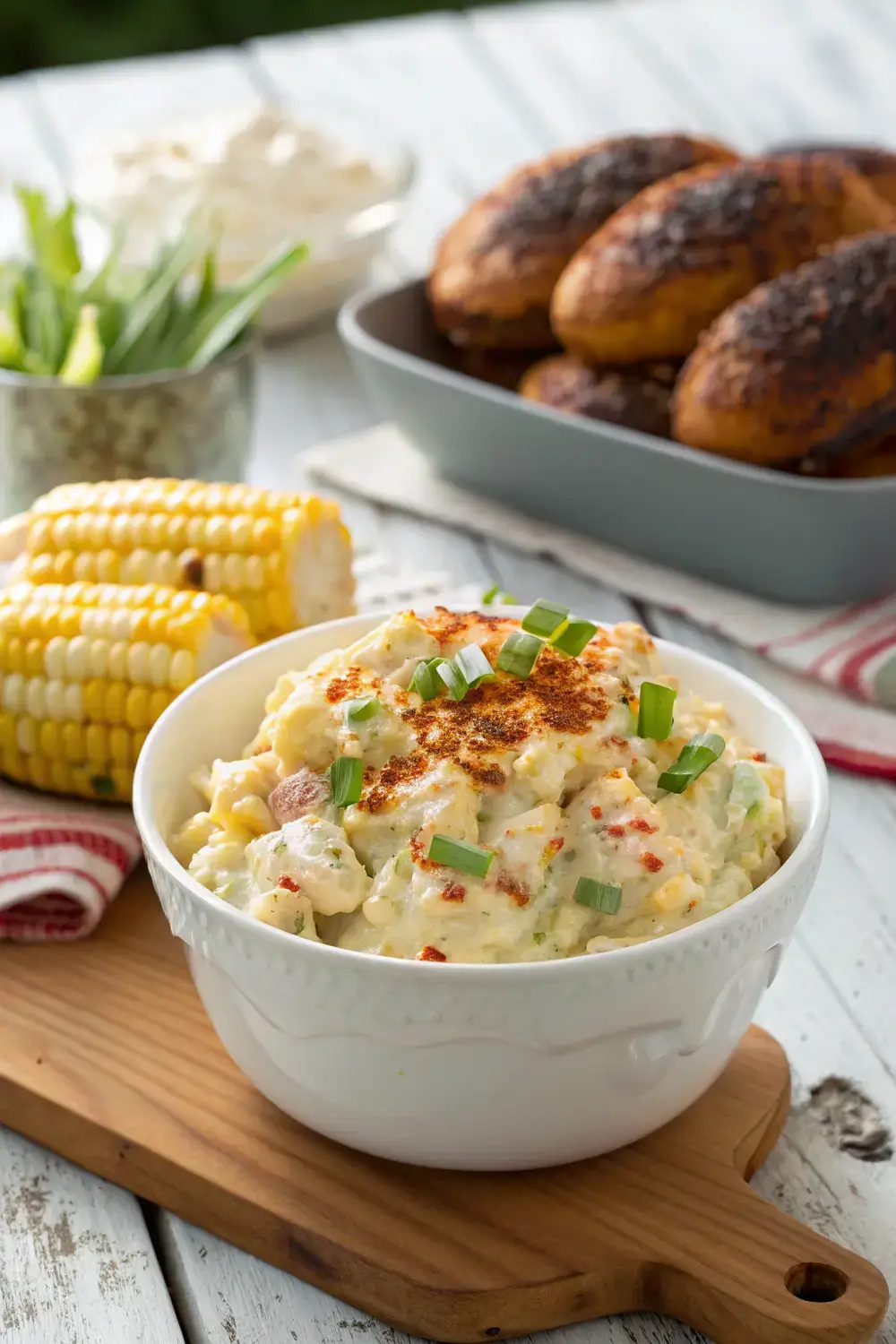
There’s something magical about a summer BBQ spread that brings people together. The sizzle of the grill, the laughter of friends and family, and the irresistible aroma of outdoor cooking all create memories that last a lifetime. And no summer cookout would be complete without that iconic side dish that has grained American tables for generations – the classic potato salad. This isn’t just any potato salad; this is the one that will have guests hovering around the bowl, asking for your secret recipe before they’ve even taken their first bite.
The beauty of this classic American potato salad lies in its perfect balance of creamy, tangy, and savory flavors. Each bite offers a delightful combination of tender potatoes, crisp celery, sweet red onion, and rich hard-boiled eggs, all enveloped in a luscious dressing that’s both comforting and refreshing. What makes this recipe truly special is its versatility – it’s equally at home at a casual weeknight cookout as it is at a grand Fourth of July celebration. Best of all, it’s incredibly forgiving and can be prepared ahead of time, allowing you to spend more time enjoying your company rather than slaving away in the kitchen.
Why This Potato Salad Stands Out
After sampling countless potato salads at potlucks, picnics, and family gatherings over the years, I’ve come to appreciate what makes a potato salad truly exceptional. This recipe strikes the perfect balance between creamy and light, between familiar and exciting. The dressing isn’t overly mayonnaise-heavy like some versions, nor is it too light and watery. Instead, it achieves that ideal consistency where every potato piece is beautifully coated without being swimming in dressing.
The magic begins with the quality of ingredients. We’re using Russet potatoes, which hold their shape well while becoming perfectly tender inside. Their starchy nature allows them to absorb just enough dressing to flavor each bite without becoming mushy. The addition of hard-boiled eggs not only provides wonderful texture but also richness and protein that makes this more satisfying than your average side dish.
What elevates this recipe beyond the ordinary is the thoughtful layering of flavors and textures. The subtle bite of red onion, the crisp crunch of celery, the creamy richness of eggs, and the aromatic paprika on top – each element plays its part in creating a harmonious dish that’s greater than the sum of its parts. The dressing combines the tang of Dijon mustard with the slight sweetness of apple cider vinegar, balanced by the creaminess of mayonnaise. It’s a familiar yet sophisticated flavor profile that appeals to all ages.
Essential Ingredients for Perfect Potato Salad
Let’s break down the ingredients that make this potato salad so special. Each component plays a crucial role in creating that authentic American flavor profile we all love.
Russet Potatoes: These are the workhorses of the potato world, and for good reason. Their high starch content means they become wonderfully fluffy when cooked, yet hold their shape well enough for a salad. When boiled, the exterior becomes tender while the interior stays firm, providing the perfect canvas for absorbing the flavorful dressing. Russets are also larger than many other potato varieties, meaning fewer potatoes to peel and chop.
Celery: This humble vegetable provides the essential crunchy counterpoint to the creamy potatoes. When diced small, celery offers a satisfying texture that keeps each bite interesting. Its fresh, slightly bitter flavor balances the richness of the mayonnaise and eggs. Look for crisp, firm stalks with fresh green leaves – these indicate freshness and better flavor.
Red Onion: While yellow onions are perfectly fine, red onion brings a milder, sweeter flavor that’s particularly pleasant in cold potato salad. Its vibrant color also adds visual appeal to the dish. For a subtler onion flavor, you can soak the diced onion in cold water for 10-15 minutes before draining and adding to the salad.
Hard-Boiled Eggs: These add protein, richness, and wonderful texture to the salad. The creamy yolk blends beautifully with the dressing, while the white provides satisfying bites of firm texture. When chopping, try to keep the pieces similar in size to the potatoes for a uniform texture.
Mayonnaise: This forms the creamy base of our dressing. For the best flavor and texture, use a high-quality mayonnaise. Hellmann’s/Best Foods is a classic American choice that delivers the perfect balance of richness and tang. Avoid low-fat versions if possible, as they often contain stabilizers that can affect the texture.
Dijon Mustard: This is where the magic begins. Dijon provides that signature tangy kick that cuts through the richness of the mayonnaise. It adds depth and complexity that plain yellow mustard simply can’t match. The small amount of heat and sharp flavor elevates the entire dish.
Apple Cider Vinegar: Unlike white vinegar, apple cider vinegar adds a subtle fruity note that complements the other ingredients beautifully. It provides just the right amount of acidity to balance the richness and brighten all the flavors.
Salt and Black Pepper: These basic seasonings are crucial for bringing out all the flavors in the dish. Don’t be shy with the salt – potatoes need plenty of it to really taste their best. Freshly ground black pepper adds a subtle warmth that rounds out the flavor profile.
Paprika: This isn’t just for garnish! While the sprinkle of paprika on top adds visual appeal, a small amount mixed into the dressing adds depth and color. Sweet paprika works best here, providing a mild, smoky flavor without heat.
Step-by-Step Instructions for Perfect Potato Salad
Now, let’s walk through the process of creating this potato salad masterpiece. Don’t worry if you’ve never made potato salad before – these detailed instructions will guide you every step of the way.
Preparing the Potatoes
1. Select and Wash the Potatoes: Choose 2 pounds of Russet potatoes (about 4 medium-large potatoes). Scrub them thoroughly under cold running water to remove any dirt. You can peel them if you prefer, but leaving the skins on adds both nutrients and texture.
2. Cut the Potatoes: Cut the potatoes into uniform 1-inch cubes. Consistency is key here – pieces that are too small will become mushy during cooking, while pieces that are too large won’t absorb enough dressing. Aim for bite-sized pieces that are easy to eat with a fork.
3. Boil the Potatoes: Place the potato cubes in a large pot and cover with cold, salted water (about 1 tablespoon of salt). The water should cover the potatoes by at least an inch. Bring to a boil over high heat, then reduce the heat to maintain a steady simmer.
4. Cook Until Tender: Cook for 10-15 minutes, or until the potatoes are tender but not mushy. You can test doneness by piercing a piece with a fork – it should slide in with some resistance but not fall apart. Be careful not to overcook, as this will make your potato salad watery.
5. Drain and Cool: Drain the potatoes thoroughly in a colander. For best results, spread them on a baking sheet to cool slightly. This step is crucial – adding dressing to hot potatoes will make the dressing greasy and watery. Let them cool until they’re just warm to the touch, about 15-20 minutes.
Making the Dressing
While the potatoes are cooling, you can prepare the dressing:
1. Combine Base Ingredients: In a large bowl, whisk together 1 cup of mayonnaise, 2 tablespoons of Dijon mustard, 1 tablespoon of apple cider vinegar, 1 teaspoon of salt, and ½ teaspoon of black pepper. Whisk until smooth and well combined.
2. Taste and Adjust: This is an important step! Taste the dressing and adjust the seasonings as needed. You might want more salt for seasoning, a bit more vinegar for tang, or extra pepper for depth. Remember that the potatoes will absorb some of the seasoning, so it should taste slightly stronger than you want the final salad to taste.
3. Add Paprika: Stir in ½ teaspoon of paprika into the dressing. This will give it a lovely color and subtle flavor.
Preparing the Add-ins
1. Hard-Boil the Eggs: Place eggs in a single layer in a saucepan and cover with cold water. Bring to a boil, then remove from heat and cover for 12 minutes. Drain and run under cold water to stop the cooking. Peel and chop into ½-inch pieces.
2. Prepare the Vegetables: Finely dice 2 stalks of celery (about 1 cup) and ¼ of a red onion (about ½ cup). For a milder onion flavor, place the diced onion in a small bowl of cold water for 10-15 minutes, then drain thoroughly.
Assembling the Potato Salad
1. Combine Potatoes and Dressing: Place the slightly cooled potatoes in a large bowl. Pour about three-quarters of the dressing over the potatoes and gently toss to coat. Start with less dressing – you can always add more later if needed.
2. Add Remaining Ingredients: Gently fold in the chopped hard-boiled eggs, diced celery, and red onion. Be careful not to mash the potatoes – use a gentle folding motion to combine everything evenly.
3. Final Dressing Addition: Taste the salad and add more dressing if desired. The potatoes should be well coated but not swimming in dressing. The total amount of dressing will depend on your preference and how absorbent your particular potatoes are.
4. Chill Before Serving: For the best flavor, cover the salad and refrigerate for at least 1 hour before serving. This allows the flavors to meld and the salad to chill properly. If serving at an outdoor event, keep it in a cooler with ice packs until ready to serve.
5. Garnish and Serve: Just before serving, sprinkle the top with additional paprika and some fresh chives if desired. This adds color and a fresh, oniony flavor that complements the salad beautifully.
Creative Variations and Customizations
One of the wonderful things about potato salad is its adaptability. While the classic version is perfect as is, feel free to experiment with these variations to suit your taste or to use what you have on hand.
Add Some Crunch and Tang
Dill Pickles: Add ½ cup of finely chopped dill pickles to the salad. Their briny tang and crunchy texture add wonderful complexity. This variation is especially popular in the Midwest and is often called “German-style” potato salad.
Sweet Pickle Relish: For a sweeter variation, substitute ½ cup of sweet pickle relish for some of the diced onion. This adds sweetness and tiny bursts of tang throughout the salad.
Bacon-Free “Bacon” Bits: If you’re looking for that smoky crunch without pork (as per your dietary restrictions), try crumbling 4-6 sheets of vegetarian bacon or smoked almonds over the top before serving.
Herb Variations
Fresh Dill: Replace the paprika garnish with 2 tablespoons of finely chopped fresh dill. This adds a bright, citrusy note that pairs beautifully with the potatoes and eggs.
Chives and Parsley: A combination of 2 tablespoons each of chopped fresh chives and parsley adds a fresh, garden-fresh flavor that’s perfect for spring and summer gatherings.
Fresh Chives: For a simple but elegant touch, garnish with chopped fresh chives instead of paprika. Their mild onion flavor adds sophistication without overwhelming the dish.
Lighter Versions
Greek Yogurt Swap: Replace half of the mayonnaise with plain Greek yogurt for a lighter version that’s still creamy and satisfying. This reduces the fat content while adding protein.
Avocado Dressing: For a creamy, dairy-free option, blend 1 ripe avocado with the mayonnaise, mustard, vinegar, and seasonings until smooth. This creates a vibrant green dressing that’s both healthy and delicious.
Storage, Make-Ahead, and Serving Tips
Potato salad is actually better when made ahead of time, as it gives the flavors a chance to meld and develop. Here’s how to store and serve it for the best results.
Make-Ahead Instructions
This potato salad can be made up to 2 days ahead of time. In fact, it benefits from resting in the refrigerator overnight, as the flavors continue to develop and intensify. Simply prepare the salad as directed, cover tightly with plastic wrap or an airtight container, and refrigerate.
When refrigerating, place a piece of plastic wrap directly on the surface of the salad before covering the container. This prevents the top from drying out and browning.
Storage Guidelines
Refrigerator: Store in an airtight container in the refrigerator for up to 3-4 days. After this time, the potatoes may start to break down and the dressing can separate.
Freezer: Freezing is not recommended for potato salad. The high water content in potatoes doesn’t freeze well, and the texture becomes unpleasant when thawed.
Transporting to Outdoor Events
When taking potato salad to a picnic, BBQ, or potluck, keep it safe and fresh with these tips:
1. Use an Insulated Container: A large insulated food carrier or cooler will help maintain the proper temperature.
2. Keep it Cold: Place ice packs directly on top of the container and around it in the cooler. The potato salad should be kept at 40°F (4°C) or below.
3. Don’t Leave Out for Long: Once outdoors, don’t let the potato sit at room temperature for more than 2 hours. If the outdoor temperature is above 90°F (32°C), limit it to 1 hour.
4. Serve Small Portions: If serving a large group, put out only what will be eaten immediately. Keep the rest in the cooler until needed.
5. Have a Backup Plan: Bring a thermometer to check the temperature of the potato salad periodically to ensure it stays in the safe zone.
Serving Suggestions
Classic American potato salad pairs beautifully with a wide variety of dishes:
– Grilled Burgers and Hot Dogs: The creamy texture and tangy flavor complement smoky grilled meats perfectly.
– Barbecued Chicken: The richness of the potato salad balances the tangy sweetness of BBQ sauce.
– Grilled Steaks: For a cookout with adult guests, serve alongside perfectly grilled steaks.
– Corn on the Cob: The sweet corn and creamy potato salad create a classic American plate.
– Baked Beans: These two BBQ staples are a natural pairing.
– Coleslaw: The contrast between creamy potato salad and crunchy coleslaw adds variety to the plate.
– Fresh Fruit Salad: A light, refreshing fruit salad provides a nice balance to the richness of the potato salad.
Common Mistakes to Avoid
Even experienced cooks can make mistakes when making potato salad. Here are the most common pitfalls and how to avoid them:
Overcooking the Potatoes: This is the number one mistake. Overcooked potatoes become mushy and watery, making your potato salad texture unpleasant. Test the potatoes frequently while boiling – they should be tender but still hold their shape. If they start to fall apart, they’re overcooked.
Adding Dressing to Hot Potatoes: Hot potatoes will absorb too much dressing and may cause the mayonnaise to separate, resulting in a greasy texture. Always let the potatoes cool slightly before adding the dressing.
Using Too Much Dressing: It’s better to start with less dressing and add more as needed. Too much dressing makes the salad heavy and soggy. Remember that the potatoes will continue to absorb some of the dressing as it sits.
Not Seasoning Enough: Potatoes need plenty of salt to really shine. Don’t be shy with the salt in both the cooking water and the dressing. Taste as you go and adjust seasonings until the flavors pop.
Using the Wrong Type of Potato: Waxy potatoes like red potatoes or new potatoes hold their shape well but have a different texture and flavor than Russets. For the classic American potato salad texture, Russets are the best choice.
Neglecting the Chill Time: Serving potato salad immediately after making it means the flavors haven’t had a chance to meld. For the best flavor, chill for at least an hour before serving, preferably overnight.
Frequently Asked Questions
Can I make this potato salad without eggs?
Absolutely! If you need to avoid eggs, you can omit them entirely or substitute with ½ cup of diced avocado for creaminess and texture. The salad will still be delicious, though it will have a slightly different nutritional profile.
What’s the best way to ensure my potatoes don’t get mushy?
The key is to not overcook them and to use the right type of potato. Russets are ideal because they’re starchy and hold their shape well. Cook them just until tender when pierced with a fork, and drain them immediately. Also, don’t add the dressing until they’re cooled slightly.
Can I use a different vinegar instead of apple cider vinegar?
Yes, you can substitute white vinegar or red wine vinegar in equal amounts. Apple cider vinegar adds a subtle fruity note that complements the other ingredients, but white vinegar works well if that’s what you have on hand. Avoid balsamic vinegar as its strong flavor would overpower the delicate balance of ingredients.
How far in advance can I make this potato salad?
You can make this potato salad up to 2 days ahead of time. In fact, it benefits from resting in the refrigerator overnight, as the flavors continue to develop and intensify. Just be sure to store it properly in an airtight container.
What can I add to make this potato salad more protein-rich?
You can add diced cooked chicken, chickpeas, or white beans for extra protein. For a vegetarian option, consider adding 1 cup of crumbled feta cheese or ½ cup of diced cucumber for added crunch and nutrients.
Why does my potato salad get watery sometimes?
This usually happens when you use too much dressing or when the potatoes release too much water. To prevent this, make sure your potatoes are well-drained and cooled before adding dressing. You can also pat them dry with a paper towel if they seem too watery. If the salad becomes watery after refrigeration, you can drain off some of the excess liquid before serving.
Bringing It All Together
There’s something truly special about gathering friends and family around a table laden with summer favorites. This classic American potato salad has been bringing people together for generations, and with good reason. It’s the perfect blend of comforting familiarity and exciting flavors that make every bite a celebration.
The beauty of this recipe isn’t just in its delicious taste or beautiful presentation, but in its ability to adapt to different occasions and preferences. Whether you’re keeping it classic or adding your own creative twist, this potato salad is guaranteed to be a crowd-pleaser.
What I love most about this potato salad is how it connects us to tradition while allowing for personal expression. It’s a dish that can be passed down through generations, yet each family can make it their own with special touches and secret ingredients. The memories created around a bowl of homemade potato salad – the laughter, the stories, the simple joy of good food shared with loved ones – are what summer is all about.
So go ahead, make this potato salad for your next gathering. I promise it will disappear faster than any other dish on the table, and you’ll find yourself fielding recipe requests from delighted guests. This isn’t just potato salad – it’s love, tradition, and the taste of summer, all in one delicious bowl.