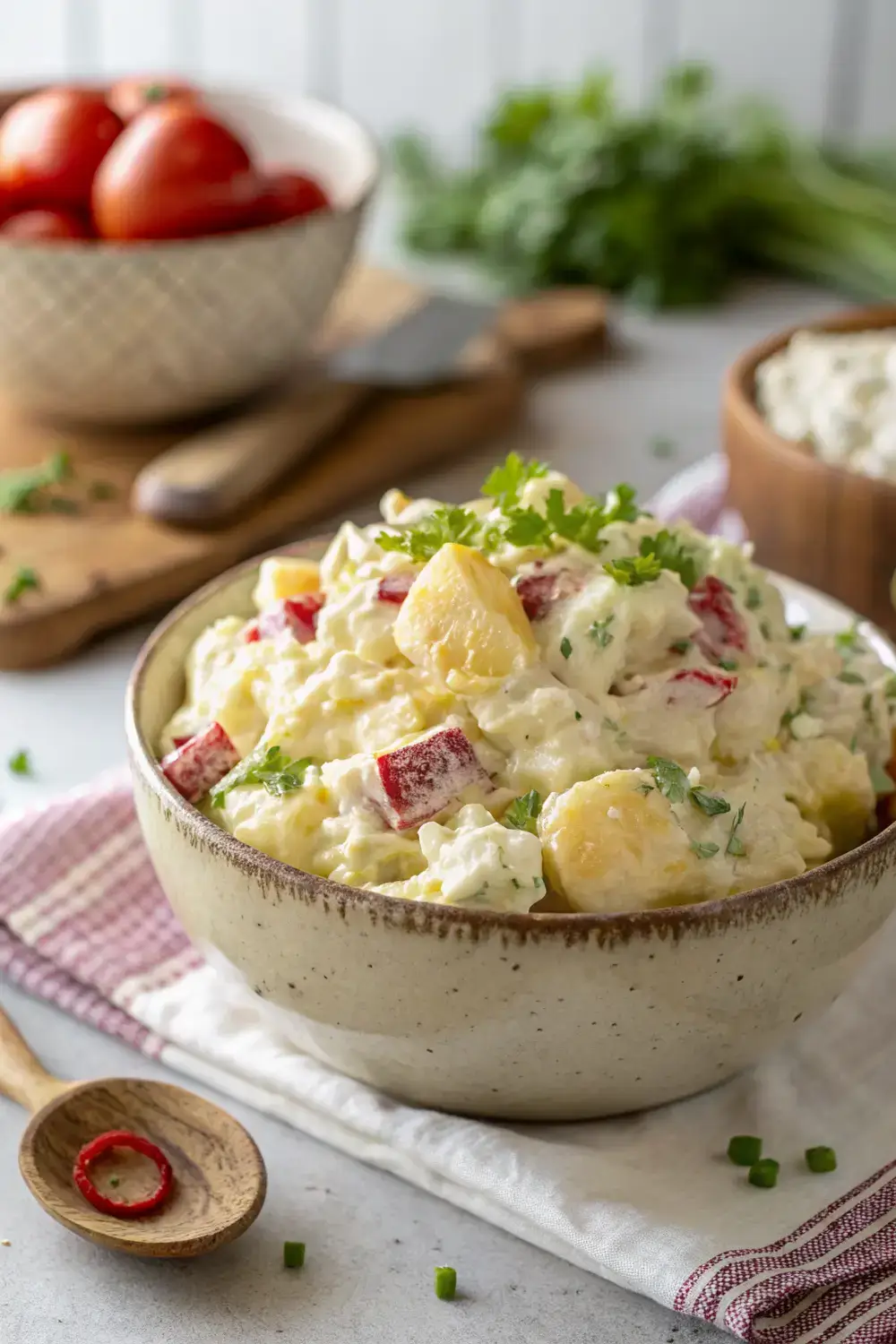
There’s something magical about a big bowl of creamy potato salad sitting beside a sizzling grill on a warm summer afternoon. The dish is simple enough for a beginner to master, yet it carries the comforting familiarity that makes it a staple at family gatherings, picnics, and backyard barbecues across the country. In this guide you’ll discover every detail needed to create a classic American potato salad that feels both timeless and fresh. From selecting the perfect potatoes to mastering the dressing, from optional twists that suit different tastes to tips for storing leftovers, we’ll walk you through each step with clear instructions and friendly advice. Whether you’re planning a weekend cookout or simply want a reliable side for weekday meals, this recipe will become a trusted favorite in your kitchen.
Ingredients
Potatoes
- Yukon Gold potatoes – 2 pounds (about 8‑10 medium potatoes). These potatoes have a buttery texture that holds up well when boiled, giving the salad a creamy base without turning mushy.
- Red potatoes – 1 pound (about 4‑5 small potatoes). Their firm flesh adds a subtle color contrast and a slightly waxy bite that balances the softer Yukon Golds.
Dressing Components
- Mayonnaise – 1 cup. Choose a full‑fat version for richness; it helps the dressing cling to the potatoes.
- Apple cider vinegar – 2 tablespoons. The gentle acidity brightens the flavor and prevents the salad from feeling heavy.
- Dijon mustard – 1 tablespoon. This adds a mild tang and a hint of depth without overwhelming the other ingredients.
- Honey – 1 teaspoon. A touch of sweetness rounds out the vinegar’s bite and complements the natural sweetness of the potatoes.
- Celery seed – ½ teaspoon. This tiny seed contributes an aromatic note that is classic to traditional potato salad.
- Salt – ½ teaspoon, or to taste. Proper seasoning enhances every bite.
- Freshly ground black pepper – ¼ teaspoon. Adds a subtle warmth.
Add‑In Vegetables and Herbs
- Celery – 2 stalks, finely diced. The crisp texture provides a refreshing contrast.
- Red onion – ¼ cup, finely minced. Use a small amount to avoid a strong bite while still delivering a gentle onion flavor.
- Fresh dill – 2 tablespoons, chopped. Optional but adds a bright, herbaceous finish.
- Green onions – 2 tablespoons, sliced. Another optional garnish that adds color and a mild onion note.
Optional Variations
- Pickles – ¼ cup diced dill pickles for a tangy crunch.
- Hard‑boiled eggs – 2, chopped, for added protein and richness.
- Bell pepper – ¼ cup finely diced red or green bell pepper for color and sweetness.
Step‑by‑Step Instructions
Preparing the Potatoes
- Start by washing the potatoes under cool running water to remove any dirt. Pat them dry with a clean kitchen towel.
- Place the Yukon Gold and red potatoes in a large pot and cover them with cold water, ensuring the water level is about an inch above the potatoes. This helps them cook evenly.
- Add a pinch of salt to the water; this seasons the potatoes from the inside out.
- Bring the pot to a gentle boil over medium‑high heat. Once boiling, reduce the heat to a simmer and set a timer for 12‑15 minutes, or until a fork slides easily into the center of the largest potato.
- To test for doneness, carefully remove one potato with a slotted spoon and insert a fork. If it meets little resistance, the potatoes are ready.
- Using tongs, transfer the potatoes to a colander and let them drain for a few minutes. Allow them to cool just enough to handle, about 5‑7 minutes. Cooling prevents the potatoes from breaking apart when mixed with the dressing.
Peeling and Cutting
- While the potatoes are still warm, peel the skins off using your fingers or a small paring knife. The skins should slip away easily.
- Cut the potatoes into bite‑size cubes, aiming for uniform pieces about ½‑inch in size. Uniformity ensures even cooking and a pleasing texture.
- If you’re using red potatoes, you may leave the skins on for a rustic look, but make sure the pieces are still consistent in size.
Making the Dressing
- In a medium bowl, combine the mayonnaise, apple cider vinegar, Dijon mustard, and honey. Whisk until the mixture is smooth and glossy.
- Stir in the celery seed, salt, and black pepper. Taste the dressing and adjust the seasoning if needed—add a little more salt or a splash of vinegar if you prefer a brighter flavor.
- For a lighter version, you can substitute half of the mayonnaise with plain Greek yogurt, but keep the total fat content balanced to maintain creaminess.
Combining Everything
- Place the cooled, cubed potatoes in a large mixing bowl.
- Add the diced celery, minced red onion, and any optional vegetables you’ve chosen (pickles, bell pepper, etc.).
- Pour the prepared dressing over the potato mixture. Using a rubber spatula, gently fold the ingredients together, being careful not to mash the potatoes. The goal is to coat each piece evenly while preserving the cube shape.
- If you’re using fresh dill or green onions, sprinkle them in now and give the salad one final gentle toss.
- Cover the bowl with plastic wrap and refrigerate for at least 1 hour before serving. This resting period allows the flavors to meld and the potatoes to absorb the dressing.
Tips for Success
- Use a large bowl to give yourself plenty of room to toss the salad without crushing the potatoes.
- If the salad looks dry after chilling, drizzle a little extra mayonnaise or a splash of milk to reach the desired creaminess.
- For a smoother texture, you can mash a small portion of the potatoes (about ¼ cup) and stir it into the dressing before combining with the rest of the salad.
- Always taste the dressing before adding it to the potatoes; the balance of tangy, sweet, and savory is key to a perfect potato salad.
Cooking Variations and Substitutions
Dairy‑Free Option
Replace the mayonnaise with a dairy‑free alternative such as a vegan mayo made from sunflower oil. Ensure the substitute is thick enough to coat the potatoes. The rest of the ingredients remain the same, giving you a creamy, dairy‑free salad that still feels indulgent.
Low‑Fat Version
Use a reduced‑fat mayonnaise or blend regular mayo with a light olive‑oil based dressing. You can also increase the proportion of Greek yogurt to cut fat while keeping the salad moist.
Flavor Twists
For a smoky note, add a teaspoon of smoked paprika to the dressing. If you enjoy a little heat, a pinch of cayenne pepper works well. Fresh herbs like parsley or chives can be swapped for dill to change the herb profile.
Texture Enhancements
Adding toasted sunflower seeds or chopped nuts (such as pecans) just before serving introduces a pleasant crunch. If you choose nuts, make sure they are unsalted to keep the overall seasoning balanced.
Storage and Reheating Tips
Refrigeration
Store the potato salad in an airtight container in the refrigerator. It will stay fresh for up to 5 days. Keep the container sealed to prevent the salad from absorbing other odors.
Freezing
Potato salad does not freeze well because the texture of the potatoes can become grainy after thawing. If you need to make a large batch ahead of time, consider storing the dressing separately and combining it with freshly cooked potatoes when you’re ready to serve.
Reheating
When you’re ready to serve chilled salad that has been stored, simply give it a gentle stir. If you prefer a slightly warmed version, place the salad in a shallow baking dish, cover loosely with foil, and warm in a 300°F oven for 10‑15 minutes, stirring once halfway through. Avoid high heat, which can cause the mayonnaise to separate.
Common Mistakes to Avoid
- Overcooking the potatoes – This makes them mushy and causes the salad to fall apart. Aim for just‑tender cubes.
- Skipping the cooling step – Adding dressing to hot potatoes will cause them to break down and the dressing to separate.
- Using too much vinegar – While acidity is important, an excess can overwhelm the creamy base. Start with the recommended amount and adjust to taste.
- Not seasoning the potatoes – Salt the cooking water and taste the dressing before mixing; under‑seasoned salad can taste flat.
- Storing in a metal container – Metal can react with the acidic dressing, altering flavor. Use glass or plastic containers instead.
Frequently Asked Questions
Can I make this salad ahead of time?
Yes. Prepare the potatoes and dressing separately, then combine them up to 24 hours before serving. Keep the salad covered in the refrigerator and give it a gentle stir before plating.
What’s the best way to keep the salad from getting watery?
Make sure the potatoes are fully drained and allowed to cool before mixing. Also, avoid adding extra liquid (like milk or broth) unless the salad looks dry after chilling.
Can I use sweet potatoes instead of regular potatoes?
Sweet potatoes work well for a different flavor profile, but they are softer and sweeter. If you substitute, reduce the amount of honey in the dressing and consider adding a pinch of cinnamon for complementary warmth.
Is it safe to leave the salad out at a summer BBQ?
Potato salad should not sit at room temperature for more than two hours. Keep it on a bed of ice or in a cooler to maintain a safe temperature and prevent bacterial growth.
Can I add protein to make it a more substantial side?
Absolutely. Diced cooked chicken, turkey, or even chickpeas blend nicely with the salad. Just ensure any meat is fully cooked and cooled before mixing.
How can I make the salad gluten‑free?
All the ingredients listed are naturally gluten‑free. Just double‑check any packaged items (such as mustard or pickles) for hidden wheat additives.
Conclusion
Creating a classic American potato salad is a rewarding experience that blends simple ingredients into a dish that feels both nostalgic and fresh. By selecting the right potatoes, mastering a balanced dressing, and following the step‑by‑step guidance provided, you’ll be able to serve a creamy, comforting side that enhances any summer BBQ or family meal. Feel free to experiment with the suggested variations, keep the storage tips in mind, and avoid the common pitfalls to ensure consistent success. With this recipe in your repertoire, you’ll have a reliable, crowd‑pleasing side that brings people together around the table. Enjoy the process, savor each bite, and let the aroma of your homemade potato salad become a beloved part of your gatherings.