Why This Tomato Cucumber Onion Salad is Your New Summer Staple
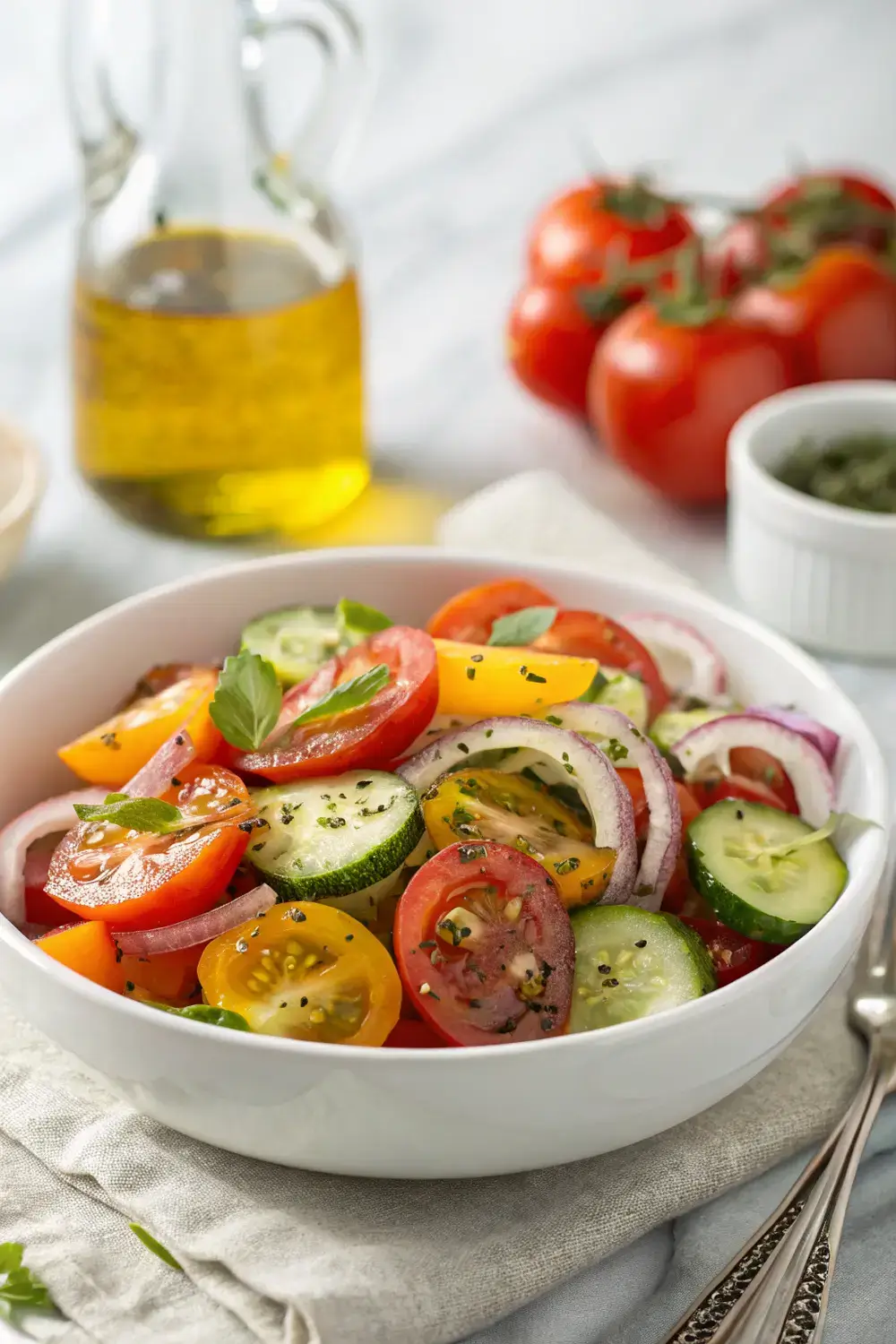
When the sun is blazing and the grill is smoking, nothing beats a fresh, crisp salad to balance the richness of summer meals. This Tomato Cucumber Onion Salad isn’t just a side dish—it’s a celebration of the season’s best produce. With its vibrant colors and zesty dressing, it’s the kind of dish that disappears in minutes at picnics and family gatherings. Whether you’re feeding a crowd or just want something light and easy, this salad delivers.
The combination of juicy tomatoes, crunchy cucumbers, and sharp red onions creates a symphony of textures and flavors. But what makes this recipe truly special is the simplicity of the dressing—just a handful of pantry staples you probably already have. No fancy ingredients or complicated techniques, just a straightforward toss that comes together in under 10 minutes.
What Makes This Salad a Summer Favorite?
This salad is a chameleon. It’s equally at home alongside grilled chicken, tucked into a sandwich, or served as a light lunch with some crusty bread. The acidity in the dressing helps cut through the heat, making it a refreshing counterpoint to heavier dishes. Plus, it’s incredibly versatile. Don’t have cherry tomatoes? Use grape tomatoes instead. Want to add some herbs? Fresh basil or parsley work beautifully. Need to make it heartier? Throw in some chickpeas or avocado.
The beauty lies in its adaptability. No matter how you tweak it, the core remains the same: fresh, simple, and satisfying. Let’s dive into how to make this summer essential.
Ingredients Explained: Building Flavor with Every Bite
Before we get cooking, let’s talk about the ingredients that make this salad shine. Each component plays a crucial role in creating the perfect balance of flavor and texture.
Fresh Produce Essentials
- Tomatoes: For the best flavor, use ripe, in-season tomatoes. Heirloom varieties add a burst of color, while cherry or grape tomatoes offer convenience and sweetness. Avoid overripe or mushy ones, as they can make the salad watery.
- Cucumbers: English or Persian cucumbers are ideal because they have fewer seeds and a crisp texture. If using regular cucumbers, peel them and remove the seeds to prevent excess moisture.
- Red Onion: Adds a sharp bite that balances the sweetness of the tomatoes. If you’re sensitive to raw onions, soak the slices in cold water for 10 minutes to mellow their flavor.
The Zesty Dressing
- Olive Oil: Provides a smooth base for the dressing. Extra virgin olive oil adds a rich, peppery note.
- Lemon Juice: Freshly squeezed lemon juice gives the salad a bright, citrusy kick. White wine vinegar or apple cider vinegar are great alternatives if you prefer a milder tang.
- Honey: Just a touch of sweetness helps round out the acidity. Substitute with maple syrup for a vegan version.
- Salt & Pepper: Enhances all the flavors. Use flaky sea salt for a subtle crunch.
Optional Boosters
- Fresh Herbs: Basil, parsley, or dill add a fragrant layer. Chop them just before mixing to preserve their freshness.
- Feta Cheese: For a creamy, salty element. Crumbled feta pairs especially well with the sharp onions.
- Olives: Kalamata or green olives bring a briny contrast that complements the tomatoes beautifully.
Step-by-Step Instructions: How to Make the Perfect Salad
Now that we’ve covered the ingredients, let’s walk through the process of making this salad. Don’t worry if you’re new to cooking—this recipe is designed for everyone, from kitchen novices to seasoned cooks.
Prep Work: Setting the Stage
Start by washing all your vegetables thoroughly. For the cucumbers, slice them into half-moons or rounds, depending on your preference. If using cherry tomatoes, halve them gently to avoid squishing. The key here is uniformity in size so each bite has a little of everything.
For the red onion, slice it thinly against the grain. This makes it easier to chew and distributes its sharpness evenly. If the raw onion feels too intense, give it a quick rinse in cold water and pat dry.
Mixing the Dressing
In a small bowl, whisk together the olive oil, lemon juice, honey, salt, and pepper. Taste and adjust the seasoning—add more honey if it’s too tart or a pinch more salt if it feels flat. This dressing should be bright and zesty, not overpowering.
Pro tip: Let the dressing sit for a few minutes to allow the flavors to meld. This ensures every bite is perfectly seasoned.
Assembly Time
In a large bowl, combine the tomatoes, cucumbers, and onions. Pour the dressing over the top and toss gently to coat everything evenly. Avoid overmixing; you want the vegetables to stay intact. If adding herbs or cheese, fold them in last to maintain their fresh flavors.
Let the salad sit for 5–10 minutes before serving. This gives the onions time to soften slightly and the flavors to harmonize. However, if you’re preparing it ahead of time, wait to add the herbs until right before serving to keep them vibrant.
Cooking Variations: Making It Your Own
While this salad is delicious as-is, there’s room for creativity. Here are some ideas to customize it based on your taste or dietary needs:
Mediterranean Twist
Add a handful of pitted Kalamata olives, some crumbled feta, and a sprinkle of oregano. This version pairs beautifully with grilled lamb or falafel.
Creamy Avocado Upgrade
Slice in a ripe avocado just before serving. The creaminess balances the acidity and adds healthy fats. Drizzle a bit of extra lemon juice over the avocado to prevent browning.
Asian-Inspired Flair
Replace the honey with a splash of sesame oil and a teaspoon of soy sauce. Top with sesame seeds and chopped cilantro for an umami-rich twist.
Make It a Meal
Toss in a can of rinsed chickpeas or white beans for plant-based protein. Add some chopped bell peppers or radishes for extra crunch. This turns your salad into a satisfying main dish.
Storage and Serving Tips
Since this salad is best served fresh, it’s important to know how to store it properly. Here’s how to keep it tasting its best:
Storing Leftovers
If you have leftovers, transfer the salad to an airtight container and refrigerate. It’s best consumed within 24 hours, as the cucumbers will start to release water and soften. To extend its shelf life, keep the dressing separate and toss it in just before serving.
Freezing Considerations
This salad isn’t ideal for freezing due to the fresh vegetables. However, you can prep the ingredients in advance and store them separately. Keep the dressing in a sealed jar in the fridge for up to a week.
Serving Suggestions
Serve this salad chilled, paired with grilled chicken, fish, or tofu. It’s also fantastic as a topping for burgers or as a filling for wraps. For a light lunch, add some quinoa or farro to make it more substantial.
Common Mistakes to Avoid
Even the simplest recipes can have pitfalls. Here are the most common errors people make and how to sidestep them:
- Over-Marinating: While the salad benefits from a short rest, leaving it too long can cause the vegetables to lose their crunch. Stick to 10 minutes max unless you’re preparing it ahead.
- Using Watery Veggies: Salting cucumbers and tomatoes lightly and letting them sit in a colander for 10 minutes can draw out excess moisture. Pat them dry before assembling.
- Ignoring Seasoning: Taste the dressing before adding it to the salad. Adjust the salt, acid, and sweetness to your liking.
- Adding Delicate Herbs Too Early: Fresh herbs like basil or parsley can wilt quickly. Add them just before serving to preserve their flavor and color.
- Not Draining Onions: Raw onions can overpower the dish. If you’re worried about their intensity, rinse the slices in cold water first.
Frequently Asked Questions
Here are answers to the most common questions about this salad:
Can I use different types of tomatoes?
Absolutely! Cherry tomatoes are great for sweetness, while Roma tomatoes offer a meatier texture. Just avoid overripe or bruised ones to keep the salad fresh.
How long does it last in the fridge?
It’s best eaten within a day. After that, the cucumbers may soften and the onions can intensify in flavor. Store the dressing separately to maintain freshness.
What if I don’t have red onion?
White or yellow onions work fine, but they’re more pungent. Soak the slices in cold water for 10 minutes to mellow their bite.
Can I make it ahead of time?
Yes, but keep the ingredients separate. Mix the salad just before serving to prevent it from getting soggy. The dressing can be prepared up to a week in advance.
Is there a substitute for honey?
Maple syrup or agave nectar are great vegan alternatives. You can also use a pinch of sugar if you prefer.
What’s the best way to slice cucumbers?
English cucumbers don’t need peeling, but regular ones do. Slice them into rounds or half-moons for even pieces. Removing seeds helps reduce moisture.
Conclusion: Your Summer Table’s New Best Friend
This Tomato Cucumber Onion Salad is more than just a side dish—it’s a versatile, refreshing addition to any meal. Whether you’re hosting a backyard BBQ or just want something light for dinner, it’s a recipe that never fails to impress. With its simple ingredients and easy preparation, it’s perfect for busy cooks who still want to serve something special.
So grab those fresh veggies, whip up the zesty dressing, and get ready to enjoy a salad that’s as vibrant as your summer days. Don’t forget to save this recipe for your next gathering—it’s sure to become a staple in your kitchen. Happy cooking!