There is something undeniably magical about summer baking. The kitchen warms up with the scent of ripe fruit and butter, the oven hums a low, comforting tune, and the result is almost always a dish that brings people straight to the table with spoons in hand. Among all the seasonal treats I look forward to every year—peach pies, blueberry buckles, strawberry shortcakes—this Fresh Blackberry Cobbler holds a special place in my heart. It is the definition of rustic elegance: zero fuss, maximum flavor, and a texture contrast that dreams are made of.
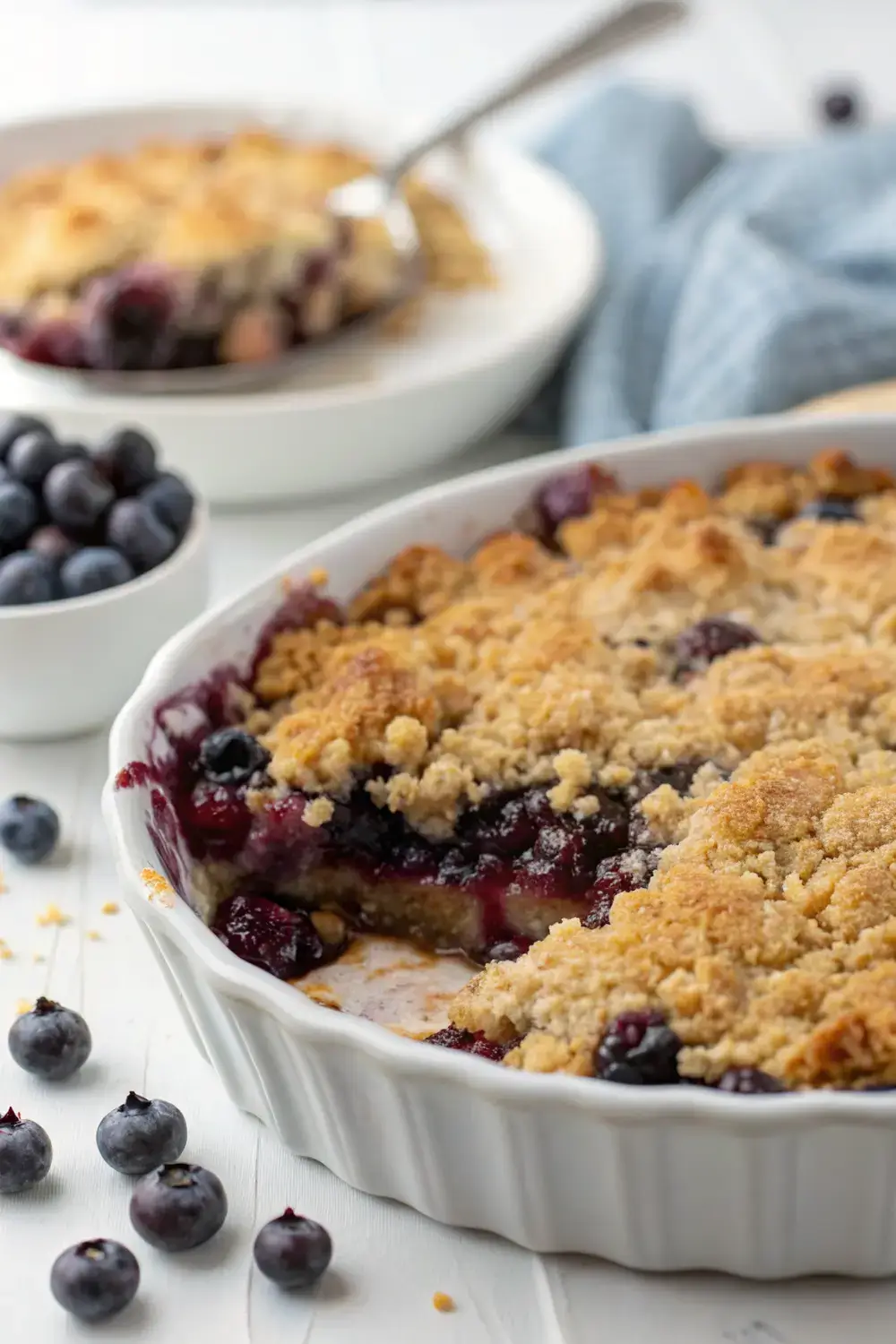
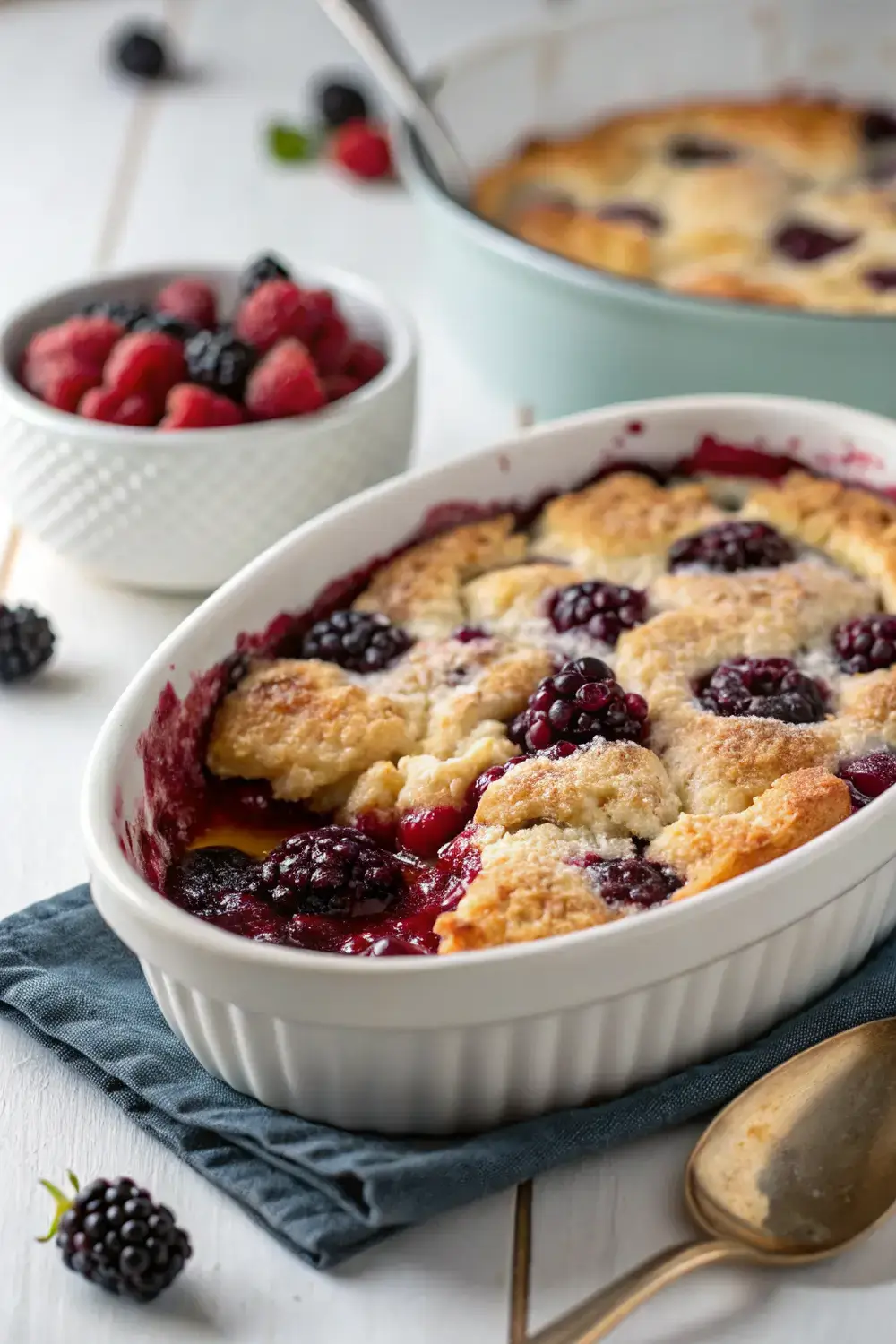
Imagine this: a bubbling, jammy layer of deep purple blackberries, sweetened just enough to highlight their natural tartness, topped with mounds of golden, buttery biscuit dough that puff up into craggy, crisp peaks. You scoop a generous portion into a bowl, the steam rising carrying notes of vanilla and lemon zest, and top it with a melting scoop of vanilla bean ice cream. The cold cream cuts through the warm, juicy fruit and the tender crumb of the topping. It is pure comfort in a cast-iron skillet or a ceramic baking dish.
What I love most about this recipe is its accessibility. You do not need a stand mixer, a rolling pin, or a pastry degree. If you can stir a bowl and drop spoonfuls of dough, you can make this cobbler. It comes together in about fifteen minutes of active prep time, making it the perfect “company’s coming” dessert or a well-deserved weeknight treat for the family. It scales beautifully for a crowd, travels well to potlucks (reheat it when you arrive!), and uses ingredients you likely already have in your pantry and fridge.
In this post, I am walking you through every single step to guarantee success. We will talk about picking the best berries, the secret to a flaky biscuit topping that doesn’t turn tough, how to adjust the sugar based on your fruit’s sweetness, and all the ways you can customize this to fit dietary needs or flavor preferences. By the end, you will have the confidence to whip this up anytime the blackberry craving hits—which, let’s be honest, is all summer long.
Why This Blackberry Cobbler Recipe Works Every Time
I have tested a lot of cobbler recipes over the years. Some have soggy bottoms. Some have tough, rubbery toppings. Some taste like plain flour and sugar with fruit hiding underneath. This specific formula solves all of those problems through a few key techniques:
- Macerating the berries: We toss the fresh blackberries with sugar, lemon juice, and a touch of cornstarch (or tapioca starch) and let them sit. This draws out the juices, dissolves the sugar, and creates a natural syrup that thickens beautifully in the oven without turning into glue.
- Cold butter is non-negotiable: Just like pie crust or scones, the biscuit topping relies on cold butter cutting into the flour to create steam pockets. Those pockets equal flakiness. I grate frozen butter directly into the flour—it is the fastest, easiest way to get perfect distribution without overworking the dough.
- Buttermilk for tang and tenderness: The acidity in buttermilk reacts with the baking powder and baking soda for a great rise, while tenderizing the gluten strands so the topping stays soft and cakey on the inside, crisp on the outside.
- High heat bake: We bake at 400°F (200°C). This ensures the topping sets and browns quickly before the fruit juices can seep up and make the bottom dough gummy.
The result is a cobbler that looks bakery-worthy but requires a fraction of the effort. It is the dessert I bring to every Fourth of July barbecue, every Labor Day picnic, and every “just because” Sunday dinner.
Ingredients Deep Dive: What You Need and Why
Great baking starts with understanding your ingredients. Because this recipe has a short list, the quality of each component shines through. Here is exactly what you need, plus notes on substitutions and selection.
For the Blackberry Filling
- Fresh Blackberries (6 cups / approx. 24 oz / 3 pints): This is the star. Look for berries that are plump, deeply colored (almost black-purple), and fragrant. Avoid containers with juice stains at the bottom—that indicates crushed or overripe fruit. If you must use frozen, do not thaw them first; toss them frozen with the sugar and starch, and add 5–10 minutes to the bake time.
- Granulated Sugar (¾ to 1 cup): The range depends on your berries. Wild or very tart berries need the full cup. Supermarket berries at peak season might only need ¾ cup. Taste one! If it makes you pucker, go higher.
- Light Brown Sugar (2 tablespoons): Just a touch adds a subtle molasses warmth and helps the juices caramelize at the edges. Don’t skip it.
- Cornstarch or Tapioca Starch (3 tablespoons): This thickens the juices into a luscious, glossy sauce. Tapioca starch (sometimes labeled tapioca flour) creates a clearer, slightly more gel-like texture that freezes better. Cornstarch is perfectly fine and more common. Arrowroot works too but can break down under high prolonged heat.
- Fresh Lemon Juice (1 tablespoon) and Zest (1 teaspoon): Acid is crucial. It balances the sugar, brightens the “jammy” flavor, and prevents the filling from tasting flat. Always use fresh; bottled lemon juice has a harsh, metallic aftertaste.
- Vanilla Extract (1 teaspoon): Pure vanilla extract rounds out the tartness. Imitation works in a pinch, but pure makes a difference in a simple recipe.
- Pinch of Salt: Enhances all the other flavors. Don’t leave it out.
For the Buttery Biscuit Topping
- All-Purpose Flour (2 cups / 250g): Spoon and level your flour! Do not scoop the measuring cup into the bag; you will pack it down and get too much flour, leading to a dense, dry topping. Weighing it (250g) is the most accurate method.
- Granulated Sugar (¼ cup / 50g): Sweetens the dough just enough to taste like a dessert biscuit, not a dinner roll.
- Baking Powder (2 ½ teaspoons): The primary leavener. Check the expiration date! Old baking powder = flat, dense biscuits.
- Baking Soda (½ teaspoon): Reacts with the buttermilk for extra lift and browning.
- Fine Sea Salt (1 teaspoon): If using kosher salt (like Diamond Crystal), use 1 ½ teaspoons.
- Unsalted Butter (½ cup / 1 stick / 113g), COLD and cubed (or frozen): This is the flavor and the flake. Unsalted lets you control the salt. European-style butter (higher fat, lower water) makes an even richer, flakier topping if you can find it (Kerrygold, Plugrá).
- Buttermilk (¾ cup / 180ml), well-shaken and COLD: The tang and fat content are essential. No buttermilk? See the substitutions section below for a quick DIY version.
- Coarse Sugar (Turbinado or Demerara) for sprinkling: This gives that professional bakery “sparkle” and a delightful crunch on the crust. Regular granulated sugar works but melts faster.
Equipment You Will Need
Keep it simple. You likely own all of these:
- 9×13 inch baking dish (ceramic, glass, or metal) OR a 10-inch cast iron skillet OR a 9-inch square pan for a deeper cobbler. A 2.5 to 3-quart capacity is ideal.
- Large mixing bowl for the filling.
- Large mixing bowl for the topping (or a food processor, see tips).
- Pastry cutter, two forks, or a box grater for cutting in butter.
- Measuring cups and spoons (or a kitchen scale).
- Microplane or zester for lemon zest.
- Rubber spatula or large spoon for dolloping dough.
- Baking sheet to place under the dish—blackberry juices will bubble over and burn on your oven floor.
Step-by-Step Instructions: Let’s Bake!
1. Prep and Preheat
Position a rack in the center of your oven and preheat to 400°F (200°C). This high heat is critical for the rise. Place your empty baking dish on a rimmed baking sheet (lined with foil or parchment for easy cleanup if you like) and set aside.
2. Make the Filling
In a large bowl, combine the 6 cups fresh blackberries, ¾ to 1 cup granulated sugar, 2 tablespoons light brown sugar, 3 tablespoons cornstarch (or tapioca starch), 1 tablespoon fresh lemon juice, 1 teaspoon lemon zest, 1 teaspoon vanilla extract, and a pinch of salt.
Technique Tip: Use a large spoon or flexible spatula to gently fold everything together. You want the berries coated, not crushed. Some breakage is inevitable and fine—it just makes more sauce. Once coated, let this bowl sit on the counter while you make the topping. This 10–15 minute rest allows the sugar to dissolve and the starch to hydrate, preventing a chalky texture in the final sauce.
3. Make the Biscuit Topping (The “Grate & Shake” Method)
In a separate large bowl (or the bowl of a food processor), whisk together the 2 cups flour, ¼ cup sugar, 2 ½ tsp baking powder, ½ tsp baking soda, and 1 tsp salt. Whisk well for 30 seconds to distribute the leaveners evenly.
Now for the butter. You have two excellent options:
- Box Grater Method (My Favorite): Take your frozen stick of butter (pop it in the freezer for 20 mins beforehand) and grate it on the large holes of a box grater directly into the flour mixture. Toss with a fork to coat the shreds in flour. This creates perfect, uniform, cold butter pieces in seconds.
- Pastry Cutter / Two Forks Method: Cube cold butter and toss into flour. Cut in until the mixture resembles coarse crumbs with some pea-sized pieces of butter remaining. Work fast to keep butter cold.
Food Processor Option: Pulse dry ingredients 3 times. Add cold butter cubes. Pulse 6–8 times until coarse crumbs form. Transfer to bowl.
Make a well in the center of the flour/butter mixture. Pour in the ¾ cup cold buttermilk. Using a fork or sturdy spatula, stir just until combined. The dough will look shaggy, sticky, and lumpy. Stop mixing! Overmixing develops gluten and makes tough biscuits. A few streaks of flour are okay; they will hydrate in the oven.
4. Assemble
Give the blackberry mixture one gentle stir. Pour it into your prepared baking dish (on the sheet pan). Spread it into an even layer.
Using a large spoon or a ¼ cup measure (or an ice cream scoop), drop mounds of the biscuit dough over the fruit. Leave a little space between mounds—the steam needs to escape, and the dough will spread and rise. You should get 8–10 nice-sized biscuits. Do not spread the dough to the edges like a pie crust; the “cobblestone” look is the goal.
Brush the tops of the raw dough mounds lightly with a splash of buttermilk or heavy cream (optional, but helps browning). Generously sprinkle the tops with coarse sugar (Turbinado).
5. Bake
Place the sheet pan in the oven. Bake for 35 to 45 minutes.
Visual Doneness Cues:
- The topping is a deep, golden brown (not pale blond).
- The fruit juices are bubbling vigorously and thickly around the edges and visibly bubbling up through the cracks in the biscuits in the center.
- A toothpick inserted into the center of a biscuit (avoiding fruit) comes out clean or with just a few moist crumbs—no raw, wet dough.
If the tops are browning too fast (over 375°F oven hot spots), tent loosely with foil for the last 10 minutes.
6. The Most Important Step: REST
Remove from oven. Let it rest for at least 20–30 minutes. I know, the smell is torture. But the filling is molten lava hot and very thin. As it cools, the starch finishes setting up into that perfect, spoonable jam consistency. If you cut into it immediately, it will run like soup. Warm is the ideal serving temperature, not scorching.
7. Serve
Scoop generous portions into bowls. Top with vanilla bean ice cream, lightly sweetened whipped cream, or a drizzle of heavy cream. A sprig of mint makes it pretty for guests.
Pro Tips for the Absolute Best Cobbler
Don’t Wash Berries Until Ready to Use
Blackberries are delicate and mold quickly with moisture. Rinse them gently in a colander under cool water right before you start the recipe. Spread them on a clean kitchen towel or paper towels to air dry thoroughly. Excess water on the berries dilutes the filling and can make the topping soggy.
Taste Your Fruit
This is the number one secret of professional pastry chefs. Sugar content in fruit varies wildly by variety, weather, and ripeness. Pop a berry in your mouth. Is it intensely sweet? Dial back the sugar to ¾ cup. Is it mouth-puckeringly tart? Go for the full cup or even 1 ¼ cups. You are the boss of the sweetness.
Keep Everything Cold
Cold butter = flaky layers. Cold buttermilk = tender crumb. If your kitchen is hot, chill your flour bowl for 10 minutes before starting. Chill the mixing bowl for the topping. If the butter softens while you work, pop the whole bowl in the freezer for 5 minutes before adding the liquid.
Use a Sheet Pan
I cannot stress this enough. Blackberry juice + sugar + 400°F oven = cement-like burnt sugar on your oven floor. The rimmed baking sheet catches every bubble-over. Line it with foil or a silicone mat, and cleanup is zero effort.
Weigh Your Flour
Volume measuring (cups) is notoriously inaccurate for flour. 2 cups can vary from 240g to 280g depending on how you scoop. 250g on a scale is always 250g. A kitchen scale is a $15 investment that transforms your baking consistency.
Customizing the Flavor Profile
- Warm Spices: Add ½ tsp ground cinnamon, ¼ tsp nutmeg, or a pinch of cardamom to the flour mixture for a cozy vibe.
- Herbs: 1 tablespoon finely chopped fresh thyme or basil in the filling is surprisingly sophisticated with blackberries.
- Citrus Swap: Use lime zest and juice instead of lemon for a tropical twist.
- Almond: Add ½ tsp almond extract to the filling (go easy, it’s potent) or ¼ cup almond flour swapped into the topping.
- Boozy (Non-Alcoholic Note): While the prompt restricts alcohol, a teaspoon of vanilla bean paste or bourbon vanilla extract gives that depth without the liquor.
Variations and Substitutions
Gluten-Free Blackberry Cobbler
Swap the 2 cups all-purpose flour for a 1:1 Gluten-Free Baking Flour Blend (like King Arthur Measure for Measure, Cup4Cup, or Bob’s Red Mill 1:1). Ensure it contains xanthan gum. The dough will be slightly stickier; chill it 15 minutes before dropping onto the fruit. Bake time may need 5 extra minutes.
Dairy-Free / Vegan Blackberry Cobbler
- Butter: Use a high-quality vegan butter stick (Miyoko’s, Melt Organic, Country Crock Plant Butter) that is very cold. Grate it frozen.
- Buttermilk: Whisk ¾ cup unsweetened soy milk or oat milk (barista blends work best for fat content) with 1 tablespoon lemon juice or apple cider vinegar. Let sit 5 minutes to curdle/thicken.
- Brush: Use plant milk or melted vegan butter on top.
- Serve: With your favorite dairy-free ice cream (coconut, oat, or cashew based).
Lower Sugar Option
Reduce granulated sugar in filling to ½ cup (if berries are sweet). Use a monkfruit/erythritol blend 1:1 for the sugar in the topping and the coarse sugar sprinkle. Note: Sugar substitutes don’t caramelize or brown the same way; the topping will be paler.
Mixed Berry Cobbler
Blackberries play beautifully with others. Use 3 cups blackberries + 3 cups raspberries, blueberries, or sliced strawberries. Adjust starch slightly up (add 1 tsp more) if using very juicy berries like raspberries or thawed frozen fruit.
Peach Blackberry Cobbler
A classic Southern combo. Use 3 cups peeled, sliced fresh peaches (toss with lemon juice to prevent browning) and 3 cups blackberries. Increase starch to 4 tablespoons.
Individual Cobblers
Divide filling among 6–8 ramekins (8–10 oz size). Top with dough. Bake on a sheet pan at 400°F for 25–30 minutes. Adorable for dinner parties!
Storage and Reheating: Keeping It Fresh
Room Temperature (Day Of)
Cobbler is best eaten the day it is made. Cover loosely with foil or a clean kitchen towel (airtight traps steam and softens the topping). It sits happily on the counter for up to 12 hours.
Refrigerator (2–3 Days)
Once completely cooled, cover the baking dish tightly with plastic wrap or foil, or transfer portions to airtight containers. The topping will soften and absorb juices—it becomes more “cakey” than “biscuity,” which many people actually prefer on day two!
Freezing (Unbaked – Best Method)
Assemble the cobbler completely in a freezer-safe dish (foil pans work great). Do not bake. Wrap tightly in plastic wrap, then foil. Freeze up to 3 months. Bake from frozen at 375°F (lower temp so topping doesn’t burn before fruit cooks) for 55–70 minutes, until bubbling and golden.
Freezing (Baked)
Cool completely. Wrap tightly. Freeze up to 2 months. Thaw overnight in fridge. Reheat per instructions below.
Reheating
- Oven (Best for texture): 350°F. Cover with foil. Heat 15–20 minutes (single portion) or 25–30 minutes (whole dish). Remove foil last 5 minutes to re-crisp top.
- Microwave (Fastest): 60–90 seconds per serving. Topping will be soft.
- Air Fryer: 350°F for 5–7 minutes for a single serving in a ramekin. Crisps the top beautifully.
Common Mistakes and How to Avoid Them
1. The “Soup” Cobbler (Runny Filling)
Cause: Not enough thickener, not letting the filling rest after baking, or using frozen berries without extra starch.
Fix: Measure starch accurately. Let the macerated berries sit 15 mins before baking. Crucial: Rest the baked cobbler 30 mins minimum. If using frozen berries, add 1 extra tablespoon starch.
2. The “Brick” Topping (Tough, Dense, Flat)
Cause: Overmixing the dough, warm butter, old baking powder, too much flour (scooping cup), or oven not hot enough.
Fix: Mix dough barely 15 strokes. Use frozen grated butter. Check leavener dates. Weigh flour. Verify oven temp with an oven thermometer.
3. The “Pale & Soggy” Bottom (Raw Dough Under Fruit)
Cause: Oven too low, dough spread too thin/covering fruit completely, very wet fruit.
Fix: Bake at 400°F. Drop dough in mounds, leaving gaps for steam. Don’t press dough down. If fruit is very wet (thawed frozen), sprinkle 1 tbsp flour or starch over fruit before adding dough.
4. Burnt Edges, Raw Center
Cause: Dish too small/deep, oven hot spots.
Fix: Use a wide, shallow dish (9×13 or 10-inch skillet) rather than a deep 8×8. Rotate pan halfway through. Tent with foil if edges darken too fast.
5. Flavorless Filling
Cause: Under-ripe berries, no salt, no acid, not enough sugar.
Fix: Taste berries first! Adjust sugar. Never skip lemon juice/zest and salt. Add vanilla. Macerate the berries.
6. Using a “Non-Stick” Dark Metal Pan Without Adjusting
Cause: Dark pans absorb heat faster, burning the bottom biscuits.
Fix: Lower oven temp to 375°F if using dark metal or glass (Pyrex). Glass also conducts heat differently; check 5 mins early.
Frequently Asked Questions (FAQs)
Can I use frozen blackberries instead of fresh?
Absolutely! Do not thaw them. Toss the frozen berries directly with the sugar, starch, lemon, and vanilla. They will release more liquid as they bake, so increase the cornstarch or tapioca starch to 4 tablespoons (¼ cup). You will likely need to bake 5–10 minutes longer to ensure the center is bubbling thickly. The texture of the berries will be softer, more like jam, but the flavor is fantastic.
What is the difference between a cobbler, a crisp, a crumble, and a buckle?
Great question! They are all fruit desserts with toppings, but the topping defines the name.
Cobbler: Biscuit or cake-like dough dropped/spread over fruit (looks like cobblestones).
Crisp: Oat-based streusel topping (flour, butter, sugar, oats) that gets crispy.
Crumble: Similar to crisp but traditionally no oats—just flour, butter, sugar (streusel).
Buckle: Cake batter with fruit folded in or topped; the fruit sinks, “buckling” the cake.
My biscuit topping didn’t rise much. What happened?
Usually, this is one of three things: 1) Your baking powder or soda is expired (test it: ½ tsp powder in hot water should fizz violently; ½ tsp soda in vinegar should fizz). 2) The butter wasn’t cold enough, so it melted into the flour instead of creating steam pockets. 3) You overmixed the dough, developing gluten which makes it tough and dense rather than light and high. Remember: shaggy, lumpy dough = high, flaky biscuits.
Can I make the topping dough ahead of time?
Yes, but with a caveat. You can make the dry mix (flour, sugar, leaveners, salt) and cut in the butter, then freeze the crumbly mixture in a zip-top bag for up to a month. When ready to bake, dump it in a bowl, add cold buttermilk, and stir. Do not mix the wet dough and hold it; the baking powder will expend its energy, and the gluten will relax, resulting in flat, tough biscuits.
How do I know when the cobbler is truly done in the center?
Look for the “thick bubble.” The juices around the edges will bubble fast and thin. In the very center, the bubbles should be slower, larger, and thicker—like lava. Insert a toothpick into the center of a biscuit (not into a berry). It should come out clean or with moist crumbs, no wet batter. The internal temp of the biscuit should be around 200°F–205°F if you have a probe thermometer.
Can I reduce the sugar significantly?
You can reduce the sugar in the filling by up to half if your berries are very sweet, though the texture of the sauce will be thinner (sugar helps thicken via pectin interaction). I don’t recommend reducing the sugar in the biscuit topping below 2 tablespoons; it aids in browning, tenderness, and structure. The coarse sugar on top is purely for texture/looks and can be omitted.
What is the best ice cream pairing?
Classic Vanilla Bean is the gold standard—it’s a blank canvas. But Honey Vanilla, Salted Caramel, Lemon (double citrus!), Brown Butter Pecan, or even a good Coconut Milk based vanilla for dairy-free folks are incredible. A dollop of Crème Fraîche or Mascarpone whipped with a little powdered sugar and vanilla is a sophisticated, less sweet alternative to ice cream.
Can I bake this in a cast iron skillet?
Yes! A 10-inch or 12-inch cast iron skillet is my absolute favorite vessel for cobbler. The iron conducts heat evenly, giving the most incredibly crisp, buttery bottom crust on the biscuits. Preheat the skillet in the oven while it heats up (careful adding cold fruit to screaming hot iron—thermal shock risk). Better: assemble in the cold skillet and put it in the oven as it preheats, or just assemble and bake normally. The skillet retains heat, so the cobbler stays warm longer at the table.
Conclusion: Your New Summer Staple
There you have it—everything you need to bake the most glorious Fresh Blackberry Cobbler of your life. It is a recipe that proves you don’t need complicated techniques or fancy equipment to create a dessert that stops conversation at the table. It is humble ingredients treated with respect: cold butter, ripe fruit, a hot oven, and a little patience while it rests.
Whether you are baking this for a holiday weekend crowd, a quiet Tuesday night treat with a good book, or packing it up for a neighbor who needs a pick-me-up, this cobbler delivers. It carries the taste of summer sunshine in every purple-stained spoonful. The contrast of the tart, jammy berries against the sweet, tender, golden crust is the kind of simple perfection that creates core memories.
So, hit that farmers market or grocery store, grab those pints of inky-black jewels, and preheat your oven. I promise you, the smell alone is worth the effort. Don’t forget to let it rest (the hardest part!), scoop it warm into your favorite bowl, and pile on the vanilla ice cream.
If you make this recipe, I would absolutely love to hear how it turned out! Leave a comment below with a star rating, snap a photo and tag me on social media, or send it to a friend who needs a little berry magic in their life. Happy baking, friends!