Table of Contents
- 1 The Meaning Behind Lucky New Year Foods
- 2 Introducing the Lucky New Year’s Dinner
- 3 Ingredients for This Lucky New Year’s Dinner
- 4 How to Prepare the Lucky New Year’s Dinner
- 5 Why This Dish Is Perfect for New Year’s Day
- 6 Flavor Variations
- 7 Serving Ideas
- 8 Tips for a Meaningful New Year’s Dinner Tradition
- 9 How to Meal Prep This Dish
- 10 Storage and Leftover Tips
- 11 Nutritional Benefits of This Lucky Meal
- 12 Frequently Asked Questions
- 13 Final Thoughts
The Meaning Behind Lucky New Year Foods
Food traditions exist because they make people feel connected—to culture, to history, to family, and to hope. When we choose ingredients symbolizing good fortune, we’re not only feeding our bodies; we’re symbolically feeding our intentions for the new year.
Legumes: A Symbol of Prosperity
Beans, lentils, and peas—especially black eyed peas—are believed to represent wealth because their round shape resembles coins. They expand as they cook, symbolizing growth and abundance.
Leafy Greens: Representing Money and Fresh Starts
Greens like kale, spinach, collard greens, or chard resemble folded bills. Eating greens on New Year’s Day is believed to encourage financial growth and luck.
Golden Vegetables: Hope, Warmth, and Prosperity
Carrots, sweet potatoes, and corn carry a golden hue associated with fortune, sunlight, and a “bright” year ahead.
Grains: Stability and Foundations
Rice, quinoa, or barley symbolize a strong foundation and nourishment. They’re comforting, grounding, and perfect for winter meals.
Introducing the Lucky New Year’s Dinner
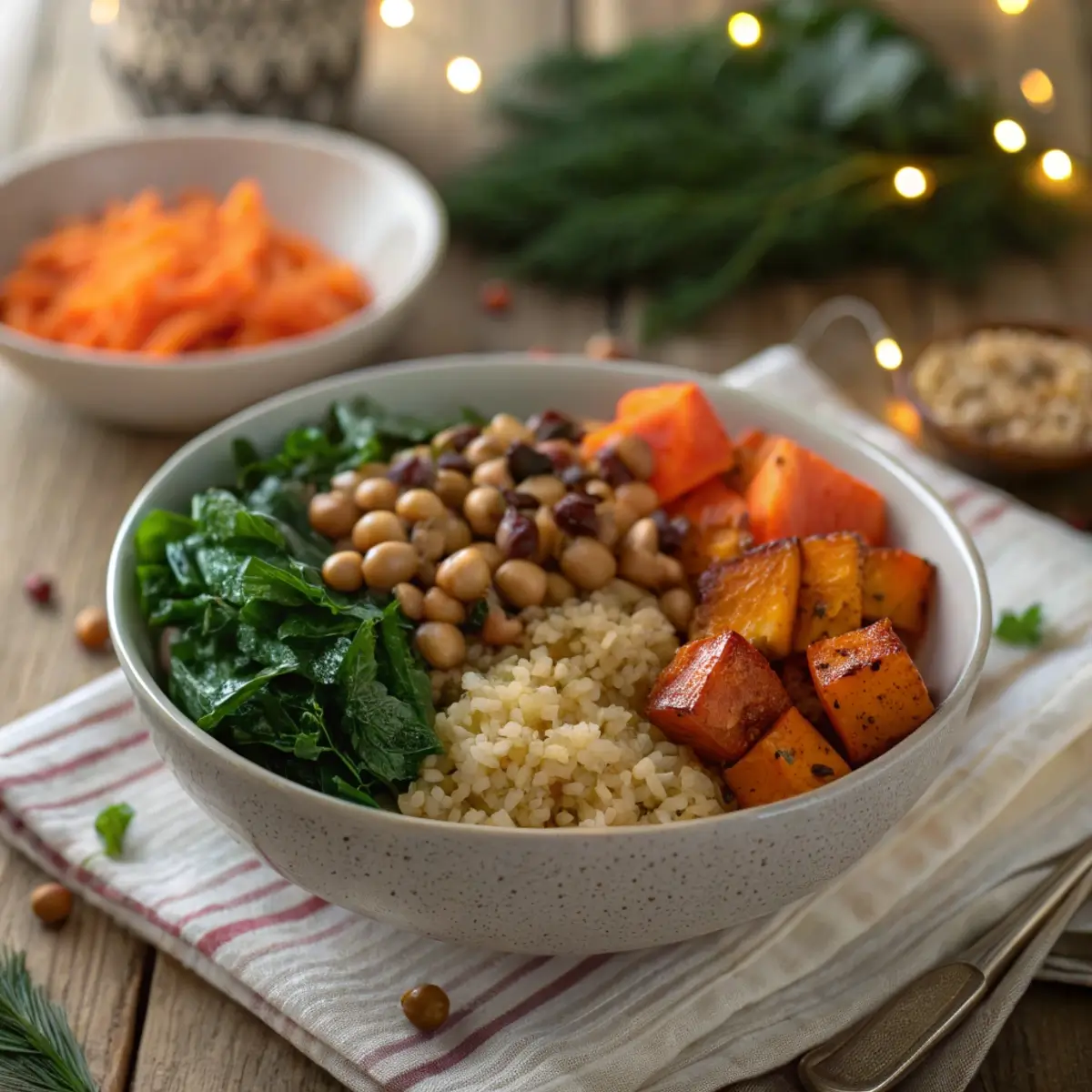
This recipe builds a hearty, symbolic bowl featuring:
Tender black eyed peas (abundance)
Sautéed kale or spinach (growth and prosperity)
Sweet potatoes and carrots (good fortune and warmth)
Aromatic herbs (fresh energy)
A base of fluffy rice or quinoa (stability for the year)
The result is a layered, comforting, nourishing dinner that looks beautiful and carries meaningful intention. It’s a naturally wholesome, alcohol-free, pork-free, bacon-free dish suitable for all ages.
Ingredients for This Lucky New Year’s Dinner
Base Components
2 cups cooked rice or quinoa
Optional: brown rice for extra fiber
For the Black Eyed Peas
2 tbsp olive oil
1 medium onion, diced
3 cloves garlic, minced
2 cups cooked black eyed peas (or canned, rinsed)
1 tsp smoked paprika
1 tsp dried thyme
½ tsp turmeric for golden color and warmth
Salt and black pepper to taste
¼ cup vegetable broth (to keep the peas moist and flavorful)
For the Greens
2–3 cups chopped kale, collards, chard, or spinach
1 tbsp olive oil
1 clove garlic, minced
Pinch of salt
Optional: red pepper flakes for a little heat
For the Roasted Sweet Potatoes and Carrots
2 cups sweet potato cubes
1 cup sliced carrots
1–2 tbsp olive oil
½ tsp cumin
½ tsp paprika
Salt to taste
Optional Lucky Add-Ins
Corn kernels for golden sweetness
Fresh herbs for brightness
Lemon for cleansing “new beginning” symbolism
How to Prepare the Lucky New Year’s Dinner
Preparing the Base
Cook your rice or quinoa first, since it takes the longest. Keep it covered and warm until serving time.
Preparing the Black Eyed Peas
Heat olive oil in a skillet. Add onions and sauté until soft. Stir in garlic until fragrant. Add black eyed peas, paprika, thyme, turmeric, salt, pepper, and a splash of vegetable broth. Simmer for 5–8 minutes until warmed through and aromatic.
Preparing the Greens
Warm olive oil in a skillet. Add garlic, then pile in your greens. Cook until wilted and tender. Season lightly with salt and pepper.
Roasting the Sweet Potatoes and Carrots
Preheat the oven to 400°F (204°C). Toss sweet potatoes and carrots with olive oil, paprika, cumin, and salt. Spread on a baking sheet and roast 20–30 minutes or until beautifully caramelized.
Assembling the Lucky Bowl
In a deep bowl, layer:
A scoop of rice or quinoa
A generous portion of black eyed peas
Roasted golden vegetables
A handful of sautéed greens
Optional herbs, lemon, or seeds
Serve warm, ideally shared with family or loved ones.
Why This Dish Is Perfect for New Year’s Day
It’s comforting and symbolic
Every ingredient brings meaning without being heavy or complicated.
It’s nourishing
Packed with fiber, antioxidants, healthy fats, plant-based protein, and slow-digesting carbohydrates.
It’s visually beautiful
A bowl filled with greens, oranges, golds, and earthy tones creates a festive New Year presentation.
It’s easy to customize
You can adapt it to dietary needs, preferences, or whatever ingredients you already have.
Flavor Variations
For a Spicier Version
Add chili flakes to the greens
Stir in jalapeño to the peas
Add cayenne to the roasted vegetables
For a Creamier Version
Stir in a spoonful of tahini or coconut milk into the peas.
For More Freshness
Top with:
Lemon zest
Parsley
Cilantro
Scallions
For a Smokier Flavor
Use smoked paprika or add charred roasted peppers.
Serving Ideas
Make It a Family-Style Spread
Place each component in its own serving dish so everyone can build their own “lucky bowl.”
Serve as a One-Bowl Meal
Perfect for cozy nights, solo bites, or simple family dinners.
Pair With:
Warm flatbread
A fresh green salad
A warm vegetable soup
Tips for a Meaningful New Year’s Dinner Tradition
Set the Table with Intention
Use candles, simple greenery, or warm colors.
Share a Reflection Moment
Before eating, each person can share one intention or gratitude for the year ahead.
Enjoy the Meal Slowly
This dinner is as much about presence as it is about flavor.
How to Meal Prep This Dish
Cook Ahead
Black eyed peas stay good for up to 3–4 days.
Roasted vegetables reheat well.
Rice keeps for several days and can be revived with a splash of water.
Store Components Separately
This helps maintain texture and freshness.
Assemble When Ready
Just reheat, plate, and enjoy.
Storage and Leftover Tips
Refrigeration
Keep in airtight containers for up to 4 days.
Freezing
The peas and vegetables freeze well; greens are better fresh.
Reheating
Warm gently on the stovetop or in the microwave with a splash of broth.
Nutritional Benefits of This Lucky Meal
Rich in Fiber
Supports digestion and satiety.
Packed with Protein
Black eyed peas and quinoa provide complete nourishment.
High in Antioxidants
Sweet potatoes, carrots, greens, and onions support overall wellness.
Balanced Macronutrients
Carbs, proteins, and fats come together for sustained energy.
Frequently Asked Questions
Can I use lentils instead of black eyed peas?
Yes, though black eyed peas are more symbolic for New Year’s luck.
Can I substitute kale with spinach?
Absolutely—any leafy green works beautifully.
Does this recipe work for vegan or vegetarian diets?
Yes, it’s completely plant-based.
What can I use instead of rice?
Quinoa, barley, couscous, or cauliflower rice.
Can I make this without roasting the vegetables?
Yes—steam or sauté them if you prefer.
Can children eat this dish?
Definitely; you can soften the seasoning if needed.
Does this dish taste good the next day?
It often tastes even better after the flavors blend overnight.
Final Thoughts
A Lucky New Year’s Dinner is more than a recipe—it’s a ritual of hope. This wholesome bowl brings together intention, symbolism, warmth, and comfort to help set a positive tone for the year. Whether you prepare it for tradition, nourishment, or simply to enjoy a delicious homemade meal, it creates a meaningful moment that lingers long after the table is cleared.
May this comforting, symbolic dish bring joy, good health, and prosperity into your home as the new year begins.