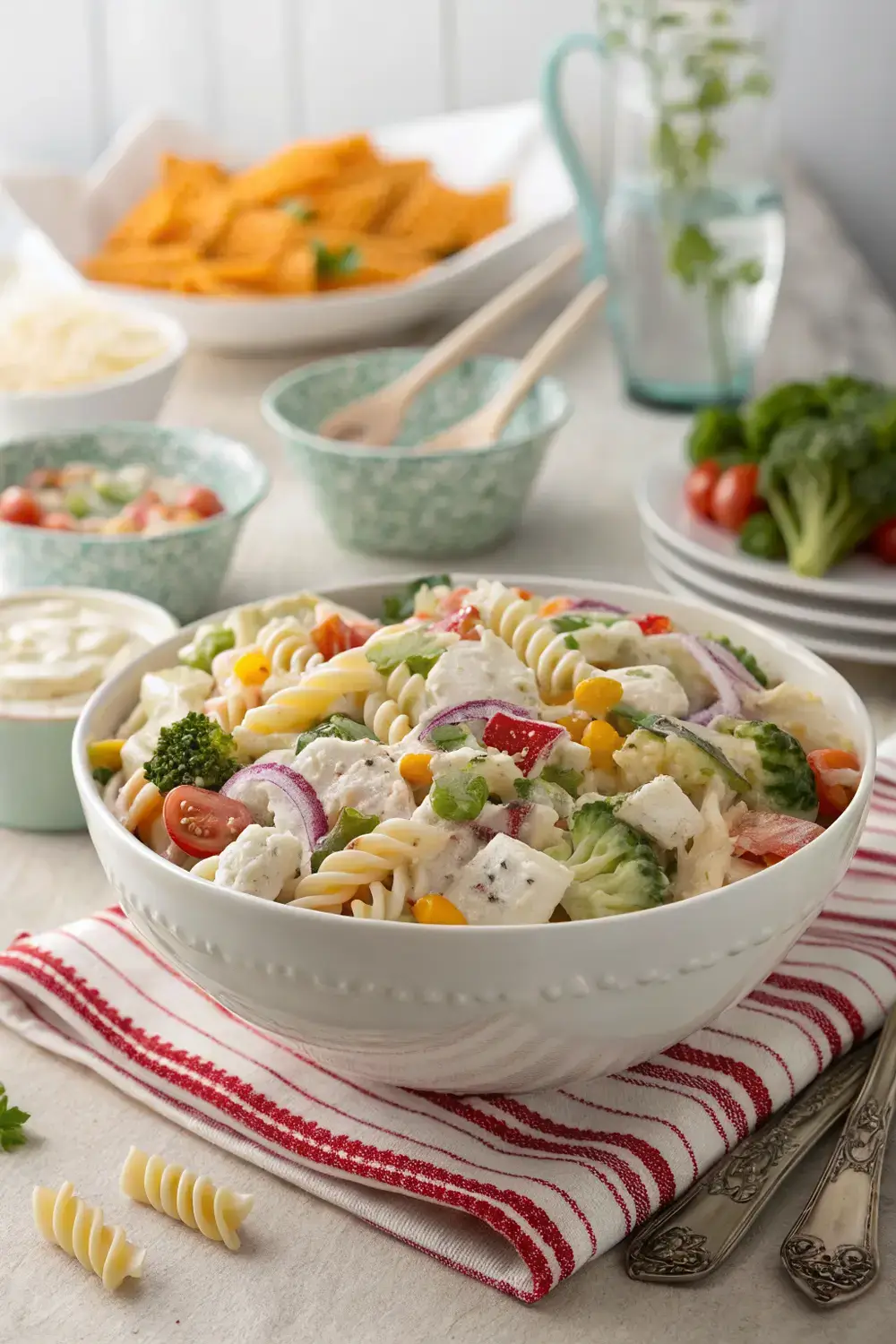
Turn every family get‑together into a culinary celebration with this crowd‑pleasing Classic Ranch Pasta Salad. Light, creamy, and packed with fresh veggies, this recipe blends al dente pasta with crisp cucumbers, sweet bell peppers, juicy tomatoes, and a zesty ranch dressing that everyone will rave about. With no pork or alcohol, it’s perfect for all ages and dietary preferences. Serve a generous portion at your next gathering, and watch it disappear in minutes!
Introduction
There’s something magical about a big bowl of pasta salad sitting on a picnic table, surrounded by laughter and the clink of glasses. It’s the kind of dish that invites everyone to grab a fork, scoop a hearty portion, and linger a little longer over conversation. This Classic Ranch Pasta Salad captures that spirit perfectly. The creamy ranch dressing coats each bite of tender pasta, while crisp vegetables add a refreshing crunch that balances the richness. Because it’s made without any pork or alcohol, it fits comfortably into a wide range of diets, making it a safe bet for family reunions, birthday parties, potlucks, or even a simple weeknight dinner.
What sets this version apart is the attention to texture and flavor. The pasta is cooked just shy of fully soft so it holds up to the dressing without becoming mushy. The vegetables are cut into uniform pieces, ensuring every spoonful delivers a mix of sweet, tangy, and crisp notes. The homemade ranch dressing—bright with herbs, a touch of tang from buttermilk, and a whisper of garlic—elevates the salad from ordinary to unforgettable. Best of all, the recipe is straightforward enough for beginners yet flexible enough for seasoned cooks to tweak according to taste or what’s on hand.
In the sections that follow, you’ll find a detailed ingredient list with explanations for each component, step‑by‑step instructions that guide you from pot to plate, helpful tips to avoid common pitfalls, ideas for variations, storage advice, and a FAQ section that answers the questions most home cooks ask. Let’s dive in and create a salad that will become the highlight of your next gathering.
Ingredients
Below is each ingredient grouped by its role in the salad, along with a brief note on why it matters and any possible swaps.
Pasta Base
- 12 ounces (340 g) rotini, fusilli, or farfalle – These shapes have crevices that hold the dressing well. Choose a sturdy wheat pasta; if you prefer gluten‑free, look for a corn‑rice blend that maintains its shape after cooking.
- 1 tablespoon salt – For the pasta water; it seasons the noodles from the inside out.
- 1 tablespoon olive oil (optional) – Added to the boiling water to help prevent sticking, though a good stir usually does the trick.
Fresh Vegetables
- 1 medium cucumber (about 8 inches), peeled if the skin is thick, diced into ¼‑inch pieces – Adds cool crunch and moisture.
- 1 red bell pepper, diced – Provides sweetness and a pop of color.
- 1 yellow bell pepper, diced – Same reason as red; using both creates a vibrant rainbow.
- 1 cup cherry tomatoes, halved – Juicy bursts that balance the creaminess.
- ½ cup red onion, finely minced – Gives a mild bite; soak in cold water for 5 minutes if you prefer a softer flavor.
- ¼ cup fresh parsley, chopped – Bright herbaceous note that lightens the dressing.
- ¼ cup fresh dill, chopped – Classic ranch flavor; can be substituted with extra parsley if dill isn’t available.
Creamy Ranch Dressing
- ½ cup mayonnaise – Forms the rich base; you can use light mayo for fewer calories.
- ½ cup buttermilk – Adds tang and helps achieve a pourable consistency. If you don’t have buttermilk, mix ½ cup milk with ½ teaspoon lemon juice or white vinegar and let sit 5 minutes.
- 2 tablespoons sour cream or Greek yogurt – Contributes extra creaminess and a slight tang.
- 1 tablespoon apple cider vinegar – Brightens the dressing; white wine vinegar works as a substitute.
- 1 teaspoon Dijon mustard – Adds depth and helps emulsify the dressing.
- 1 teaspoon garlic powder – Distributes garlic flavor evenly without the risk of raw garlic bits.
- ½ teaspoon onion powder – Complements the garlic and enhances the savory backbone.
- ½ teaspoon dried dill weed – Reinforces the fresh dill; optional if you used plenty of fresh dill.
- ¼ teaspoon black pepper – Freshly ground for the best aroma.
- ¼ teaspoon salt – Adjust to taste after mixing.
- Optional: a pinch of smoked paprika – For a subtle, warm undertone.
Step‑by‑Step Instructions
Follow these directions closely, and you’ll have a bowl of salad that’s creamy, crisp, and perfectly seasoned.
1. Cook the Pasta
- Bring a large pot of water to a rolling boil. Add the tablespoon of salt and, if using, the olive oil.
- Add the pasta and cook according to the package directions until al dente—usually 8‑10 minutes for rotini. You want the noodles firm to the bite; they will soften slightly as they absorb the dressing.
- When the pasta is done, reserve ½ cup of the cooking water, then drain the noodles in a colander.
- Rinse the pasta under cold running water for about 30 seconds to stop the cooking process and to cool it down. Shake off excess water.
- Transfer the cooled pasta to a large mixing bowl. If you’re not ready to dress it yet, drizzle a teaspoon of olive oil over the noodles and toss gently to prevent sticking.
2. Prepare the Vegetables
- While the pasta cooks, wash all produce thoroughly.
- Peel the cucumber if desired, then dice into uniform ¼‑inch cubes. Uniform size ensures even distribution and a pleasant mouthfeel.
- Dice the red and yellow bell peppers into similar sized pieces.
- Halve the cherry tomatoes; if they’re particularly large, quarter them.
- Mince the red onion finely. To tame its sharpness, place the minced onion in a bowl of cold water for five minutes, then drain and pat dry.
- Chop the parsley and dill. Keep the herbs slightly moist; they’ll release their aroma into the dressing.
- Combine all the prepared vegetables in a separate bowl and set aside.
3. Make the Ranch Dressing
- In a medium whisking bowl, combine the mayonnaise, buttermilk, sour cream (or Greek yogurt), apple cider vinegar, and Dijon mustard. Whisk until smooth.
- Add the garlic powder, onion powder, dried dill weed, black pepper, and salt. Whisk again to incorporate the spices evenly.
- Taste the dressing. It should be creamy, tangy, and herbaceous. If you prefer a thinner consistency, drizzle in a little of the reserved pasta water, one tablespoon at a time, until you reach the desired texture. For a richer dressing, add an extra teaspoon of sour cream.
- If using, stir in the pinch of smoked paprika now.
- Finally, fold in the chopped fresh parsley and dill. The herbs will give the dressing a fresh, vibrant speckle.
4. Combine Pasta, Vegetables, and Dressing
- Add the diced vegetables to the bowl of cooled pasta. Toss gently to distribute them evenly.
- Pour the ranch dressing over the pasta‑vegetable mixture. Using a spatula or large spoon, fold the dressing in, making sure every noodle gets coated.
- If the salad looks a bit dry after the first mix, add a splash of the reserved pasta water or a little extra buttermilk, then toss again.
- Give the salad a final taste test. Adjust seasoning with a pinch more salt or pepper if needed.
- Cover the bowl with plastic wrap or a lid and refrigerate for at least 1 hour, preferably 2‑3 hours. This chilling period allows the flavors to meld and the pasta to absorb a bit of the dressing, resulting in a more cohesive dish.
5. Serve and Enjoy
- Just before serving, give the salad a gentle toss to loosen any dressing that may have settled at the bottom.
- Transfer to a serving bowl or platter. Garnish with a sprinkle of extra chopped parsley or dill for a fresh look.
- Serve chilled or at room temperature, alongside grilled chicken, burgers, or as a standalone side for a picnic.
Tips for Success
Even a simple recipe benefits from a few insider pointers. Keep these in mind to ensure your salad turns out perfect every time.
Pasta Perfection
- Do not overcook the pasta. It should retain a slight firmness; otherwise, it will become mushy after sitting in the dressing.
- Rinsing the pasta in cold water stops the cooking process and removes excess starch, which can make the salad gummy.
- If you’re making the salad ahead of time, toss the cooked pasta with a tiny drizzle of olive oil before refrigerating. This prevents the noodles from clumping together.
Vegetable Texture
- Uniform dicing ensures each bite has a balanced crunch. If you prefer larger pieces, aim for ½‑inch cubes, but be aware that bigger vegetables may release more water over time.
- Pat the cucumber pieces dry with a paper towel after dicing; excess moisture can dilute the dressing.
- For a sweeter profile, add a handful of frozen corn kernels, thawed and drained, or some diced avocado just before serving (avocado may brown, so add it last).
Dressing Consistency
- The dressing should coat the back of a spoon without dripping off too quickly. If it’s too thick, thin it with a splash of buttermilk or milk; if too runny, whisk in a bit more mayo or a teaspoon of plain Greek yogurt.
- Let the dressing sit for 10 minutes after mixing before adding it to the salad. This allows the herbs and spices to bloom, deepening the flavor.
- Taste the dressing before combining; it’s easier to adjust seasoning at this stage than after the salad is assembled.
Flavor Development
- Chilling is non‑negotiable. The salad tastes markedly better after a couple of hours in the fridge, as the pasta absorbs the dressing and the vegetables soften slightly.
- If you’re preparing the salad the night before, keep the dressing separate and combine it just before serving to maintain optimal texture.
- Consider adding a squeeze of fresh lemon juice right before serving for an extra bright note.
Variations and Substitutions
One of the joys of this salad is its adaptability. Feel free to experiment based on dietary needs, seasonal produce, or what’s already in your pantry.
Protein Boosts
- Grilled chicken breast, sliced into strips, adds heartiness without overpowering the ranch flavor.
- Chickpeas, rinsed and drained, provide a plant‑based protein and a pleasant nutty bite.
- Cubed cheese—such as cheddar, mozzarella, or feta—melts into the creamy dressing for extra richness.
- Hard‑boiled eggs, quartered, are a classic addition that pairs beautifully with ranch.
Gluten‑Free and Grain Alternatives
- Use gluten‑free pasta made from rice, corn, or quinoa. Cook according to package directions, being careful not to overcook.
- For a grain‑free option, substitute the pasta with cooked, cooled quinoa or cauliflower rice. Note that cauliflower rice will absorb dressing more quickly, so add it just before serving.
- Orzo or small pearl couscous also work well, offering a different texture while still holding the dressing.
Dairy‑Free and Vegan Adjustments
- Replace mayonnaise with vegan mayo or a blend of silken tofu and a touch of lemon juice.
- Substitute buttermilk with unsweetened almond milk mixed with ½ teaspoon apple cider vinegar; let sit five minutes.
- Use plain coconut yogurt or soy yogurt in place of sour cream.
- Ensure any added cheese is a dairy‑free alternative, or simply omit it and boost flavor with nutritional yeast.
- The fresh herbs and spices remain unchanged, keeping the ranch character intact.
Flavor Twists
- Add a teaspoon of horseradish or a dash of hot sauce to the dressing for a subtle kick.
- Stir in a handful of chopped pickles or relish for a tangy, crunchy surprise.
- Swap half of the bell peppers for diced carrots or snap peas for added sweetness and color.
- For a smoky note, include a pinch of chipotle powder in the dressing or toss in some smoked paprika‑roasted chickpeas.
Storage and Reheating
This pasta salad is best enjoyed cold, but proper storage keeps it fresh and safe for later enjoyment.
Refrigeration
- Transfer the salad to an airtight container. It will stay fresh for 3‑4 days in the refrigerator.
- If you notice any separation of dressing after a day, give the salad a good stir before serving.
- Keep the container in the coldest part of the fridge, ideally at or below 40°F (4 °C).
Freezing (Not Recommended)
- Because of the mayonnaise‑based dressing and fresh vegetables, freezing can cause texture changes—veggies may become soggy and the dressing may separate upon thawing.
- If you must freeze, consider separating the pasta from the veggies and dressing, freezing the pasta alone, and combining fresh components after thawing.
Serving Leftovers
- Serve the salad straight from the fridge; there’s no need to reheat.
- If the salad feels too thick after chilling, loosen it with a tablespoon of buttermilk, milk, or a splash of lemon juice, then toss.
- Taste and adjust seasoning before serving leftovers, as flavors can mellow over time.
Common Mistakes to Avoid
Even experienced cooks can slip up. Here are the pitfalls to watch for, along with easy fixes.
Overcooking the Pasta
Soft, mushy noodles ruin the texture of the salad. Always test for doneness a minute or two before the package time ends; the pasta should be firm‑but‑tender.
Skipping the Rinse
Failing to rinse the pasta leaves excess starch, which can make the salad gummy and prevent the dressing from coating evenly.
Adding Dressing Too Early
If you dress the pasta while it’s still warm, the heat can cause the mayo to break, resulting in an oily separation. Let the pasta cool completely before mixing.
Neglecting Vegetable Moisture
Watery cucumbers or tomatoes can dilute the dressing, making the salad bland. Pat cucumbers dry and consider seeding tomatoes if they’re exceptionally juicy.
Underseasoning
The dressing needs a balanced amount of salt and acid. Taste after mixing and adjust; a bland salad is often just a matter of needing a pinch more salt or a splash of vinegar.
Overcrowding the Bowl
Trying to mix everything in a too‑small container leads to uneven distribution. Use a large bowl that gives you plenty of room to toss gently.
Frequently Asked Questions
Can I make this salad ahead of time?
Absolutely. Prepare the pasta, vegetables, and dressing separately, then combine them up to 24 hours before serving. Keep the dressing on the side if you’re making it more than a few hours ahead, and toss just before serving for the best texture.
Is there a low‑fat version?
Yes. Substitute half of the mayonnaise with plain Greek yogurt and use low‑fat buttermilk. You’ll still get creaminess with fewer calories.
What pasta shape works best?
Short, twisted shapes like rotini, fusilli, or farfalle hold the dressing well in their crevices. Elbow macaroni or small shells also work, but avoid long strands like spaghetti, which don’t mix as evenly.
Can I add fruit to the salad?
Certainly. Diced apples, grapes, or dried cranberries add a sweet contrast that pairs nicely with the savory ranch. Add fruit just before serving to prevent excess moisture from softening the vegetables.
How do I keep the salad from getting watery?
Make sure all vegetables are well‑drained after washing. For cucumbers, sprinkle a little salt on the diced pieces, let sit for five minutes, then rinse and pat dry—this draws out excess water. Also, avoid over‑dressing; you can always add more dressing later if needed.
Is this salad kid‑friendly?
Definitely. The mild ranch flavor, colorful veggies, and familiar pasta make it a hit with children. You can reduce the onion or garlic powder if little ones are sensitive to stronger flavors.
Conclusion
Classic Ranch Pasta Salad is more than just a side dish; it’s a versatile centerpiece that brings people together. Its creamy dressing, tender pasta, and crisp garden vegetables create a harmony of textures and flavors that please palates of all ages. By following the detailed steps, honoring the tips, and feeling free to personalize the recipe with your favorite add‑ins, you’ll create a dish that feels both familiar and exciting every time you serve it.
Whether you’re preparing for a bustling family reunion, a casual backyard barbecue, or a simple weeknight dinner, this salad promises to deliver satisfaction without the fuss. Make it ahead, let the flavors meld, and watch as it disappears bowl after bowl, leaving behind smiles and requests for the recipe. Enjoy the process, share the love, and let this Classic Ranch Pasta Salad become a staple in your culinary repertoire.