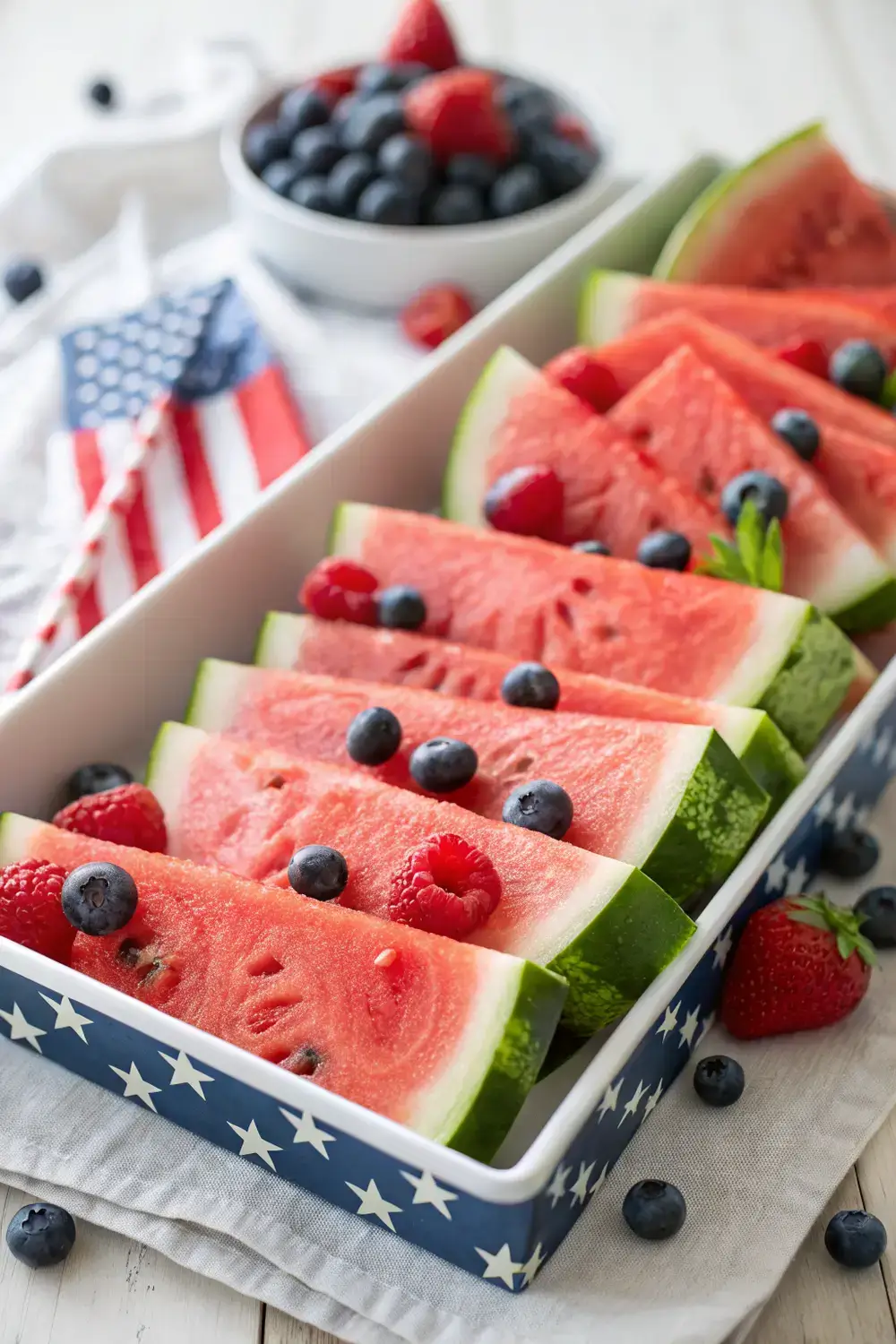
Why This Recipe Is Perfect for Independence Day
There’s something magical about the way a bright red slice of watermelon can instantly bring a sense of joy to a summer gathering. The juicy sweetness, the crisp snap of the flesh, and the vivid color all scream “celebration.” When you serve watermelon on a beautifully arranged tray, you create a visual centerpiece that’s as festive as fireworks without any of the fuss. Because the recipe contains no pork, bacon, wine, or any kind of alcohol, it fits perfectly into a wide range of dietary needs while still feeling indulgent and special.
What Readers Will Learn
In this guide you’ll discover exactly how to pick the ripest watermelon, prepare it with simple yet effective techniques, and dress it up with complementary flavors that make every bite feel like a tiny party. We’ll walk through each step in a friendly, beginner‑focused way, share tips that keep the fruit from turning mushy, suggest tasty variations, and answer the most common questions that pop up when you’re planning a 4th of July spread.
Choosing the Perfect Watermelon
Look for the “Ground Spot”
When you’re at the grocery store or farmer’s market, the first clue to a sweet watermelon lies on the bottom of the fruit. That pale, yellowish spot—often called the ground spot—should be creamy, not white. A deep golden hue signals that the melon has spent enough time soaking up sunshine, which translates to richer flavor.
Tap It Like a Drum
Give the watermelon a gentle tap with your knuckles. A hollow, resonant thump means the interior is full of air and water, indicating juiciness. A dull thud, on the other hand, can suggest the fruit is either underripe or has begun to overripen.
Check the Stripes
Dark green stripes that contrast sharply with a lighter green background are another sign of a healthy, mature watermelon. The stripes should be well‑defined, not faded or uneven.
Feel the Weight
A ripe watermelon feels surprisingly heavy for its size because it’s packed with water. If it feels light, it may be lacking in juiciness.
Gathering Your Ingredients
Fresh Watermelon
The star of the show is, of course, the watermelon itself. Aim for a slice that’s roughly 1‑inch thick; this size holds its shape while still being easy to bite into. You’ll need about one large watermelon for a party of eight to ten people.
Fresh Mint Leaves
A handful of bright green mint adds a refreshing counterpoint to the sweetness. Roughly tearing the leaves rather than chopping them releases their aromatic oils, preventing an overpowering mint flavor.
Lime Juice
Just a splash of freshly squeezed lime brightens the fruit and helps balance the flavors. About one tablespoon per watermelon is enough; too much can make the dish taste sour.
Honey or Agave Syrup
If you’d like a subtle hint of extra sweetness, drizzle a teaspoon of honey or agave over the finished slices. This step is optional and can be omitted for a cleaner taste.
Sea Salt
A light sprinkle of flaky sea salt amplifies the natural sugars. Use just enough to give a faint crunch; the goal is to enhance, not dominate.
Optional Garnishes
For a festive look, consider adding a few edible flowers, such as violets or nasturtiums, or a handful of pomegranate seeds for a burst of color and a pop of tartness.
Step‑by‑Step Instructions
Step 1: Prepare the Watermelon
Start by washing the exterior of the watermelon under cool running water. Pat it dry with a clean kitchen towel. Using a sharp chef’s knife, cut off both ends to create a stable base. Stand the watermelon upright and slice off the rind in vertical strips, following the curve of the fruit. Once the rind is removed, cut the flesh into thick wedges or rectangular slices, depending on how you plan to arrange them on the serving tray.
Step 2: Arrange on a Vibrant Tray
Choose a platter that showcases the watermelon’s ruby hue. A white or pastel ceramic tray works beautifully, but a wooden board can add a rustic charm. Lay the slices in a single layer, overlapping slightly to create a visually appealing mosaic. If you’re feeling adventurous, you can fan out the slices in a circular pattern that mimics a sunburst—perfect for a holiday celebration.
Step 3: Add Mint and Citrus
Scatter the torn mint leaves over the top of the arranged watermelon. Drizzle the lime juice evenly across the slices, allowing it to seep into the crevices. This step not only adds flavor but also helps keep the fruit looking fresh.
Step 4: Finish with Sweetness and Salt
Drizzle a thin stream of honey or agave if you desire that extra touch of sweetness. Then, finish the tray with a light dusting of flaky sea salt. The combination of sweet, salty, and tangy creates a balanced bite that keeps guests reaching for more.
Step 5: Garnish and Serve
Add any optional garnishes—pomegranate seeds, edible flowers, or a sprinkle of chopped pistachios for a subtle crunch. Serve the tray alongside chilled glasses of sparkling water for a refreshing non‑alcoholic pairing. Encourage guests to pick up a slice, enjoy the burst of flavor, and savor the moment.
Helpful Tips Along the Way
– Keep it cold: If the party is outdoors, place the tray on a larger ice‑filled bowl to maintain a cool temperature.
– Avoid sogginess: Pat the watermelon slices with a paper towel before arranging them to remove excess surface moisture.
– Uniform cuts: Use a ruler or a guide strip on the cutting board to ensure each slice is the same thickness; this makes for a tidy presentation.
Delicious Variations and Substitutions
Add a Berry Boost
Mix in fresh strawberries, blueberries, or blackberries for a burst of color and additional antioxidants. Toss the berries gently with the watermelon slices before adding the mint and lime.
Herb‑Infused Twist
Swap mint for basil or cilantro for a different aromatic profile. Basil pairs especially well with watermelon in a summer gazpacho style presentation.
Spice It Up
A pinch of ground chili or a few thin slices of fresh jalapeño can add a surprising heat that plays beautifully against the fruit’s sweetness. Use sparingly—just enough to awaken the palate.
Vegan Sweetener Alternatives
If you prefer to stay away from honey, try a drizzle of maple syrup or a few drops of date syrup. Both options keep the dish vegan while maintaining a natural sweetness.
Gluten‑Free and Nut‑Free Adaptations
All of the suggested variations are naturally gluten‑free and nut‑free, making the recipe safe for those with common food allergies. Just double‑check any added garnishes for hidden ingredients.
How to Store and Serve Leftovers
Refrigerating Cut Watermelon
If you have leftover slices, place them in an airtight container lined with a paper towel to absorb any excess moisture. Store them in the refrigerator for up to two days. The fruit may become slightly softer, but the flavor remains delightful.
Freezing for Later Use
While watermelon doesn’t freeze perfectly due to its high water content, you can still make use of it by turning the slices into frozen cubes. Lay the cubes on a baking sheet, freeze until solid, then transfer to a zip‑top bag. Use the frozen pieces in smoothies or as a chilled garnish for cocktails (or mocktails) at future gatherings.
Re‑assembling the Tray
When you’re ready to serve the leftovers again, give the slices a quick pat with a clean cloth to remove any condensation, then arrange them on a fresh tray with a few fresh mint leaves for a revived look.
Common Mistakes to Avoid
Choosing an Underripe Watermelon
An underripe melon will be bland and may lack the characteristic juicy crunch. Always check the ground spot and perform the tap test before purchasing.
Over‑seasoning with Salt
A little salt goes a long way; too much can make the fruit taste metallic. Start with a light sprinkle and taste before adding more.
Cutting the Watermelon Too Far in Advance
Leaving sliced pieces out for too long can cause them to wilt. Aim to cut and assemble the tray within an hour of the party’s start time for optimal freshness.
Skipping the Lime
Even a small amount of acidity brightens the flavor and prevents the watermelon from tasting flat. Don’t overlook this simple step.
Neglecting to Chill the Tray
Serving the fruit at room temperature can make it feel overly sweet and heavy. Keep the tray chilled until guests are ready to dig in.
Frequently Asked Questions
Can I use a different type of melon?
Absolutely! Cantaloupe or honeydew can be used in place of watermelon, though the flavor profile will shift slightly. Adjust the seasoning accordingly—perhaps adding a dash more lime to keep the brightness.
Is it safe to serve watermelon to infants?
Watermelon is generally safe for babies older than six months, provided it’s cut into very small, soft pieces to prevent choking. Always ensure the fruit is fully ripe and well‑washed.
How can I make this recipe vegan?
The base recipe is already vegan. If you choose to add honey, swap it for maple syrup or agave nectar, both of which are plant‑based sweeteners.
What’s the best way to keep the tray from getting soggy on a hot day?
Place a shallow pan of ice beneath the serving tray or set the tray on a larger tray filled with crushed ice. This keeps the fruit cool without water pooling around the slices.
Can I prep the watermelon ahead of time?
Yes! Cut the watermelon up to 12 hours in advance and store the slices in an airtight container with a damp paper towel. Add the mint, lime, and other garnishes just before serving to keep flavors fresh.
Do I need to use a special type of salt?
A flaky sea salt like Maldon adds a pleasant crunch and bursts of flavor, but any fine sea salt works fine. The key is to use it sparingly.
Can I add dairy or cheese to the tray?
While the recipe is designed to stay dairy‑free, you can experiment with crumbled feta or a light sprinkle of cotija for a salty contrast—just make sure it aligns with your guests’ dietary preferences.
Conclusion
Celebrating the 4th of July doesn’t have to involve heavy meals or elaborate cooking techniques. With a fresh watermelon delight, you can offer a vibrant, juicy, and entirely plant‑based dish that effortlessly captures the spirit of summer festivities. From selecting the ripest fruit to arranging it on a beautiful tray, the steps are simple enough for any beginner yet flexible enough to let you personalize the flavors. Whether you stick with the classic mint‑lime combo or experiment with berries, herbs, or a hint of spice, the result will be a crowd‑pleasing centerpiece that brightens any gathering. Keep the tray chilled, serve it with a smile, and let the sweet, refreshing bites become the talk of your Independence Day celebration. Enjoy the flavor, the color, and the joy of sharing something deliciously different—without a single drop of pork, bacon, wine, or alcohol in sight. Happy 4th of July!