Table of Contents
- 1 Why Butter and Lobster Are a Perfect Match
- 2 What Makes This Butter-Brushed Lobster Tail Special
- 3 Understanding Lobster Tail Before Cooking
- 4 Choosing the Best Lobster Tails for Rich Flavor
- 5 Thawing Lobster Tails the Right Way
- 6 Preparing Lobster Tails for Butter Brushing
- 7 Butter-Brushed Lobster Tail Recipe
- 8 How to Know When Lobster Is Perfectly Cooked
- 9 Why This Cooking Method Preserves Juiciness
- 10 Side Dishes That Complement Rich Lobster Flavor
- 11 Creating a Slow, Elegant Dinner Experience
- 12 Making This Recipe for Special Occasions or Quiet Nights
- 13 Cooking for One, Two, or More Guests
- 14 Storing and Reheating Without Losing Texture
- 15 Common Mistakes to Avoid
- 16 Frequently Asked Questions
- 17 Final Thoughts on Butter-Brushed Lobster Tail with Rich Flavor
Why Butter and Lobster Are a Perfect Match
Lobster tail is prized for its naturally sweet, delicate meat. Butter doesn’t mask that flavor—it enhances it. When brushed gently and cooked with care, butter melts into the lobster, carrying warmth, richness, and a luxurious mouthfeel that feels indulgent without being heavy.
This pairing has stood the test of time because it works. Butter highlights the lobster’s sweetness, keeps the meat moist during cooking, and creates a glossy finish that feels elegant and comforting at the same time.
This recipe focuses on achieving that perfect balance: rich but not greasy, flavorful but not overwhelming.
What Makes This Butter-Brushed Lobster Tail Special
This recipe isn’t about excess. It’s about intention.
Layered Flavor Without Complexity
Each ingredient serves a clear purpose, enhancing the lobster rather than competing with it.
Gentle Cooking for Maximum Juiciness
The cooking method keeps the lobster tender and prevents drying.
Restaurant-Quality Texture at Home
The lobster stays soft, plump, and buttery with every bite.
Ideal for Slow, Meaningful Meals
This is a dish meant to be enjoyed without rushing.
Understanding Lobster Tail Before Cooking
What Lobster Tail Should Taste Like
Lobster tail has a mild sweetness and a clean, ocean-fresh flavor. When cooked properly, it tastes rich yet light.
Texture Matters More Than Seasoning
Perfect lobster is about texture first. Seasoning enhances it, but tenderness defines success.
Why Butter Brushing Works Better Than Butter Dipping
Brushing butter onto the lobster before and during cooking allows the fat to soak into the meat rather than pooling on the plate.
Choosing the Best Lobster Tails for Rich Flavor
Frozen Lobster Tails Are a Smart Choice
High-quality frozen lobster tails are reliable and consistent. Most restaurants use frozen tails unless they are directly coastal.
Ideal Size for Butter-Brushed Cooking
6–8 ounce lobster tails are perfect
They cook evenly and absorb butter beautifully.
Signs of Quality
Look for intact shells and firm meat after thawing. Avoid tails with strong odors or discoloration.
Thawing Lobster Tails the Right Way
Proper thawing ensures even cooking and smooth texture.
Refrigerator Method
Place lobster tails on a plate and thaw in the refrigerator for 8–12 hours.
Cold Water Method
Seal tails in a bag and submerge in cold water for 30–45 minutes. Change water once if needed.
Never rush thawing with warm water.
Preparing Lobster Tails for Butter Brushing
Cutting the Shell
Use kitchen scissors to cut down the top center of the shell, stopping before the tail fin.
Loosening the Meat
Gently loosen the meat from the shell using your fingers or a spoon.
Lifting the Meat for Even Cooking
Lift the meat and rest it on top of the shell while keeping it attached at the base. This allows butter to coat the entire surface evenly.
Butter-Brushed Lobster Tail Recipe
Ingredients
2 lobster tails (6–8 oz each)
4 tablespoons unsalted butter, melted
2 cloves garlic, finely minced
1 tablespoon lemon juice
½ teaspoon salt
¼ teaspoon black pepper
Optional garnish: chopped parsley or lemon wedges
Instructions
Preheat the oven to 425°F (220°C).
Prepare the lobster tails by cutting the shell and lifting the meat onto the shell.
Place lobster tails in a baking dish.
In a small bowl, combine melted butter, garlic, lemon juice, salt, and pepper.
Brush the butter mixture generously over the lobster meat.
Bake uncovered for 12–15 minutes, depending on size.
Halfway through baking, brush with additional butter from the pan.
Remove from the oven when the meat is opaque and tender.
Spoon remaining butter over the lobster before serving.
How to Know When Lobster Is Perfectly Cooked
Meat turns opaque white
Texture feels firm yet springy
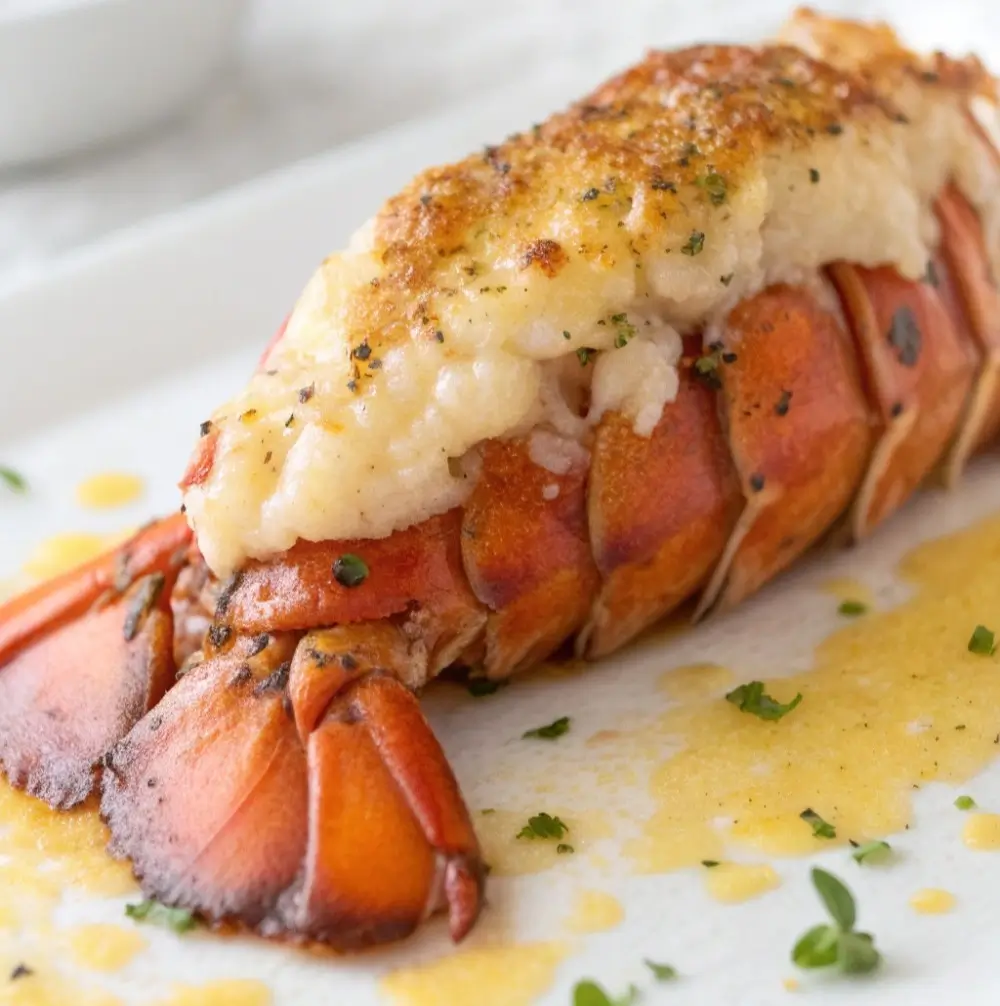
Lobster looks plump and glossy
Avoid cooking past this point, as lobster firms up quickly.
Why This Cooking Method Preserves Juiciness
High heat combined with butter creates a protective layer that seals moisture inside the lobster. Baking uncovered allows gentle browning while keeping the interior tender.
This method avoids boiling or steaming, which can dilute flavor.
Side Dishes That Complement Rich Lobster Flavor
Creamy Mashed Potatoes
Soft and comforting, they absorb extra butter beautifully.
Roasted Vegetables
Asparagus, green beans, or carrots add freshness.
Rice or Orzo
Neutral grains balance the richness.
Simple Green Salad
A light salad refreshes the palate.
Creating a Slow, Elegant Dinner Experience
This dish shines when served thoughtfully.
Use warm plates
Serve immediately after baking
Keep portions balanced
Let the lobster be the centerpiece
A calm, unrushed atmosphere enhances the experience.
Making This Recipe for Special Occasions or Quiet Nights
Butter-brushed lobster tail works equally well for celebrations and intimate dinners. It feels luxurious without requiring hours of preparation.
Serve it when you want the food to feel intentional and memorable.
Cooking for One, Two, or More Guests
This recipe scales easily. Arrange lobster tails in a single layer with space between them for even cooking.
Avoid stacking or crowding.
Storing and Reheating Without Losing Texture
Storage
Store leftovers in an airtight container for up to 2 days in the refrigerator.
Reheating
Reheat gently in the oven at low heat, covered with foil and a small amount of butter. Avoid microwaving.
Common Mistakes to Avoid
Overcooking
The most common issue. Set a timer and trust it.
Too Much Garlic
Garlic should support, not overpower.
Skipping the Butter Brush Midway
Reapplying butter keeps the lobster moist.
Letting Lobster Sit Too Long
Serve immediately for best texture.
Frequently Asked Questions
Why brush butter instead of pouring it?
Brushing ensures even coverage and better absorption.
Can I use salted butter?
Yes, but reduce added salt slightly.
Is this recipe suitable for beginners?
Yes. The steps are simple and forgiving.
How much lobster per person?
One 6–8 ounce tail per person is ideal.
Can I prepare lobster tails ahead of time?
You can prep the shells and butter mixture a few hours in advance.
What if my lobster looks slightly translucent?
Return it to the oven for 1–2 minutes and check again.
Final Thoughts on Butter-Brushed Lobster Tail with Rich Flavor
This butter-brushed lobster tail recipe proves that rich flavor doesn’t require complicated techniques or heavy sauces. By focusing on quality ingredients, gentle cooking, and thoughtful preparation, you can create a dish that feels luxurious and deeply satisfying.
The butter enhances the lobster without overpowering it, creating a smooth, comforting texture that invites you to slow down and enjoy every bite. Whether served for a special occasion or a quiet evening at home, this dish delivers elegance, warmth, and confidence in the kitchen.
Once you master this method, it becomes a reliable go-to for any night that calls for something a little extra—simple, rich, and unforgettable.