Table of Contents
- 1 Why Black Eyed Peas Make the Perfect Stew Base
- 2 A Vegetable Stew That’s Anything but Boring
- 3 Ingredients
- 4 How to Make Black Eyed Peas and Vegetable Stew
- 5 Texture and Flavor Profile
- 6 What to Serve With This Stew
- 7 Recipe Variations
- 8 Why This Stew Is Ideal for Families
- 9 Meal Prep and Storage Tips
- 10 Health Benefits
- 11 Frequently Asked Questions
- 12 Tips for the Best Stew
- 13 Why This Recipe Belongs in Your Regular Rotation
Few meals bring warmth and nourishment quite like a hearty stew simmered slowly with vegetables, herbs, and tender legumes. Among all the legumes available, black eyed peas hold a special place in comforting home cooking. Their gentle earthiness, creamy texture, and ability to soak up seasonings make them perfect for a wholesome and filling stew. This Black Eyed Peas and Vegetable Stew is built around simplicity and depth of flavor, creating a bowl that feels both familiar and exciting.
Vegetable-packed stews are timeless classics for a reason: they nourish without being heavy, and they offer layers of texture in every bite. In this recipe, black eyed peas anchor the dish with satisfying density, while carrots, tomatoes, celery, onions, and herbs provide color, fragrance, and balanced taste. The result is a stew that feels luxurious, even though it uses humble ingredients you likely already have.
This meal is perfect year-round. It’s warm enough for cold evenings, but fresh enough for lunches during spring or fall. It also holds up beautifully as leftovers—often tasting better the next day. Whether you’re feeding your family, meal prepping for the week, or making a soul-soothing dinner just for yourself, this stew brings comfort in every spoonful.
Why Black Eyed Peas Make the Perfect Stew Base
Black eyed peas bring something special to stew recipes. Their flavor is mild, allowing herbs and vegetables to shine, but their texture is hearty enough to create a thick, stew-like consistency naturally. When cooked gently with aromatics and vegetables, they become incredibly tender without falling apart.
They Absorb Flavors Beautifully
Black eyed peas soak up broth, spices, and herbs, creating a stew with flavor permeating through each bite instead of just the broth.
Nutritionally Balanced
They provide plant-based protein, essential minerals, and plenty of fiber. Combined with vegetables, the resulting stew becomes a complete meal.
Comforting but Light
Unlike heavier legumes, black eyed peas create a stew that feels comforting without being overly rich or heavy.
Excellent for Batch Cooking
Their texture holds up well for several days, making them an excellent choice for leftovers or meal prep.
A Vegetable Stew That’s Anything but Boring
Veggie stews sometimes get the reputation of being bland, but this recipe proves the opposite. Sautéed onions and garlic create the aromatic foundation, carrots add sweetness, tomatoes provide depth and acidity, celery brings freshness, and herbs round everything out. When simmered together, these ingredients create a broth that is naturally rich and satisfying without requiring any fancy techniques.
The stew achieves a balance of textures: softness from the peas, slight bite from vegetables, and thickness from gentle simmering. If you enjoy rustic, homemade, comforting meals, you will find yourself making this again and again.
Ingredients
Vegetables
1 tablespoon olive oil
1 medium onion, chopped
3 cloves garlic, minced
3 carrots, peeled and sliced
2 celery stalks, diced
1 medium red or green bell pepper, chopped
1 can diced tomatoes (14 oz)
Base Ingredients
3 cups cooked black eyed peas (or 2 cans, drained and rinsed)
4 cups vegetable broth
1 bay leaf
Seasonings and Herbs
1 teaspoon smoked paprika
1 teaspoon dried thyme
½ teaspoon oregano
½ teaspoon cumin
Salt and black pepper to taste
Fresh parsley or cilantro for garnish
Optional Add-Ins
Spinach or kale
Sweet potatoes or white potatoes
Zucchini
A squeeze of lemon juice
Crushed red pepper flakes
Fresh basil
How to Make Black Eyed Peas and Vegetable Stew
Sautéing the Aromatics
Start by warming olive oil in a large pot. Add the chopped onion and cook until golden and soft. Stir in the minced garlic and allow it to become fragrant. This sautéing step forms the base flavor of the entire stew.
Adding the Vegetables
Add carrots, celery, and bell pepper into the pot. Let them sauté until slightly softened. This helps build deeper vegetable flavor once the stew simmers.
Seasoning the Base
Sprinkle smoked paprika, thyme, oregano, cumin, and black pepper over the vegetables. Stir to coat the mixture in warm, aromatic spices that will permeate the broth as the stew cooks.
Adding Peas, Tomatoes, and Broth
Pour in the cooked black eyed peas, diced tomatoes, vegetable broth, and the bay leaf. Stir well and bring the mixture to a gentle simmer.
Simmering Slowly
Let the stew simmer for 30–35 minutes. This reduces the broth slightly, softens the vegetables, and allows the flavors to deepen.
Optional Greens
If adding spinach or kale, stir them in during the last 5 minutes. They wilt quickly and add beautiful color and nutrients.
Final Touches
Taste and adjust salt or seasoning as needed. Remove the bay leaf before serving.
Texture and Flavor Profile
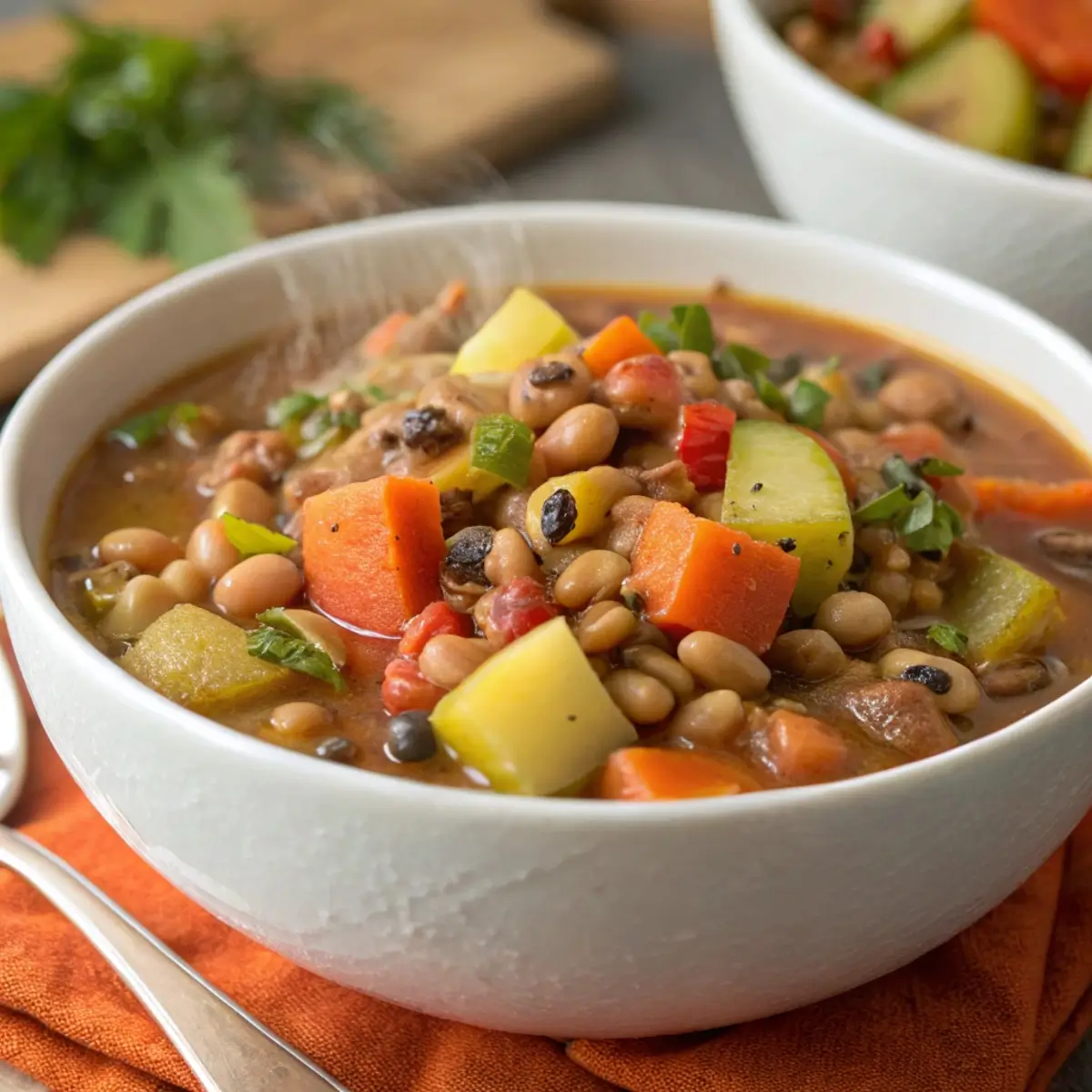
This stew is thick enough to feel hearty but not so dense that it resembles chili. The broth becomes slightly creamy thanks to the starches released by the peas, while the tomatoes provide brightness. Carrots add a hint of sweetness, the herbs bring earthiness, and the celery balances everything with freshness.
The overall flavor is comforting and deep, yet simple and familiar—exactly what a vegetable stew should deliver.
What to Serve With This Stew
This stew is a complete meal, but pairing options can elevate the experience even further.
Perfect Pairings
Warm crusty bread
Cornbread
Steamed white or brown rice
Quinoa
Couscous
Roasted vegetables
Simple side salads
For a Heartier Dinner
Serve over rice, couscous, or alongside roasted potatoes.
For a Lighter Meal
Enjoy on its own or with a leafy green salad.
Recipe Variations
This recipe is highly adaptable. Whether you want a richer stew, a spicier one, or a more vegetable-packed bowl, the options are endless.
Add Sweet Potatoes
Adds sweetness, thickness, and extra fiber.
Add More Greens
Spinach, kale, collard greens, or Swiss chard all work well.
Make It Spicy
Add jalapeños, cayenne pepper, or red pepper flakes.
Make It Creamy
Add a small amount of coconut milk for a silky final texture.
Add Fresh Herbs
Try basil, parsley, dill, or cilantro for brightness.
Tomato-Free Version
Replace tomatoes with extra broth and lemon juice.
Why This Stew Is Ideal for Families
Family-friendly meals aren’t just about flavor—they’re about comfort, nutrition, affordability, and ease. This stew checks all the boxes.
Mild Flavor Profile
It’s flavorful but not overpowering, making it appealing to kids and adults alike.
Balanced Nutrition
Protein from peas, vitamins from vegetables, and low-fat broth combine into a well-rounded bowl.
Budget-Friendly Ingredients
Beans and vegetables stretch far without costing much.
Easy to Reheat
Perfect for leftovers or next-day lunches.
One-Pot Simplicity
Minimal dishes, maximum flavor.
Meal Prep and Storage Tips
Refrigeration
Store in an airtight container for up to 4 days.
Freezing
This stew freezes beautifully for up to 2–3 months. Thaw in the fridge before reheating.
Reheating
Microwave: Heat for 1–2 minutes, stirring halfway.
Stovetop: Warm gently over low heat, adding a splash of broth if needed.
Batch Cooking
Doubling the recipe is easy—just use a larger pot and adjust simmering time slightly.
Health Benefits
This stew is not only delicious—it supports overall health.
Rich in Fiber
Great for digestion and sustained fullness.
Plant-Based Protein
Black eyed peas offer clean, nutrient-dense protein.
Antioxidant-Rich Vegetables
Tomatoes, carrots, and peppers bring powerful antioxidants.
Low in Fat
Olive oil provides healthy fats without heaviness.
Heart-Healthy
Legumes and vegetables contribute to heart health through potassium, fiber, and nutrient density.
Suitable for Many Diets
It fits vegan, vegetarian, dairy-free, and budget-friendly diets effortlessly.
Frequently Asked Questions
Can I use canned black eyed peas?
Yes, just rinse and drain them before adding.
Can I cook with dried peas instead?
Absolutely—just cook them beforehand. Add pre-cooked peas to the stew as instructed.
Will frozen vegetables work?
Yes. Frozen carrots, onions, or mixed veggies still work great.
Can I add potatoes?
Definitely—they add thickness and sweetness.
Can this stew be made spicy?
Yes. Add crushed red pepper, chili powder, or fresh peppers.
Is the stew vegan?
Yes, completely plant-based and dairy-free.
How thick should the stew be?
It should be thick but still slightly brothy. Adjust by simmering longer or adding broth.
Can I make this in a slow cooker?
Yes. Add all ingredients and cook 4–6 hours on low.
Tips for the Best Stew
Sauté onions until golden—they build essential flavor.
Add spices early to bloom them.
Simmer long enough for vegetables to soften fully.
Always taste and adjust seasoning at the end.
Add leafy greens at the end to prevent overcooking.
Let the stew rest 10 minutes before serving—it thickens beautifully.
Why This Recipe Belongs in Your Regular Rotation
This Black Eyed Peas and Vegetable Stew is more than just a comforting meal—it’s versatile, nourishing, and deeply satisfying. It stands out because it delivers so much flavor with so little effort. Whether you enjoy it with bread, rice, or on its own, every spoonful brings warmth and nourishment.
It’s the kind of dish that fills your home with inviting aromas, transforms simple ingredients into something rich and cozy, and reminds you that wholesome meals don’t require complicated techniques or expensive items. With its thick texture, bold flavors, and plant-based nutrition, this stew easily becomes a go-to for weeknight dinners, meal prepping, or slow weekend cooking.
Warm, filling, and endlessly adaptable—it’s everything a perfect vegetable stew should be.