The Ultimate No-Mixer Cinnamon RollAdventure: Soft, Gooey, and Absolutely Worth the Wait!
Imagine the moment: the warm, inviting aroma of cinnamon and sugar fills your kitchen. You pull a perfectly golden, pillowy cinnamon roll from the oven, its surface glistening with a thick, irresistible glaze. This isn’t just breakfast; it’s pure, unadulterated comfort. And the best part? You can create this magic without a single electric mixer, relying solely on your hands and a little patience. Welcome to the world of Quick Homemade Cinnamon Rolls No Mixer Needed – your gateway to bakery-style perfection in your own kitchen.
Forget complicated recipes requiring specialized equipment or hours of kneading. This beginner-friendly method harnesses the power of simple hand kneading and strategic resting times to develop the perfect gluten structure, resulting in rolls that are incredibly soft, tender, and boast a gloriously chewy yet yielding texture. The dough rises beautifully, creating those coveted air pockets that make each bite melt in your mouth. The filling? A simple, heavenly blend of brown sugar, cinnamon, and a touch of melted butter, rolled up into a spiral of pure delight. And the glaze? A simple drizzle of powdered sugar and milk that transforms these rolls into a decadent treat.
This recipe is designed for success, even for those new to baking. I’ll guide you through every step with clear, encouraging instructions, explain the why behind each action (so you understand the process, not just the steps), and offer plenty of tips to ensure your rolls turn out picture-perfect. Whether you’re craving a special weekend breakfast, a sweet surprise for unexpected guests, or simply a moment of pure baking joy, these no-mixer cinnamon rolls deliver. Let’s dive in and create something truly special together.
The Heart of the Roll: Understanding Your Dough
The foundation of any great cinnamon roll is a well-developed, soft dough. This recipe relies on the natural elasticity of wheat gluten, activated through gentle hand kneading and ample resting time. Here’s what you’ll need:
- All-Purpose Flour (2 1/2 cups / 315g): The workhorse of the recipe. It provides the necessary structure while keeping the rolls tender. Bread flour (2 1/4 cups / 280g) can be substituted for a slightly chewier texture, but all-purpose is perfectly fine for this method.
- Warm Milk (3/4 cup / 180ml): Crucial for activating the yeast. Use whole milk for the richest flavor and softest texture, but 2% or even skim milk will work. The milk should be warm to the touch, not hot (around 105-110°F / 40-43°C). Too hot kills the yeast; too cold won’t activate it.
- Active Dry Yeast (2 1/4 tsp / 1 standard packet): The leavening agent that makes your dough rise. Ensure it’s fresh and within its expiration date.
- Granulated Sugar (1/4 cup / 50g): Feeds the yeast and adds a touch of sweetness. A small amount is also added to the filling.
- Salt (1 tsp): Enhances all the flavors, balancing the sweetness beautifully.
- Large Egg (1, room temperature): Adds richness, structure, and helps the dough rise. Room temperature ensures it incorporates smoothly.
- Unsalted Butter (1/4 cup / 56g, melted): Adds incredible flavor and tenderness. Let it cool slightly before adding to the dough to avoid cooking the egg.
- Vanilla Extract (1 tsp): A subtle depth of flavor that complements the cinnamon perfectly.
The Sweet Swirl: Crafting the Filling
The filling is where the magic happens. It’s simple, but crucial for that classic cinnamon roll experience:
- Brown Sugar (1/2 cup / 100g, packed): Provides a deeper, caramel-like sweetness and moisture compared to white sugar. Packed ensures you get the right amount.
- Ground Cinnamon (2 tbsp): The star flavor. Use a high-quality cinnamon for the best taste.
- Unsalted Butter (2 tbsp, melted): Helps bind the filling and creates that signature gooey texture when baked. Let it cool slightly.
- Salt (1/4 tsp): Enhances the cinnamon flavor.
The Perfect Finish: The Glaze
The glaze is the crowning glory, adding a sweet, shiny finish:
- Powdered Sugar (1 1/2 cups / 180g): Sifts this for a smooth glaze.
- Milk or Heavy Cream (2-4 tbsp): Adjusts the consistency. Start with 2 tbsp for a thicker glaze, adding more as needed for drizzling.
- Vanilla Extract (1/2 tsp): A final touch of flavor.
- Salt (a pinch): Enhances the sweetness.
Your Journey Begins: Step-by-Step Instructions
Now, let’s transform these ingredients into delicious rolls. This process is surprisingly straightforward with a little patience.
1. Activating the Yeast (The First Rise):
* In a large mixing bowl, combine the warm milk, granulated sugar, and active dry yeast. Stir gently and let it sit for 5-10 minutes. You should see it become foamy on top – this means your yeast is alive and active! If it doesn’t foam, your yeast might be expired, and you’ll need to start over with fresh yeast.
* Add the room temperature egg, melted butter (cooled slightly), and vanilla extract to the yeast mixture. Whisk until well combined.
2. Bringing it Together: The Dough
* Add the salt and gradually add the flour, about 1/2 cup at a time, stirring with a wooden spoon or sturdy spatula after each addition. The dough will start to come together but will be quite shaggy and sticky.
* Kneading by Hand: This is the key step! Turn the dough out onto a lightly floured surface. Using the heels of your hands, push the dough away from you, then fold it back over itself. Give it a quarter turn and repeat. This process, called “pushing and folding,” develops the gluten gently. It takes about 8-10 minutes of consistent pushing and folding. The dough should become smoother, less shaggy, and slightly tacky but not sticky. It should pass the “windowpane test” – if you can stretch a small piece thin enough to see light through it without tearing, it’s ready. Don’t be tempted to add more flour during kneading; the dough needs moisture to stay soft. If it’s too sticky, sprinkle a tiny bit of flour under the dough and on your hands as needed, but avoid adding too much.
* First Rise: Lightly oil a clean bowl. Place the kneaded dough inside, turning it once to coat it lightly with oil. Cover the bowl tightly with plastic wrap or a damp kitchen towel. Let it rise in a warm, draft-free spot for 1 to 1.5 hours, or until it has roughly doubled in size. You can test if it’s ready by gently pressing two fingers into the dough; if the indentation remains, it’s risen enough.
3. Preparing the Filling & Pan:
* While the dough rises, make the filling: In a small bowl, whisk together the brown sugar, cinnamon, melted butter, and salt until smooth.
* Lightly grease a 9-inch round or square baking pan, or an 8×8 inch baking dish. Set aside.
4. Shaping the Rolls:
* Once the dough has risen, gently punch it down in the center to release the air. Turn it out onto a lightly floured surface.
* Roll the dough into a 12×18 inch rectangle. Aim for a relatively even thickness. If it shrinks back, let it rest for 5 minutes and try again.
* Spread the melted filling mixture evenly over the entire surface of the dough, leaving a small border (about 1/2 inch) along one of the longer edges.
* Starting from the long edge opposite the border, carefully roll the dough up tightly into a log. Pinch the seam closed firmly to seal.
* Using a sharp knife or dental floss, cut the log into 9 equal pieces (about 1.5 inches thick each). You can use a piece of unflavored dental floss by sliding it under the log where you want to cut, then crossing the ends over and pulling tightly to slice cleanly through the dough.
* Place the rolls cut-side up in the prepared pan, spacing them evenly. They should fit snugly but not be crowded. Cover the pan loosely with plastic wrap or a damp towel.
5. The Second Rise:
* Let the rolls rise again in a warm, draft-free spot for 30-45 minutes, or until they look puffy and have expanded significantly, nearly touching each other. They should look much fuller than after the first rise.
6. Baking to Golden Perfection:
* Preheat your oven to 375°F (190°C) during the last 10 minutes of the second rise.
* Bake the rolls for 20-25 minutes, or until they are deeply golden brown on top and sound hollow when tapped gently on the bottom. The internal temperature should reach around 190-200°F (88-93°C) if you have an instant-read thermometer.
* Tip: If the tops start browning too quickly, loosely tent them with a piece of aluminum foil during the last 10 minutes of baking.
7. The Glorious Glaze:
* While the rolls are baking, make the glaze: Whisk together the powdered sugar, milk (or cream), vanilla extract, and a pinch of salt until smooth. Adjust the consistency with more milk if needed – you want it thick enough to drizzle but pourable.
* Once the rolls are baked and have cooled in the pan for 5-10 minutes (this allows them to set slightly), carefully invert them onto a serving plate or cutting board. If you used a square pan, you can simply drizzle the glaze over the top. If you used a round pan, you might want to place a plate over the pan, invert everything, then invert again onto the serving plate to get the rolls right-side up.
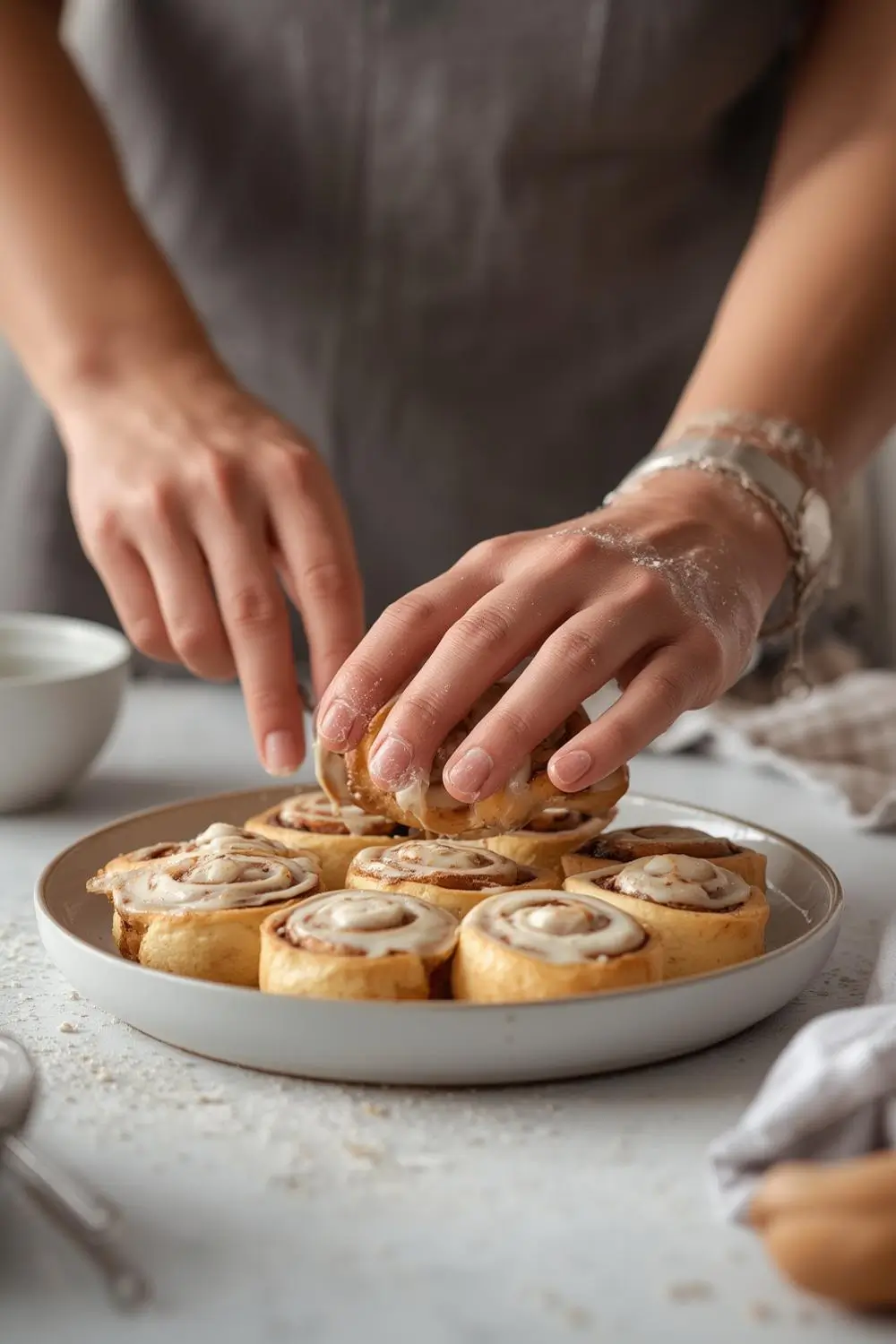
* Drizzle the glaze generously over the warm rolls. The heat from the rolls will help the glaze melt and seep into the crevices, creating an irresistible glossy finish.
Variations and Substitutions: Making it Your Own
The beauty of this recipe lies in its adaptability. Here are some ideas to customize your cinnamon rolls:
- Add-Ins: Fold in 1/2 cup of chopped pecans, walnuts, or chocolate chips into the filling before rolling. Sprinkle some on top of the filling before rolling for extra texture.
- Different Fillings: Swap the cinnamon filling for a chocolate-hazelnut spread (like Nutella), a simple brown sugar and butter filling, or even a savory option like cheese and herbs (though this is less traditional).
- Flavored Glazes: Add a teaspoon of orange zest to the glaze, or use maple syrup instead of milk for a richer, deeper flavor. A splash of bourbon or rum extract can add a sophisticated twist (ensure it’s alcohol-free if needed).
- Whole Wheat Twist: Substitute up to 1 cup of the all-purpose flour with whole wheat flour for a heartier, nuttier flavor and added fiber. The texture might be slightly denser.
- Vegan Option: Use a flax egg (1 tbsp ground flaxseed + 3 tbsp water, let sit 5 mins) instead of the regular egg. Use plant-based milk and melted coconut oil instead of butter. The texture will be slightly different but still delicious.
- Smaller Rolls: For more rolls, divide the dough into 12 pieces instead of 9.
Storage and Reheating: Keeping the Magic Alive
These rolls are best enjoyed fresh and warm on the day they are baked. However, you can store them for later:
- Room Temperature: Store leftover rolls in an airtight container at room temperature for up to 2 days. Reheat gently in the microwave for 15-20 seconds or in a low oven (300°F / 150°C) for 5-10 minutes to restore softness.
- Refrigerator: For longer storage (up to 5 days), wrap individual rolls tightly in plastic wrap or place them in a resealable bag. Reheat as above.
Freezing: For maximum freshness, freeze the baked rolls (without glaze) in a single layer on a baking sheet until solid, then transfer to a freezer bag or airtight container. Freeze for up to 3 months. To reheat, thaw overnight in the refrigerator, then reheat as above. You can also freeze the unbaked* rolls (after shaping and before the second rise) on a baking sheet until solid, then transfer to a bag. Bake from frozen, adding 5-10 minutes to the baking time, and skip the second rise step.
Common Mistakes to Avoid: Ensuring Success
- Hot Milk: Using milk that’s too hot will kill the yeast. Stick to warm (105-110°F / 40-43°C).
- Over-Kneading: While kneading is essential, over-kneading can make the dough tough. 8-10 minutes of gentle pushing and folding is sufficient. The dough should be smooth and elastic, not stiff.
- Under-Proofing: If the dough doesn’t rise enough before baking, the rolls will be dense and heavy. Be patient during the rising stages. The indentation test is your friend.
- Over-Baking: Baking too long can dry out the rolls. They should be golden brown and sound hollow when tapped. Check them a few minutes early.
- Glaze Too Thick: If your glaze is too thick, add a tiny bit more milk. If it’s too thin, add a little more powdered sugar.
- Skipping the Second Rise: This rise is crucial for developing flavor and texture. Don’t skip it!
Frequently Asked Questions: Your Cinnamon Roll Queries Answered
- Q: Can I use a stand mixer for this dough? While the recipe is designed for hand kneading, you can* use a stand mixer fitted with the dough hook. Mix on low speed for about 5 minutes until the dough comes together, then knead for another 5-7 minutes until smooth and elastic. Be careful not to overmix
- Q: My dough is too sticky. What should I do? Resist the urge to add a lot of extra flour! The dough needs moisture to stay soft. Try kneading for a few more minutes – the gluten will develop and the stickiness will lessen. If absolutely necessary, sprinkle a tiny* amount of flour under the dough and on your hands as you knead.
- Q: My rolls didn’t rise much in the second rise. Why? Ensure your rising spot is warm and draft-free. The milk might have been too cool initially. Check your yeast is fresh. The dough might have been over-kneaded initially, making it too tight to rise well.
- Q: Can I make these ahead of time? Yes! You can shape the rolls and let them rise overnight in the refrigerator. Place the shaped rolls in the pan, cover tightly, and refrigerate for up to 16 hours. Let them come to room temperature (about 1 hour) and then do the second rise and bake as directed.
- Q: How do I know when the rolls are done baking? They should be a deep golden brown on top. The best test is the “hollow sound” when tapped on the bottom. An instant-read thermometer should read 190-200°F (88-93°C) when inserted into the center of a roll.
- Q: Can I freeze the dough before the first rise? Yes! After kneading, place the dough in a greased bowl, cover tightly, and freeze for up to 1 month. Thaw overnight in the refrigerator, then let it rise at room temperature for 1-2 hours before shaping and baking.
- Q: Why are my rolls dense? This is usually due to under-proofing (not rising enough) or over-kneading. Ensure you give the dough sufficient time to rise and knead gently but sufficiently.
- Q: Can I use self-rising flour? No, self-rising flour contains leavening agents that will cause the rolls to rise too much and then collapse. Stick to all-purpose or bread flour.
- Q: What can I use if I don’t have powdered sugar for the glaze? You can make a simple glaze with 1/2 cup granulated sugar, 2-3 tbsp milk, and a pinch of salt. Whisk until smooth. It won’t be as shiny, but it will still be sweet and delicious.
The Final Proof: A Warm Embrace
There’s something profoundly satisfying about creating something delicious with your own hands, especially when it involves the comforting aroma of cinnamon and the promise of a sweet treat. These Quick Homemade Cinnamon Rolls No Mixer Needed are more than just a recipe; they’re an invitation to slow down, savor the process, and enjoy the simple, pure joy of baking. The soft, pillowy texture, the gooey cinnamon swirl, and the warm, buttery glaze are a testament to the magic that happens when you combine patience, simple ingredients, and a little bit of love. Whether you’re a seasoned baker or just starting your culinary journey, this recipe is designed to build your confidence and fill your kitchen with happiness. So, gather your ingredients, roll up your sleeves, and get ready to create a batch of cinnamon rolls that will become a cherished tradition. Happy baking!