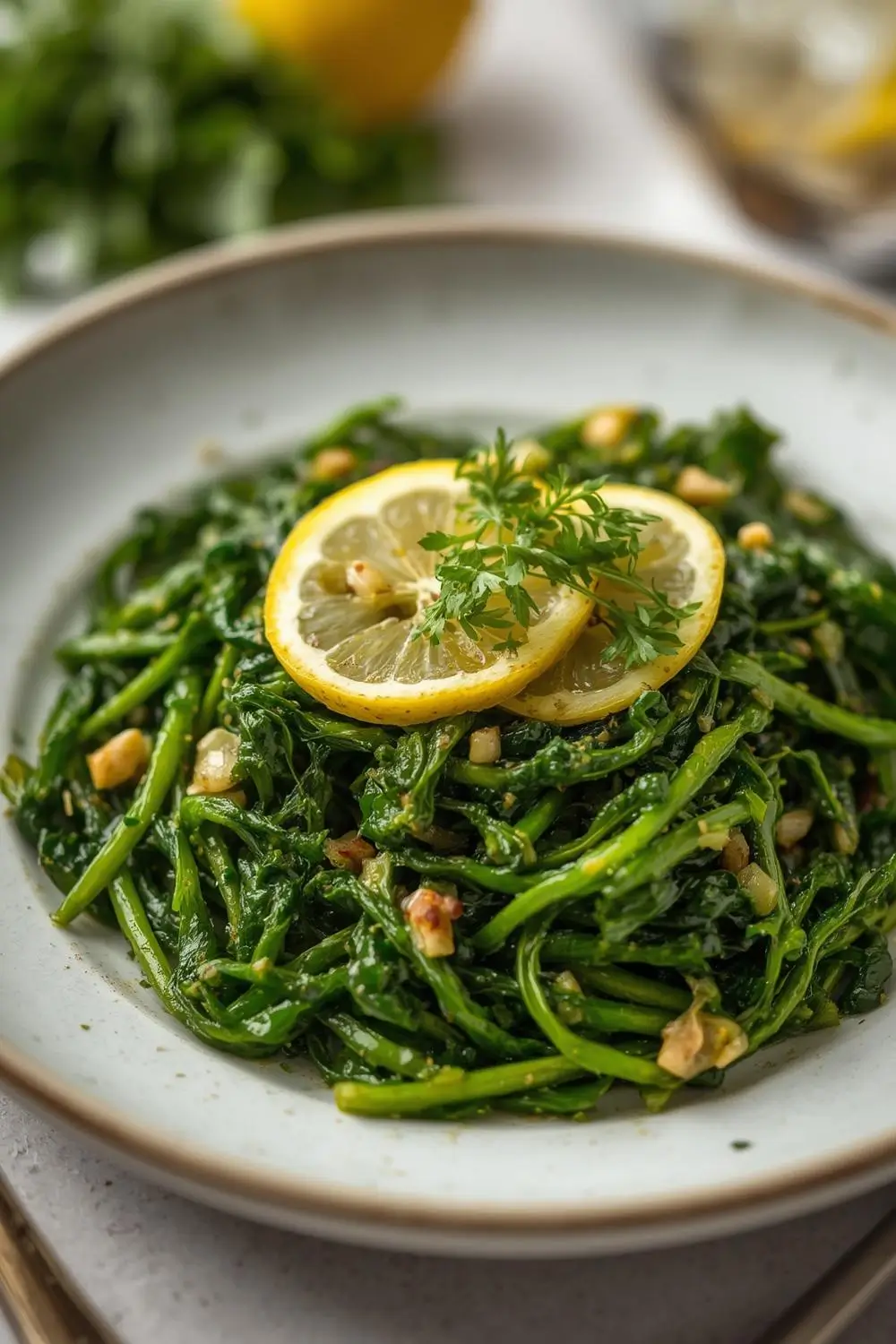
Imagine transforming a humble, often overlooked weed into a vibrant, flavorful side dish that brightens any meal. That’s the magic of sautéed dandelion greens with lemon and garlic. Once you master this simple technique, you’ll wonder why you didn’t try it sooner. These greens, with their unique earthy character, soften beautifully under heat, shedding any initial bitterness while embracing the bright zing of lemon and the rich, savory depth of garlic. It’s a testament to how a few quality ingredients can elevate something wild into something truly special. Ready in under 20 minutes, this dish is a perfect example of how simplicity and flavor go hand-in-hand.
Why Dandelion Greens?
Dandelion greens are nutritional powerhouses. Packed with vitamins A, C, and K, along with essential minerals like potassium and calcium, they offer a healthy boost to any plate. While they possess a naturally bitter note, this characteristic mellows beautifully during cooking, revealing a tender, spinach-like texture beneath. The key is gentle heat and the right accompaniments – enter lemon and garlic, the dynamic duo that cuts through the bitterness and adds layers of complexity. This recipe is incredibly adaptable, making it a fantastic canvas for your pantry staples.
Gathering Your Ingredients
Before you begin, ensure you have everything ready. Freshness is paramount for the best flavor.
- 1 large bunch (about 6-8 ounces) dandelion greens: Look for vibrant green leaves, free from yellowing or wilting. Rinse thoroughly to remove any dirt or grit trapped in the leaves and stems.
- 2 tablespoons extra-virgin olive oil: This high-quality oil adds a fruity undertone that complements the greens beautifully.
- 3 cloves garlic, minced: Fresh garlic provides the most potent flavor. Mince it finely for even distribution.
- 1 tablespoon lemon juice: Freshly squeezed is best for maximum brightness.
- 1 tablespoon lemon zest: The fragrant outer peel of the lemon adds a concentrated burst of citrus aroma.
- Salt and freshly ground black pepper: To taste. Start with a pinch of salt and adjust after cooking.
- Optional: A sprinkle of red pepper flakes for a gentle heat, or a handful of toasted pine nuts or slivered almonds for added crunch and richness.
The Art of Preparation
Proper prep makes the cooking process smoother and ensures the best results.
1. Washing: Fill a large bowl with cold water. Submerge the greens and swish them around vigorously to dislodge any dirt. Repeat this process 2-3 times until the water runs clear. Drain well in a colander, then gently pat the greens dry with clean kitchen towels or paper towels. This step is crucial – excess water can steam the greens instead of sautéing them.
2. Trimming (Optional but Recommended): While many recipes suggest removing the tough stems, I find that smaller, tender stems cook down nicely and add texture. If your greens are very large or the stems seem tough, you can snap them off at the base where they meet the leaf. Chop the stems coarsely if you remove them.
3. Mincing Garlic: Finely mince the garlic cloves. This ensures they cook quickly and distribute evenly without burning.
The Cooking Process: Step-by-Step
Now, let’s bring it all together. This is a quick cook, so stay close.
1. Heat the Pan: Place your large skillet or sauté pan over medium heat. Add the olive oil and let it warm for about 30 seconds until it shimmers slightly.
2. Sauté the Aromatics: Add the minced garlic to the pan. Stir constantly for about 30 seconds to 1 minute, until it becomes fragrant and just starts to turn golden at the edges. Crucial Tip: Don’t let the garlic brown too much or it will become bitter. If it starts to brown quickly, reduce the heat slightly.
3. Add the Greens: Working in batches if necessary (don’t overcrowd the pan), add the prepared dandelion greens to the pan in handfuls. Toss them immediately with tongs or a spatula to coat them in the garlic-infused oil. Continue adding greens and tossing until all are in the pan.
4. Cook Until Wilted: Increase the heat to medium-high. Cook the greens, tossing frequently, for 3-5 minutes. They will shrink dramatically as they wilt. The total cooking time depends on the size of your greens and how much you added at once, but you want them tender but still vibrant green, not mushy.
5. Season and Finish: Once the greens are wilted and tender, remove the pan from the heat. Immediately add the lemon juice and lemon zest. Toss everything together vigorously to distribute the citrus evenly. Season generously with salt and freshly ground black pepper to taste. Taste and adjust seasoning if needed – the lemon should shine through without overpowering the garlic.
6. Optional Additions: If using, sprinkle on any toasted nuts or seeds now and toss to combine.
Serving and Enjoyment
This dish is best served immediately while it’s still warm and the lemon aroma is most potent. It pairs beautifully with a wide range of proteins:
- Poultry: Roasted chicken, grilled chicken breast, or turkey.
- Fish: Pan-seared salmon, cod, or halibut.
- Pork: Grilled pork chops or tenderloin (though pork is excluded per dietary rules, this pairing is common).
- Beef: Grilled steak or beef tenderloin.
- Vegetarian: As a vibrant side with roasted vegetables, quinoa, or lentils.
- Pasta: Tossed with cooked pasta, a splash of pasta water, and a drizzle of olive oil.
Variations and Substitutions
The beauty of this recipe lies in its flexibility:
- Different Greens: Substitute half the dandelion greens with Swiss chard, kale, or spinach for a different texture and flavor profile.
- Garlic Alternatives: Use garlic powder (1/2 tsp per clove) if fresh isn’t available, though the flavor won’t be as vibrant. For a milder garlic flavor, use less.
- Citrus Swap: Lime juice and zest can be used instead of lemon for a slightly different tang.
- Fat Options: Use butter instead of olive oil for a richer flavor, or a combination of both. Avocado oil is another excellent neutral option.
- Additions: Stir in a spoonful of Dijon mustard or a pinch of red pepper flakes when adding the lemon juice for extra depth or heat. A splash of white wine (though wine is excluded) can be used in place of some lemon juice for a different complexity.
- Protein Boost: Add cooked chickpeas, white beans, or crumbled tempeh during the last minute of cooking for a more substantial meal.
Storage and Reheating
This dish is best enjoyed fresh, but leftovers can be stored:
- Refrigeration: Let the cooked greens cool completely. Transfer to an airtight container. They will keep in the refrigerator for 2-3 days.
- Reheating: Reheat gently in a skillet over low-medium heat, adding a tiny splash of water or broth to prevent drying out. Stir frequently. Alternatively, reheat in the microwave in short bursts, stirring in between, adding a splash of water if needed. Avoid reheating more than once.
Avoiding Common Mistakes
- Overcrowding the Pan: This steams the greens instead of sautéing them, leading to sogginess. Cook in batches if necessary.
- Burning the Garlic: Keep the heat medium and stir constantly once the garlic hits the pan.
- Underseasoning: Dandelion greens can be quite bitter, so don’t be shy with the salt and pepper. Taste before serving.
- Not Removing Excess Water: Patting the greens dry is essential for proper sautéing.
- Overcooking: Remove the greens from the heat as soon as they are tender but still bright green. They continue to cook slightly off the heat.
Your Questions Answered
Here are answers to some common questions about this dish:
1. Why do dandelion greens taste bitter?
Dandelion greens contain compounds called sesquiteric acids, which are naturally bitter. This bitterness is most pronounced in older, larger leaves. Cooking mellows these compounds significantly, making the greens much more palatable. The lemon juice and garlic further balance and complement the flavor.
2. Can I use dandelion greens that aren’t organic?
It’s highly recommended to use organically grown dandelion greens if possible. Wild dandelions can absorb pesticides or other chemicals from treated lawns or fields. If you forage, ensure you know the area is pesticide-free and not near roads.
3. What if I can’t find dandelion greens?
Swiss chard, kale, or spinach make excellent substitutes. They cook similarly and pair well with lemon and garlic. Kale might need a slightly longer cooking time.
4. Do I have to remove the stems?
While you can remove the thick, tough stems, smaller, tender stems cook down nicely and add texture. If your greens are very large or the stems seem tough, snap them off at the base where they meet the leaf and chop them coarsely.
5. Is this dish suitable for people with specific dietary restrictions?
This recipe is naturally gluten-free, dairy-free, and vegan. It’s also low in calories and packed with nutrients. However, always check individual ingredients (like the type of oil used) if you have specific allergies.
6. Can I make this ahead of time?
The flavors actually meld and improve slightly if made a few hours ahead. However, the texture can become softer. If making ahead, store it covered in the refrigerator and reheat gently when ready to serve.
A Final Thought
Sautéed dandelion greens with lemon and garlic transform the ordinary into the extraordinary. It’s a celebration of seasonal ingredients, a testament to the power of simple cooking techniques, and a delicious way to incorporate nutrient-rich greens into your diet. The vibrant green color, the fragrant aroma, and the perfect balance of savory, bright, and slightly earthy flavors make this dish a standout side. Give it a try – you might just find yourself foraging for more wild greens! Enjoy the process and the delicious results.