Table of Contents
- 1 Why Slow Roasting Makes a Difference
- 2 Ingredients
- 3 Equipment Needed
- 4 Preparing the Corned Beef
- 5 Slow Roasting Process
- 6 Preparing the Vegetables
- 7 Final Touches
- 8 Slicing and Serving
- 9 Flavor Variations
- 10 Expert Tips for Success
- 11 Storage and Reheating
- 12 Nutritional Highlights
- 13 Common Mistakes to Avoid
- 14 Serving Suggestions
- 15 Perfect Occasions for This Dish
- 16 Frequently Asked Questions
- 17 Final Thoughts
There’s something incredibly satisfying about a meal that slowly transforms over time, filling your home with rich aromas and promising a deeply comforting experience. This slow roasted corned beef and cabbage dinner captures exactly that feeling. It’s a dish built on patience, simplicity, and the natural magic that happens when ingredients are given the time they need to shine.
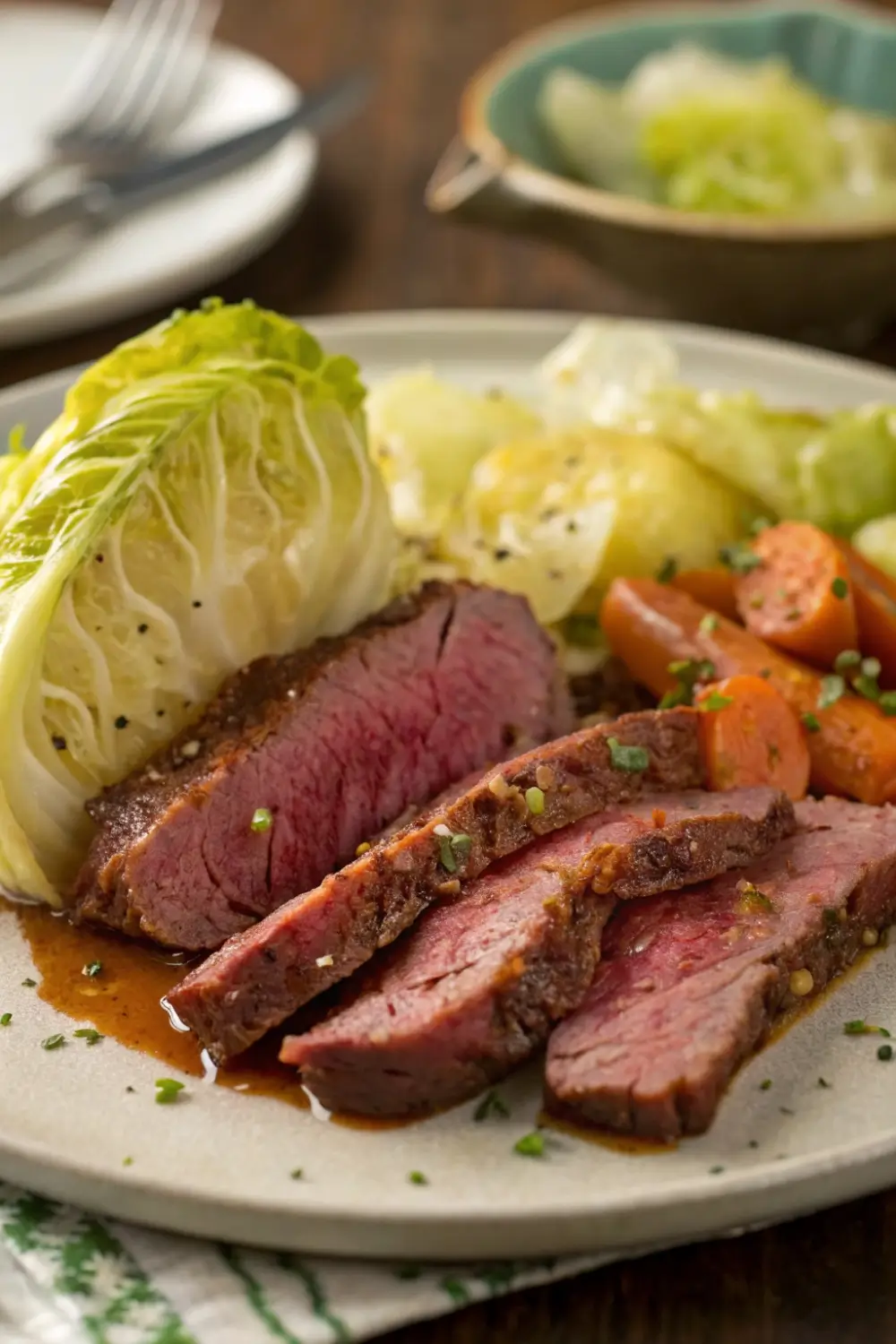
Unlike quicker cooking methods, slow roasting allows the corned beef to become exceptionally tender—so soft it practically melts with each bite. The cabbage, carrots, and potatoes absorb the flavorful juices, turning into perfectly cooked companions that complement the richness of the meat. The result is a balanced, hearty meal that feels both rustic and elevated.
Whether you’re preparing a weekend dinner, hosting guests, or simply craving a warm and nourishing meal, this recipe delivers depth, texture, and comfort in every bite.
Why Slow Roasting Makes a Difference
Deep, Developed Flavor
Cooking the corned beef slowly at a low temperature allows the spices and natural juices to penetrate deeply into the meat, resulting in a more complex and satisfying flavor.
Tender, Melt-in-Your-Mouth Texture
Slow roasting breaks down tough connective tissues gradually, creating a fork-tender consistency that’s hard to achieve with faster methods.
Evenly Cooked Vegetables
The vegetables roast gently alongside the beef, soaking up all the savory goodness while maintaining their structure.
Minimal Effort, Maximum Reward
Once everything is in the oven, the process requires very little attention, making it perfect for relaxed cooking days.
Ingredients
For the Corned Beef
1 (3–4 pound) corned beef brisket with spice packet
2 cups water or low-sodium broth
1 large onion, sliced
4 cloves garlic, crushed
2 bay leaves
1 teaspoon black pepper
For the Vegetables
1 large green cabbage, cut into wedges
5 medium potatoes, halved
4 large carrots, cut into thick pieces
1 tablespoon olive oil
1/2 teaspoon salt
1/2 teaspoon black pepper
Optional Flavor Enhancers
1 teaspoon garlic powder
1 teaspoon onion powder
Fresh thyme or parsley for garnish
Equipment Needed
Essential Tools
Large roasting pan or Dutch oven
Aluminum foil or tight-fitting lid
Sharp knife
Cutting board
Optional Tools
Meat thermometer
Basting spoon
Preparing the Corned Beef
Rinse for Balanced Flavor
Remove the corned beef from its packaging and rinse it under cold water. This helps reduce excess salt and ensures a more balanced taste.
Set Up the Roasting Base
Preheat your oven to 300°F (150°C).
Place sliced onions and crushed garlic at the bottom of your roasting pan. These will act as a flavorful base and prevent the meat from sticking.
Position the corned beef on top, fat side up. This allows the fat to slowly render and baste the meat as it cooks.
Sprinkle the spice packet over the top, along with black pepper and optional seasonings. Pour water or broth into the pan to maintain moisture throughout the cooking process.
Slow Roasting Process
Cover and Cook Low and Slow
Cover the roasting pan tightly with foil or a lid to trap moisture.
Place it in the oven and roast for approximately 4 to 5 hours. The low temperature ensures gradual cooking, which is key to achieving tender results.
Check for Doneness
The corned beef is ready when it becomes fork-tender and can be easily pulled apart. An internal temperature of around 195°F (90°C) indicates optimal tenderness.
Preparing the Vegetables
Timing the Addition
About 1.5 hours before the beef is finished, prepare the vegetables.
Toss the potatoes and carrots with olive oil, salt, and pepper. Add them to the roasting pan around the beef so they can cook in the flavorful juices.
Add the cabbage wedges during the final 45 minutes. This ensures they become tender without losing their texture.
Roasting for Flavor
As the vegetables cook, they absorb the savory broth and develop a rich, satisfying taste that complements the beef perfectly.
Final Touches
Optional Browning Step
If you prefer a slightly crisp exterior on the beef, remove the cover during the last 20 minutes of cooking and increase the oven temperature to 400°F (200°C).
This step creates a light crust while maintaining a juicy interior.
Resting the Meat
Once done, remove the beef from the oven and let it rest for 10–15 minutes. This step helps retain juices and improves slicing.
Slicing and Serving
Slice Against the Grain
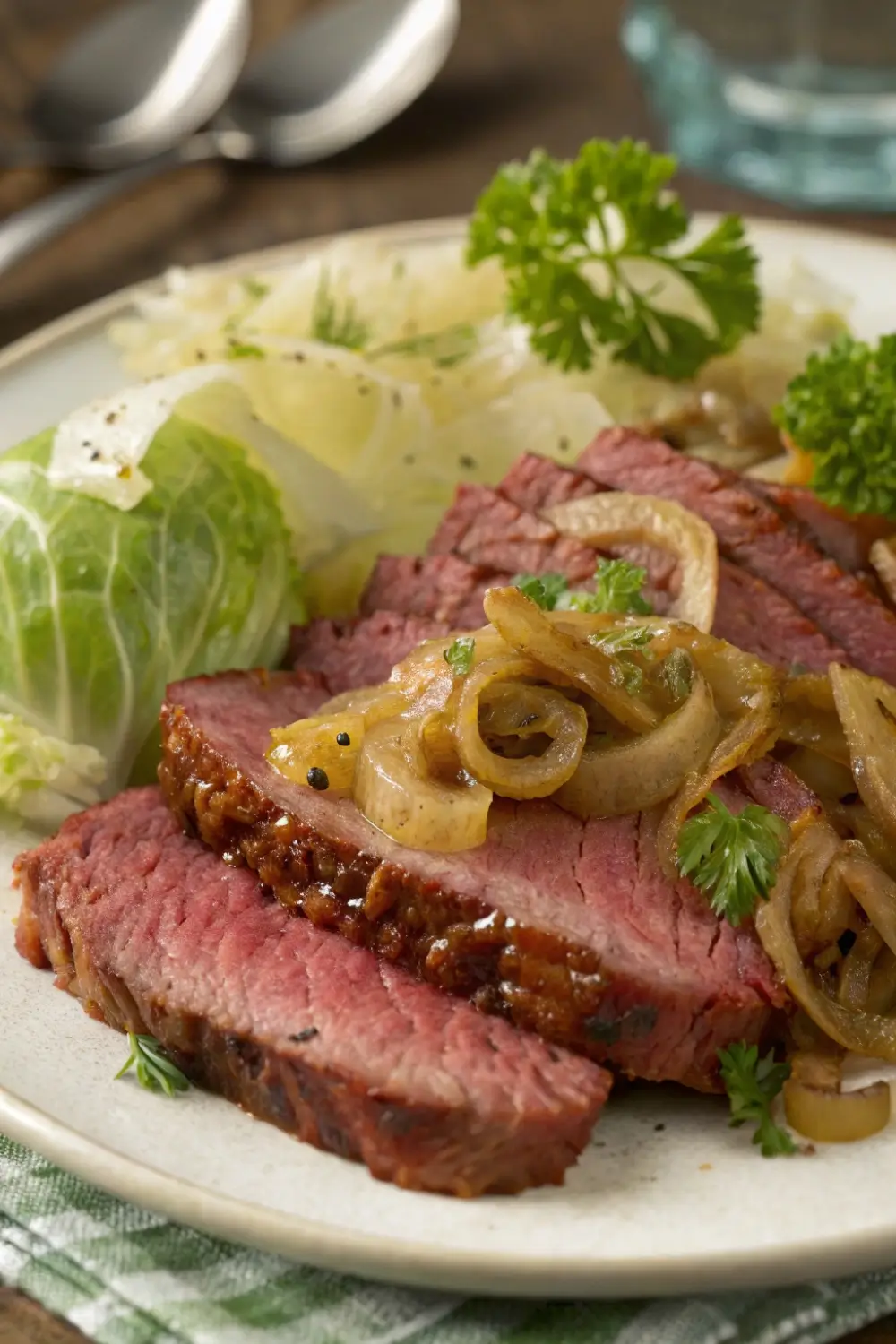
Identify the direction of the muscle fibers and slice across them. This shortens the fibers and ensures each bite is tender.
Plating the Meal
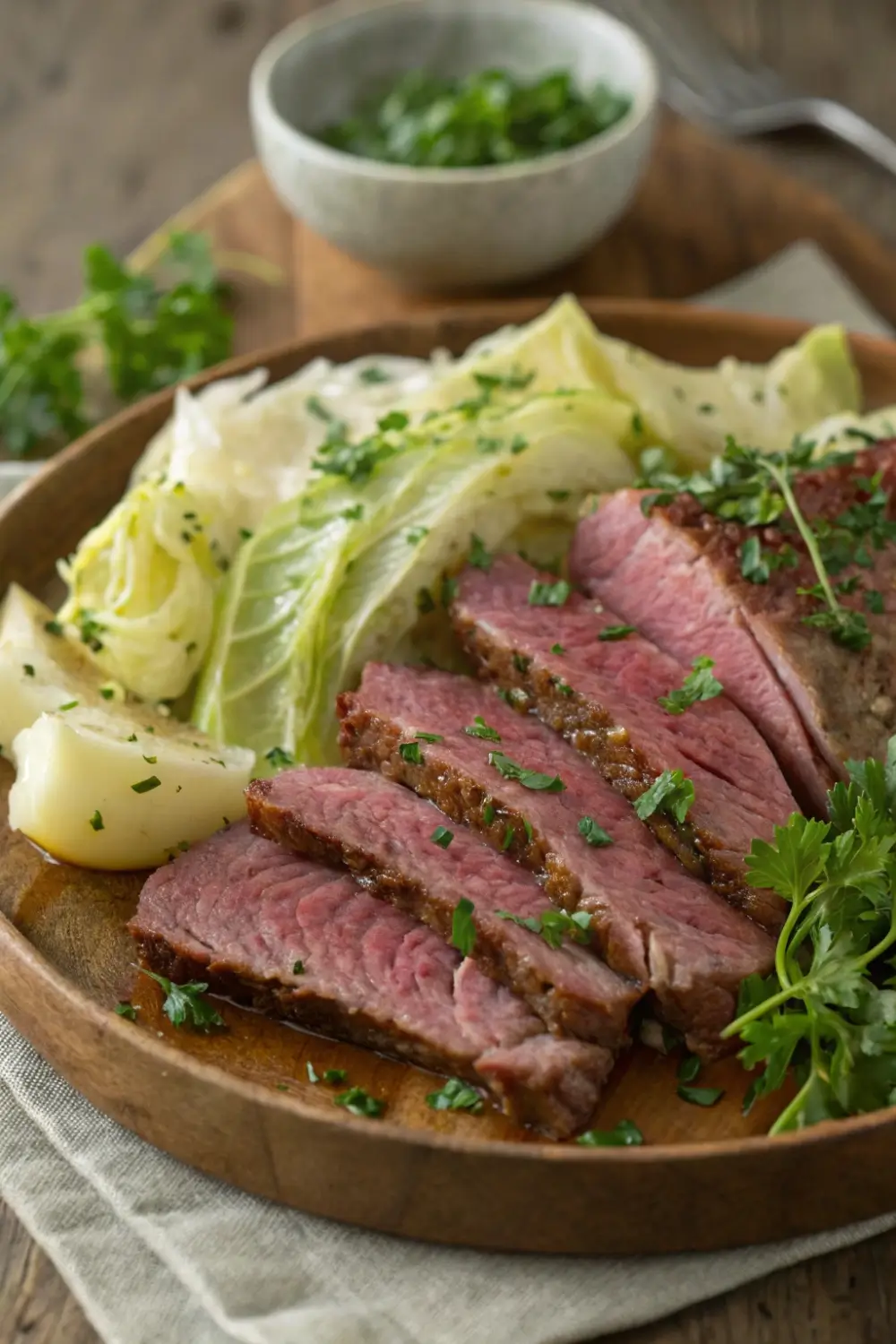
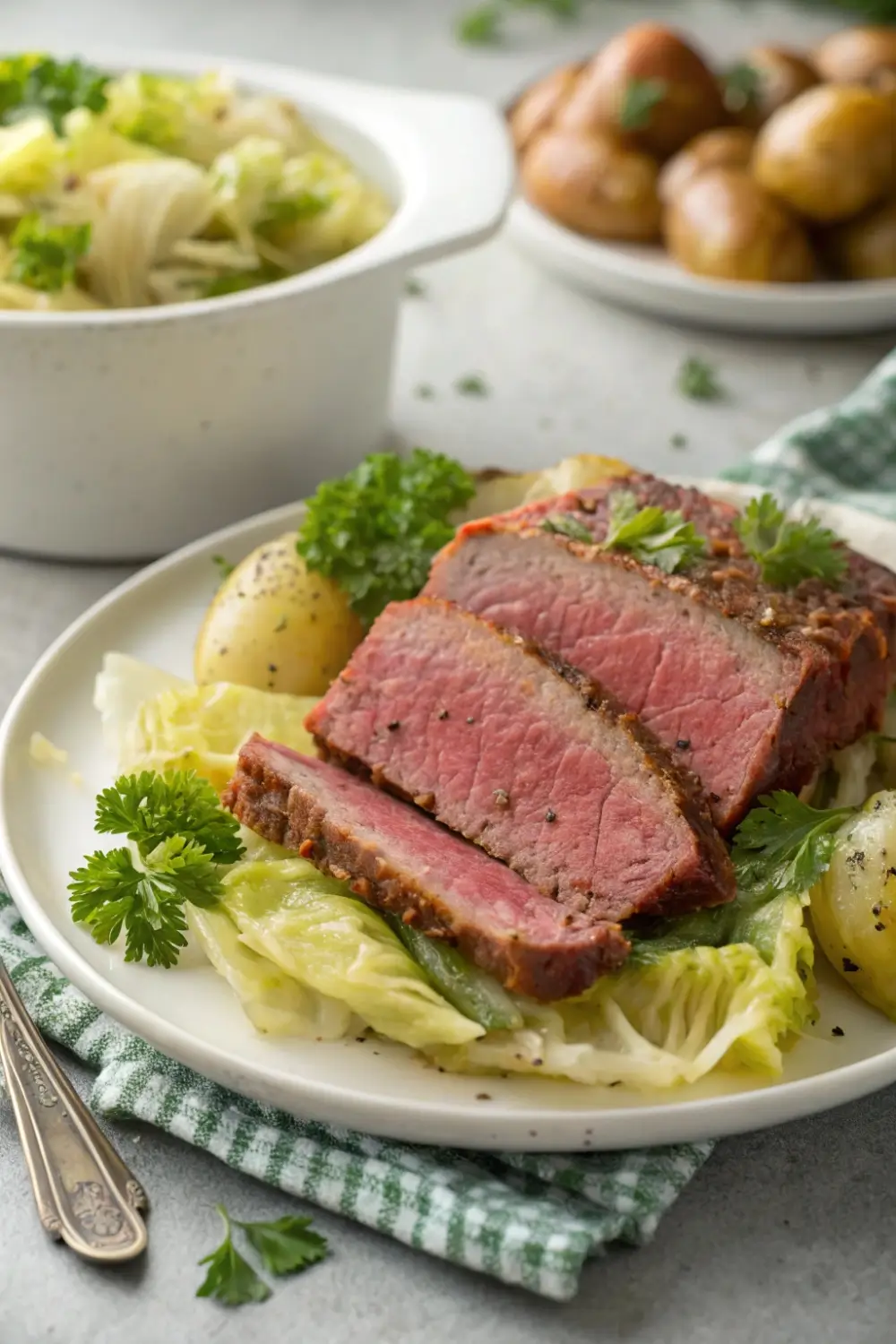
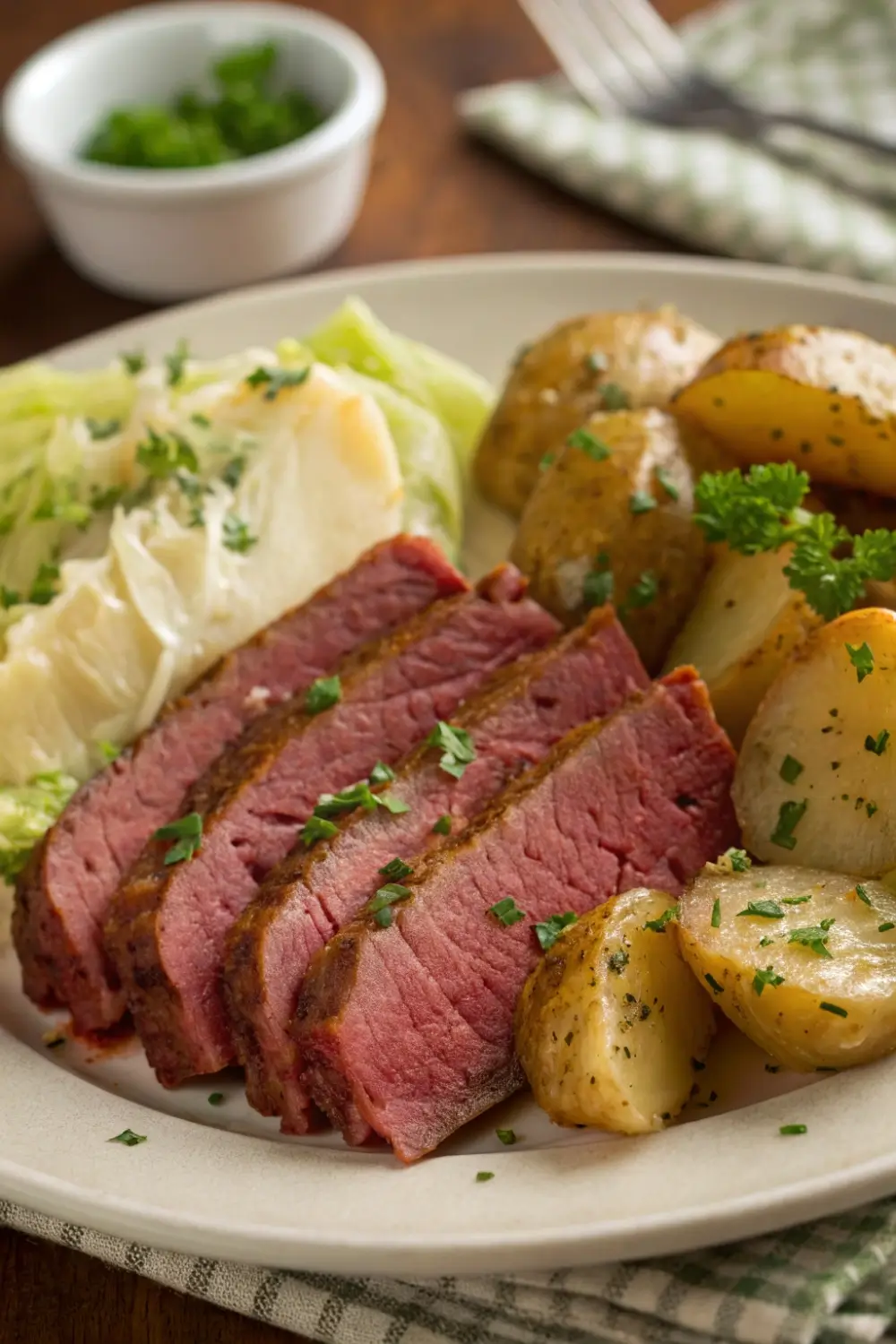
Arrange slices of corned beef on a large platter. Surround them with roasted cabbage, carrots, and potatoes.
Spoon some of the pan juices over the top to enhance flavor and presentation.
Flavor Variations
Garlic Herb Infusion
Add fresh thyme, rosemary, or parsley during roasting for an aromatic twist.
Slightly Sweet Finish
Sprinkle a small amount of brown sugar over the beef during the last 30 minutes for a subtle sweetness.
Spiced Version
Add paprika or a pinch of chili flakes for a gentle kick.
Expert Tips for Success
Be Patient
Slow roasting is all about time. Avoid increasing the temperature to speed things up, as this can toughen the meat.
Keep It Moist
Ensure there’s always liquid in the pan. Add a little more if needed during cooking.
Use the Right Cut
Flat cut brisket is ideal for even slicing, while point cut offers more richness.
Don’t Skip Resting
Allowing the meat to rest ensures it stays juicy when sliced.
Storage and Reheating
Refrigeration
Store leftovers in airtight containers for up to 4 days.
Freezing
Corned beef can be frozen for up to 2 months. Wrap tightly to preserve quality.
Reheating
Reheat gently in the oven or on the stovetop with a bit of broth to maintain moisture.
Nutritional Highlights
This meal offers a well-rounded combination of nutrients:
Protein from corned beef supports muscle health
Cabbage provides fiber and vitamins
Carrots add antioxidants
Potatoes contribute energy and potassium
It’s a hearty, satisfying option that nourishes both body and soul.
Common Mistakes to Avoid
Cooking at Too High a Temperature
High heat can make the meat tough instead of tender.
Adding Vegetables Too Early
This can result in overly soft or mushy vegetables.
Not Using Enough Liquid
Moisture is essential for proper slow roasting.
Cutting Incorrectly
Always slice against the grain for the best texture.
Serving Suggestions
Complementary Side Dishes
Steamed green beans
Roasted asparagus
Simple cucumber salad
Bread Pairings
Serve with crusty bread or soft rolls to soak up the flavorful juices.
Perfect Occasions for This Dish
This slow roasted corned beef and cabbage dinner is perfect for:
Cozy weekend meals
Family gatherings
Holiday celebrations
Meal prepping for the week
Its versatility makes it a reliable go-to for many occasions.
Frequently Asked Questions
Can I cook this at a higher temperature to save time?
It’s not recommended. Slow roasting at a low temperature is key to achieving tender, flavorful meat.
How do I know when the beef is done?
It should be fork-tender and easy to pull apart. A temperature around 195°F (90°C) is ideal.
Can I prepare this in advance?
Yes, you can cook the beef ahead of time and reheat it gently before serving.
What if my corned beef is too salty?
Rinsing it before cooking and using low-sodium broth helps control saltiness.
Can I add more vegetables?
Absolutely. Root vegetables like parsnips or turnips work beautifully.
Do I need to baste the meat?
It’s not necessary, but spooning pan juices over the meat occasionally can enhance flavor.
Can I make this dish dairy-free?
Yes, this recipe is naturally dairy-free as written.
Final Thoughts
This slow roasted corned beef and cabbage dinner is the definition of comfort food done right. With its tender, flavorful meat and perfectly cooked vegetables, it offers a satisfying and nourishing experience that’s hard to beat.
The slow roasting process brings out the best in every ingredient, creating a dish that feels both simple and deeply rewarding. It’s a reminder that great meals don’t have to be complicated—they just need time, care, and thoughtful preparation.
Whether you’re enjoying it with family or savoring leftovers the next day, this recipe is sure to become a favorite in your kitchen.