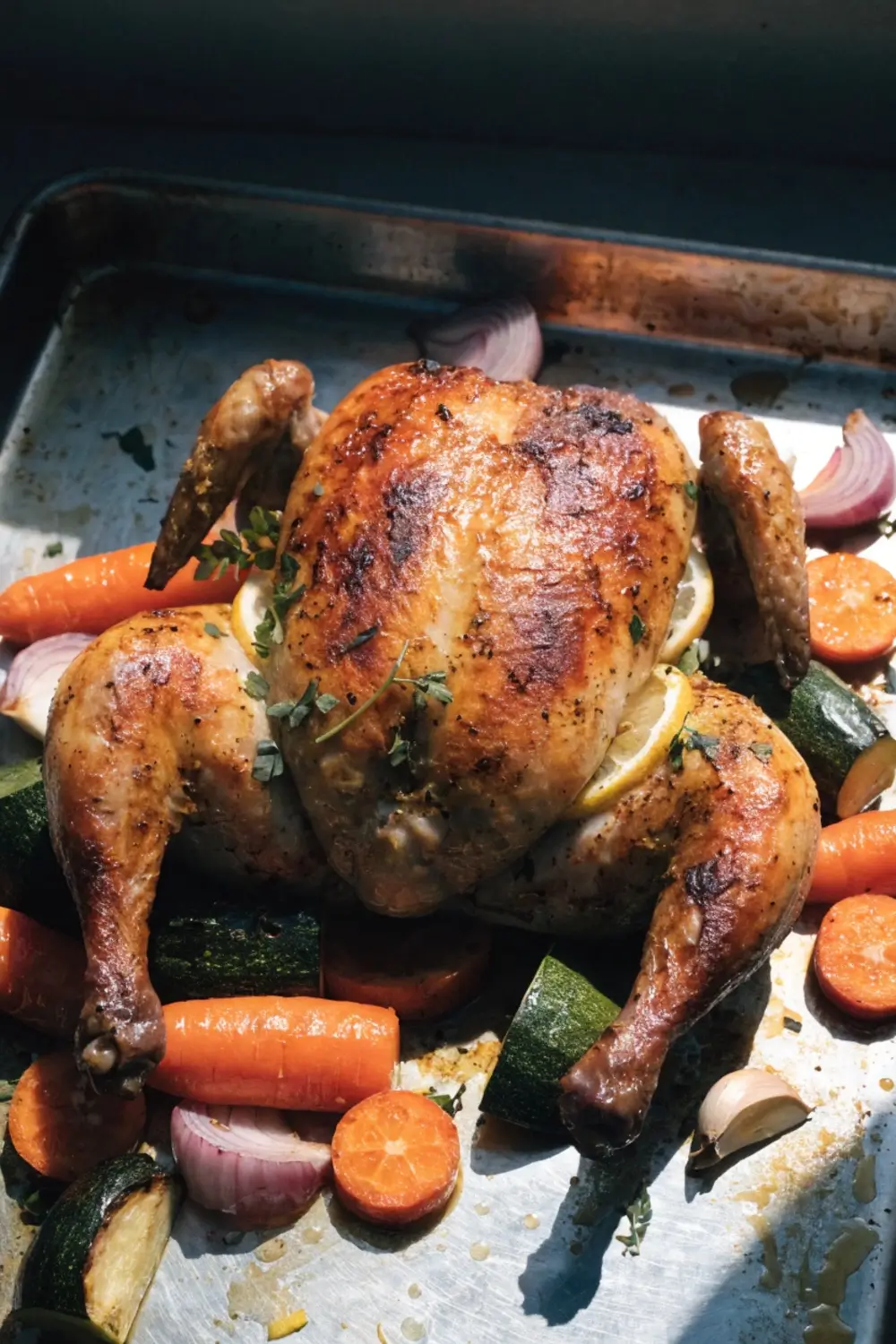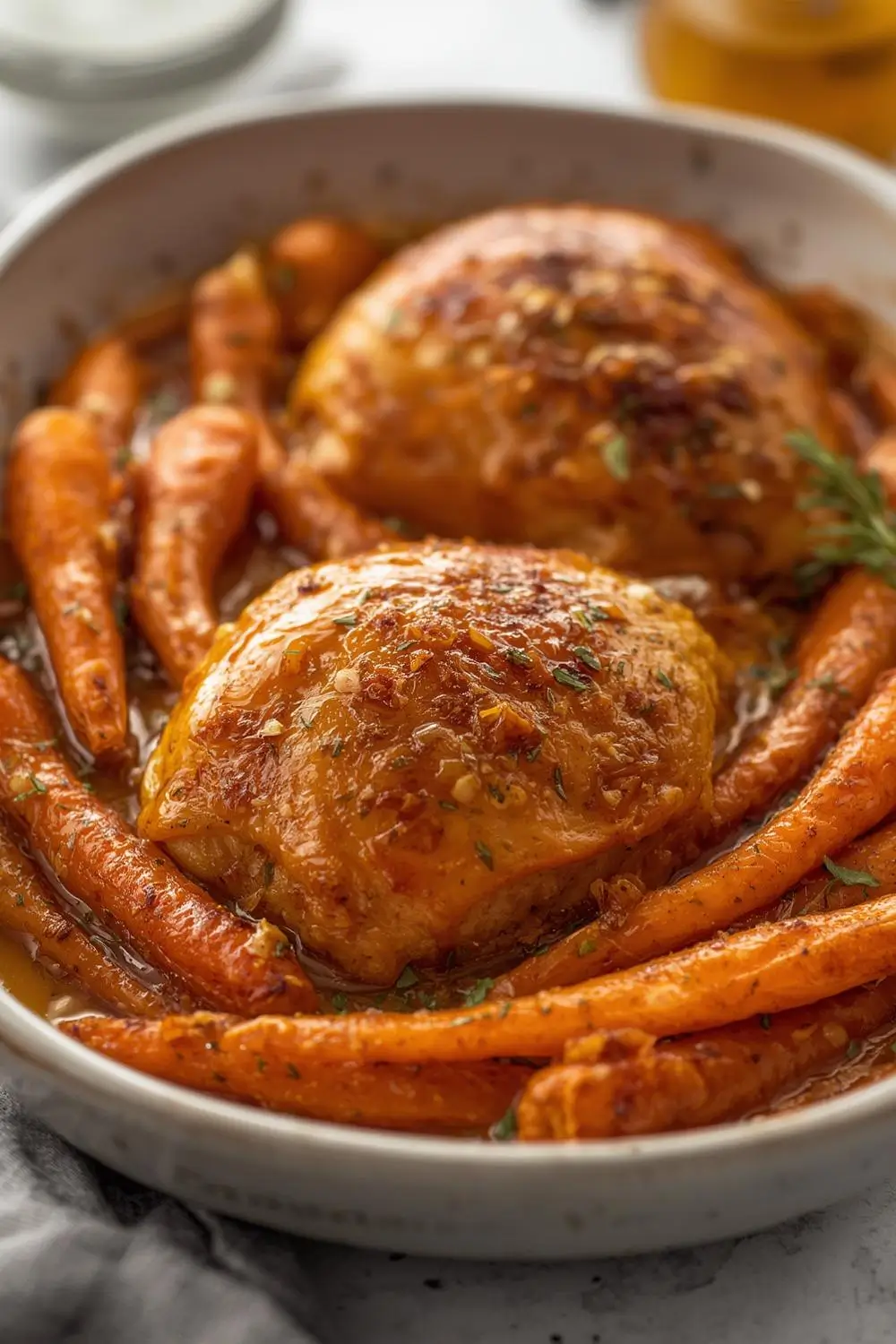
There’s something undeniably comforting about a meal where tender chicken and sweet carrots dance together in a golden, sticky glaze. This Honey Mustard Baked Chicken with Carrots recipe captures that perfect balance – the tangy bite of mustard meeting the rich sweetness of honey, all wrapped around juicy chicken breasts and caramelized carrots. It’s a one-pan wonder that delivers restaurant-worthy flavor with minimal fuss, making it a weeknight hero or a special dinner centerpiece. Forget complicated sauces or lengthy prep; this dish is pure, comforting satisfaction on a plate.
Why This Recipe Sings
Imagine biting into a piece of chicken where the exterior is beautifully caramelized, crackling with flavor, while the inside remains succulent and moist. Now picture tender, sweet carrots, roasted until they’re just starting to caramelize at the edges, infused with garlic and thyme. The magic happens in the sauce – a simple blend of honey, mustard, a touch of brown sugar, and a splash of broth that thickens into a luscious, glossy glaze as the chicken roasts. It’s a symphony of sweet, savory, tangy, and herbal notes that will have everyone asking for seconds. Best of all, it’s naturally gluten-free, requires minimal prep, and cleans up in one pan. Perfect for busy families or anyone craving a comforting, flavorful dinner.
Gathering Your Ingredients: The Building Blocks of Flavor
Before you turn on the oven, let’s gather everything you need. This recipe relies on quality ingredients to build its deep, satisfying flavor profile. Don’t be tempted to skip any step or substitute key elements unless specified in the variations section.
- The Star: Chicken Breasts: You’ll need about 4 boneless, skinless chicken breasts. Aim for breasts that are relatively uniform in thickness to ensure even cooking. Thicker cuts might need a gentle pound to an even 3/4-inch thickness. This ensures they cook through without drying out.
- The Sweet & Tangy Glaze: This is where the magic happens. You’ll need:
* Honey: Use a good quality, mild honey like clover or orange blossom. It provides the essential sweetness that balances the mustard.
* Dijon Mustard: A robust Dijon mustard is crucial for the tangy depth. Avoid sweet or whole-grain varieties unless specified in variations.
* Brown Sugar: Adds a rich caramel note and helps the glaze caramelize beautifully. Light or dark brown sugar work fine.
* Chicken Broth (or Stock): Unsalted is best. It adds moisture and depth, preventing the glaze from being too thick or sweet. Vegetable broth works well too.
* Garlic: Minced fresh garlic provides the best flavor. Avoid garlic powder here for maximum punch.
* Fresh Thyme: The aromatic herb that pairs perfectly with chicken and carrots. Use 1-2 teaspoons of fresh thyme leaves, finely chopped. Dried thyme can be used (1/2 teaspoon), but fresh is preferable.
* Salt & Black Pepper: Essential for seasoning the chicken and enhancing all the other flavors.
- The Supporting Act: Carrots: About 1.5 to 2 pounds of carrots. You can use whole carrots or pre-cut baby carrots. If using whole carrots, peel them and cut them into 1.5-inch chunks or half-moons. They should be similar in size to the chicken pieces for even roasting.
- The Fat: Olive Oil or Avocado Oil: Used to coat the chicken and carrots before roasting, helping them brown beautifully and preventing sticking. A neutral-flavored oil is best.
Essential Equipment
- Large Baking Sheet (Half Sheet Pan): This is your roasting vessel. A rimmed sheet pan is ideal to catch any drips.
- Parchment Paper or Aluminum Foil: Lining the pan makes cleanup a breeze and prevents sticking. Parchment is slightly better for easy release.
- Mixing Bowls: One for the glaze, one for tossing the carrots.
- Measuring Cups & Spoons: Accuracy matters, especially with the glaze ingredients.
- Knife & Cutting Board: For prepping the chicken and carrots.
- Whisk or Fork: For mixing the glaze.
- Tongs: For handling the chicken and carrots while roasting.
Step-by-Step Instructions: From Bowl to Oven to Plate
Now, let’s walk through the process. This recipe is designed to be straightforward, but paying attention to details like preheating the oven and basting the chicken will elevate the results.
1. Preheat & Prep: Start by preheating your oven to 400°F (200°C). This ensures the chicken and carrots start roasting immediately at the right temperature. While the oven heats, line your large baking sheet with parchment paper or aluminum foil. This step is crucial for easy cleanup and preventing sticking.
2. Prepare the Carrots: Wash and peel the carrots if using whole ones. Cut them into 1.5-inch chunks or half-moons. Place them in a medium bowl. Drizzle with 1 tablespoon of olive oil, sprinkle with a pinch of salt and pepper, and toss gently to coat. Spread the carrots out in a single layer on the prepared baking sheet. They should have some space around them for air circulation.
3. Make the Honey Mustard Glaze: In a small bowl, whisk together the honey, Dijon mustard, brown sugar, chicken broth, minced garlic, and chopped fresh thyme. Whisk until the brown sugar is completely dissolved and the mixture is smooth. This is your flavor bomb!
4. Season & Sear the Chicken: Pat the chicken breasts dry with paper towels. This helps them brown better. Season generously on both sides with salt and freshly ground black pepper. Heat 1 tablespoon of olive oil in a large skillet (like a cast-iron skillet or heavy-bottomed pan) over medium-high heat. Once shimmering, carefully place the chicken breasts in the skillet. Sear them for 2-3 minutes per side, until they develop a deep golden-brown crust. Don’t worry if they aren’t cooked through yet – they’ll finish roasting in the oven. Transfer the seared chicken breasts to the baking sheet with the carrots, placing them on top of the carrots or slightly overlapping them.
5. Glaze & Roast: Pour the honey mustard glaze evenly over the chicken breasts, making sure to spoon some over the carrots as well. Use a spoon to gently baste the chicken and carrots with the glaze. Place the baking sheet in the preheated oven.
6. Roasting Time: Roast the chicken and carrots for approximately 25-35 minutes. The exact time depends on the thickness of your chicken breasts. The chicken is done when it reaches an internal temperature of 165°F (74°C) when measured in the thickest part, and the juices run clear. The carrots should be tender when pierced with a fork and nicely caramelized around the edges. Baste the chicken and carrots with the pan juices every 10-15 minutes during roasting for maximum flavor and glaze development.
7. Rest & Serve: Once the chicken is cooked through, remove the baking sheet from the oven. Let the chicken rest for 5-10 minutes before slicing. This allows the juices to redistribute, keeping the chicken incredibly moist. The glaze will thicken slightly as it rests. Serve the sliced chicken breasts alongside the roasted carrots, generously spooning the delicious pan juices over everything. The carrots will be sweet, tender, and infused with garlic and thyme, perfectly complementing the savory-sweet chicken.
Tips for Perfect Results Every Time
- Don’t Skip the Sear: Searing the chicken creates a flavorful crust that you don’t want to miss. It adds texture and depth.
- Uniform Size Matters: Cutting the chicken and carrots to similar sizes ensures they cook at the same rate. This prevents dry chicken or undercooked carrots.
- Don’t Overcrowd the Pan: Give the chicken and carrots space on the baking sheet. Crowding leads to steaming instead of roasting, resulting in less caramelization and potentially soggy vegetables.
- Baste Regularly: Basting the chicken and carrots with the pan juices throughout roasting keeps them moist and continuously coats them in flavor. Don’t be shy with the spoon!
- Use a Meat Thermometer: This is the most reliable way to ensure the chicken is cooked safely and perfectly. Guessing by color or time is risky.
- Rest the Chicken: Letting it rest is non-negotiable for juicy results. It makes a significant difference.
- Adjust Sweetness/Tang: Taste the glaze before pouring it over the chicken. If you prefer it sweeter, add a touch more honey. If you like it tangier, add a splash more Dijon mustard. Adjust to your taste.
- Carrot Size Flexibility: While uniform size is ideal, slightly different sizes are okay. Just keep an eye on the smaller pieces and remove them if they get too done before the chicken is ready.
Variations and Substitutions: Making it Your Own
This recipe is wonderfully adaptable. Here are some ideas to tweak it to your liking:
- Different Chicken: Use boneless, skinless chicken thighs instead of breasts for even more moisture and flavor. They cook slightly faster, so reduce roasting time by 5-10 minutes.
- Sweetener Swap: If you don’t have brown sugar, white sugar works, though it won’t caramelize as well. Honey alone can be used, but the brown sugar adds crucial depth. Maple syrup is another delicious alternative.
- Mustard Variations: Use whole-grain mustard for a bit of texture and nuttiness. Yellow mustard can be used but will be milder. For a spicier kick, add a pinch of red pepper flakes to the glaze.
- Herb Infusions: Experiment with other herbs! Rosemary, oregano, or a squeeze of lemon juice can add wonderful twists. Just add them to the glaze.
- Vegetable Swap: Carrots are classic, but parsnips, sweet potatoes, or even Brussels sprouts would roast beautifully alongside the chicken. Adjust roasting time if needed.
- Gluten-Free: This recipe is naturally gluten-free. Ensure your Dijon mustard and chicken broth are certified gluten-free if you have a severe allergy.
- Dairy-Free: Naturally dairy-free. Serve with dairy-free mashed potatoes or a simple green salad if desired.
- Low-Sodium: Use low-sodium chicken broth and reduce the added salt in the glaze. Taste before adding extra salt.
Storage and Reheating: Keeping the Flavor Alive
- Cooling: Let the cooked chicken and carrots cool completely on a wire rack set over a plate or tray. This prevents condensation and sogginess.
- Refrigeration: Store leftovers in an airtight container in the refrigerator for up to 3-4 days. The glaze will thicken significantly in the fridge.
- Reheating: Reheat gently in a skillet over medium-low heat, adding a splash of broth or water to loosen the glaze and prevent drying out. Alternatively, reheat in a 300°F (150°C) oven on a baking sheet for 10-15 minutes, or until warmed through. Microwave is possible but can make the chicken less juicy and the glaze less glossy.
- Freezing: This dish freezes well! Cool it completely, then portion it into airtight containers or freezer bags. Freeze for up to 3 months. Thaw overnight in the fridge before reheating.
Common Mistakes to Avoid: Ensuring Success
- Overcrowding the Pan: This is the biggest culprit for soggy, un-caramelized results. Give them space!
- Underseasoning: Don’t be shy with the salt and pepper on the chicken. It’s the foundation of flavor.
- Rushing the Sear: Skipping or rushing the searing step means missing out on that crucial flavor-building crust.
- Not Basting Enough: Forgetting to baste regularly means the chicken and carrots miss out on the delicious glaze development.
- Cutting Chicken Too Thick: Pieces thicker than 1.5 inches will take much longer to cook through and may dry out before the center is done.
- Skipping the Rest: Cutting into the chicken immediately releases all the juices, leaving it dry.
- Using Expired Ingredients: Old garlic or stale herbs won’t provide the vibrant flavor this dish deserves.
Frequently Asked Questions (FAQs)
- Q: Can I use frozen chicken breasts? A: It’s best to use thawed chicken breasts. If you must use frozen, increase the roasting time by 50% and ensure the internal temperature reaches 165°F (74°C) in the thickest part. Pat them very dry before searing.
- Q: What if my chicken breasts are very thick? A: Pound them gently to an even 3/4-inch thickness before seasoning and searing. This ensures they cook through evenly without drying out.
- Q: Can I make this in a slow cooker? A: While the concept is similar, the slow cooker won’t achieve the same beautiful caramelization on the chicken and carrots. The high heat of the oven is key for the glaze to develop properly. You can cook the chicken and carrots separately in the slow cooker with the glaze, but the texture won’t be the same.
- Q: Can I add other vegetables? A: Absolutely! Zucchini, bell peppers, or onions would roast wonderfully alongside the carrots and chicken. Just add them to the pan at the same time as the carrots.
- Q: Is this dish spicy? A: This recipe is not inherently spicy. The heat level comes entirely from the Dijon mustard. If you prefer it milder, use a milder Dijon or omit any added heat like red pepper flakes.
- Q: Can I make this ahead of time? A: You can prepare the glaze and cut the chicken and carrots ahead of time. Store them separately in the fridge. Assemble and roast when ready to eat. The carrots can be roasted a day ahead and reheated gently.
- Q: What sides go best with this? A: This dish is incredibly versatile. Classic sides include creamy mashed potatoes, fluffy rice, or crusty bread to soak up the delicious pan sauce. A simple green salad or steamed green beans also complement it beautifully.
- Q: Can I use a different sweetener? A: Yes! Maple syrup, agave nectar, or coconut sugar can be used instead of brown sugar. Adjust to taste and note that some may caramelize differently.
- Q: How do I know when the carrots are done? A: They should be tender when pierced with a fork but still have a slight bite. They will also be nicely browned around the edges. Roasting time is usually 25-35 minutes, but check them towards the end.
A Final Thought
This Honey Mustard Baked Chicken with Carrots is more than just a recipe; it’s a celebration of simple, honest flavors coming together to create something truly special. The sweet tang of the honey mustard glaze, the savory depth of the chicken, and the earthy sweetness of the roasted carrots create a harmony that’s hard to beat. It’s a dish that feels like a hug on a plate, perfect for a cozy weeknight dinner or a gathering with loved ones. The ease of preparation and the stunning results make it a staple worth keeping close. So, preheat that oven, gather your ingredients, and get ready to savor the sweet and savory magic. Enjoy every delicious bite!