Table of Contents
- 1 Why Lobster Tail Often Turns Dry
- 2 What Makes This Baked Lobster Tail Extra Juicy
- 3 Ingredients for Juicy Baked Lobster Tail
- 4 Choosing the Best Lobster Tails for Baking
- 5 Proper Thawing for Maximum Juiciness
- 6 Preparing Lobster Tails for Baking
- 7 Seasoning That Locks in Moisture
- 8 The Best Oven Temperature for Juicy Lobster Tail
- 9 How Long to Bake Lobster Tail Without Drying It Out
- 10 How to Tell When Lobster Tail Is Perfectly Juicy
- 11 Why Resting Matters After Baking
- 12 Serving Juicy Baked Lobster Tail
- 13 Best Side Dishes That Complement Juicy Lobster
- 14 Common Mistakes That Cause Dry Lobster
- 15 How to Bake Lobster Tail for Guests
- 16 Storing Leftover Baked Lobster Tail
- 17 Nutritional Benefits of Lobster Tail
- 18 Frequently Asked Questions
- 19 Final Thoughts on Juicy Baked Lobster Tail
Baking lobster tail can feel risky if you’ve ever experienced dry, rubbery results. Lobster is delicate, and even a few extra minutes in the oven can change its texture completely. The good news is that baking lobster tail the right way keeps it moist, tender, and full of flavor every single time.
This juicy baked lobster tail recipe focuses on gentle heat, smart preparation, and simple seasoning that protects the natural sweetness of the lobster. Instead of complicated techniques or heavy sauces, this method relies on balance and timing to produce consistently juicy results from the first bite to the last.
Whether you’re cooking lobster for the first time or looking to improve your technique, this recipe shows you exactly how to bake lobster tail so it stays succulent and never dries out.
Why Lobster Tail Often Turns Dry
Understanding why lobster dries out is the first step to preventing it. Lobster meat is lean, meaning it contains very little fat. Without moisture protection, it can overcook quickly.
Common reasons lobster tail becomes dry include:
Cooking at too high a temperature
Leaving it in the oven too long
Skipping butter or oil
Not butterflying the tail
Using direct heat without moisture
This recipe addresses every one of these issues to guarantee juicy results.
What Makes This Baked Lobster Tail Extra Juicy
This method is designed to preserve moisture at every stage of cooking.
Key factors that keep the lobster juicy:
Butterflying for even cooking
Butter and oil to protect moisture
Gentle oven heat
Precise cooking time
Immediate serving after baking
Instead of rushing the process, this recipe focuses on controlled heat and thoughtful preparation.
Ingredients for Juicy Baked Lobster Tail
Main Ingredients
Lobster tails, 4 to 8 ounces each
Unsalted butter, melted
Olive oil
Garlic, finely minced
Fresh lemon juice
Paprika
Salt
Black pepper
Optional Garnishes
Fresh parsley
Lemon wedges
Every ingredient plays a role in enhancing flavor while maintaining moisture.
Choosing the Best Lobster Tails for Baking
Fresh or Frozen Lobster Tails
Both fresh and frozen lobster tails can turn out juicy if handled properly. Frozen tails are often more accessible and consistent.
When selecting lobster tails:
Look for firm shells
Avoid strong odors
Choose tails with intact shells
Avoid excessive ice buildup on frozen tails
If using frozen lobster tails, thaw them slowly in the refrigerator overnight.
Proper Thawing for Maximum Juiciness
Thawing lobster correctly is critical for even cooking.
Best thawing method:
Place lobster tails in the refrigerator overnight
Keep them covered or sealed
Pat dry before seasoning
Avoid quick thawing methods, as uneven temperature can lead to dry spots during baking.
Preparing Lobster Tails for Baking
Cleaning the Lobster Tails
Rinse lobster tails briefly under cold water and pat completely dry with paper towels. Dry surfaces allow seasoning and butter to cling properly.
Butterflying the Lobster Tail
Butterflying ensures even heat exposure and prevents the underside from overcooking while the top stays raw.
Steps:
Use kitchen scissors to cut down the center of the shell
Stop before reaching the tail fin
Gently loosen the meat from the shell
Lift the meat and rest it on top of the shell
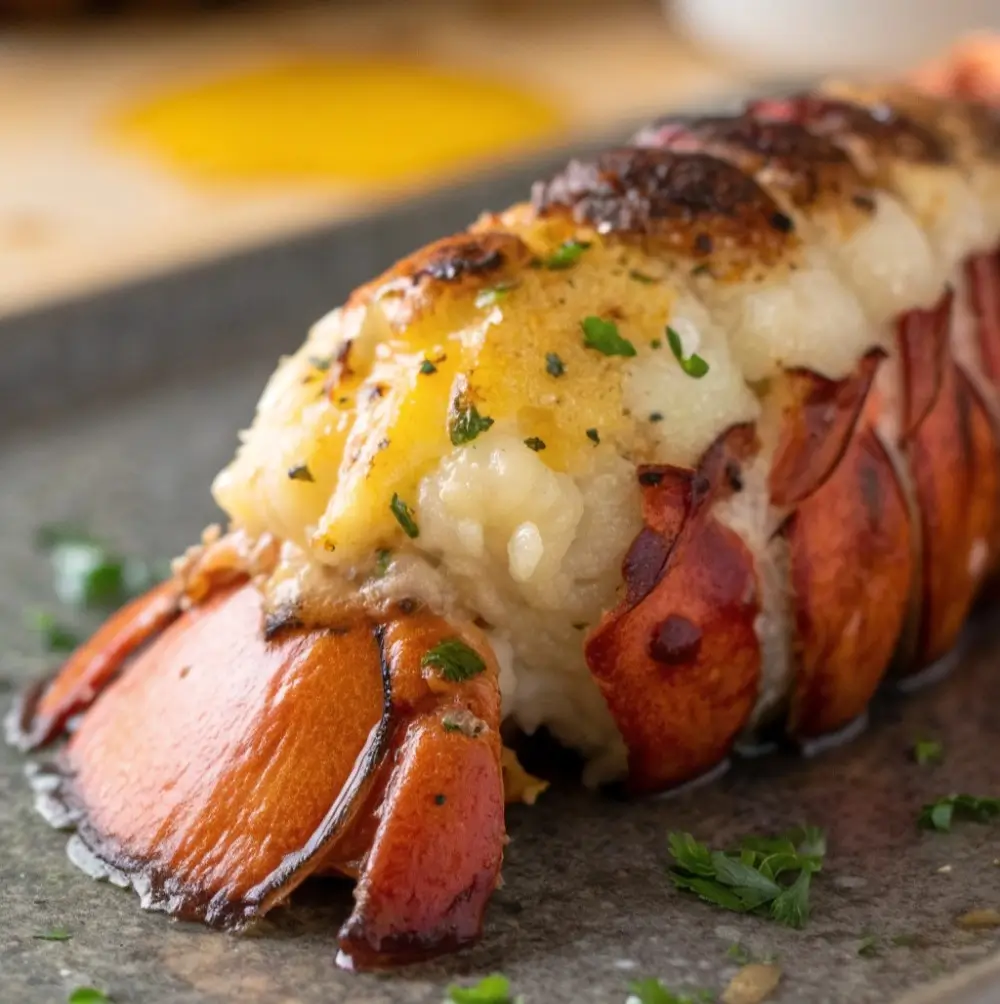
This technique also creates a beautiful presentation.
Seasoning That Locks in Moisture
Lobster doesn’t need heavy seasoning. The goal is to enhance flavor while protecting moisture.
In a small bowl, combine:
Melted butter
Olive oil
Garlic
Lemon juice
Paprika
Salt
Black pepper
Brush the mixture generously over the lobster meat, making sure it coats the surface evenly. Butter acts as a moisture barrier while adding richness.
The Best Oven Temperature for Juicy Lobster Tail
Contrary to popular belief, higher heat isn’t always better for lobster. Gentle, controlled heat keeps the meat tender.
Recommended oven temperature:
400°F (205°C)
This temperature allows the lobster to cook through evenly without drying out the exterior.
How Long to Bake Lobster Tail Without Drying It Out
Cooking time depends on the size of the lobster tail.
General baking guidelines:
4-ounce tails: 11–12 minutes
5-ounce tails: 12–13 minutes
6-ounce tails: 13–14 minutes
8-ounce tails: 15–16 minutes
Check lobster early rather than late. Overcooking is the fastest way to lose juiciness.
How to Tell When Lobster Tail Is Perfectly Juicy
Juicy lobster tail gives clear visual and texture cues.
Perfectly baked lobster:
Turns opaque white
Feels firm but springy
Pulls apart easily with a fork
Has a slight sheen from butter
An internal temperature of about 140°F–145°F indicates doneness.
Why Resting Matters After Baking
Once lobster comes out of the oven, let it rest for 2 to 3 minutes before serving. This allows juices to redistribute throughout the meat instead of spilling out immediately.
Skipping this step can make lobster seem drier than it actually is.
Serving Juicy Baked Lobster Tail
Serve lobster tails immediately while hot and glossy.
Presentation tips:
Place on warm plates
Add lemon wedges for brightness
Garnish lightly with parsley
Spoon extra melted butter over the top
Simple presentation keeps the focus on the lobster’s natural beauty.
Best Side Dishes That Complement Juicy Lobster
Moisture-Friendly Vegetable Sides
Steamed asparagus
Roasted zucchini
Green beans
Sautéed spinach
Balanced Starch Options
Mashed potatoes
Rice pilaf
Creamy polenta
Baked potatoes
Fresh Salads
Mixed greens
Tomato and cucumber salad
Arugula with lemon dressing
Choose sides that don’t overpower the lobster’s delicate flavor.
Common Mistakes That Cause Dry Lobster
Overcooking
Even one extra minute can change texture.
Skipping Butter or Oil
Fat protects moisture during baking.
Cooking Straight From Frozen
Uneven cooking leads to dry edges.
Too Much Heat
High temperatures cook the outside too fast.
Avoiding these mistakes ensures juicy lobster every time.
How to Bake Lobster Tail for Guests
Lobster tail is an excellent option for entertaining because it looks impressive and cooks quickly.
Hosting tips:
Prep lobster tails ahead of time
Season just before baking
Bake close to serving time
Keep sides simple and warm
This keeps stress low and results consistent.
Storing Leftover Baked Lobster Tail
Refrigeration
Store leftovers in an airtight container for up to 2 days.
Best Reheating Method
To maintain moisture:
Wrap lobster in foil with butter
Reheat in the oven at 300°F
Heat just until warmed through
Avoid microwaving, which can toughen the meat.
Nutritional Benefits of Lobster Tail
Lobster tail is not only flavorful but also nutritious.
Benefits include:
High protein
Low fat
Rich in essential minerals
Naturally satisfying
When baked simply, lobster fits well into balanced eating plans.
Frequently Asked Questions
Why does baked lobster sometimes turn rubbery?
Rubbery lobster is usually overcooked. Reduce cooking time and check earlier.
Can I bake lobster tail without butter?
Yes, olive oil works, but butter helps keep the meat moist and flavorful.
Should I cover lobster tail while baking?
No. Leaving it uncovered allows gentle evaporation while butter protects moisture.
How many lobster tails per person?
One medium lobster tail per person is typically enough with sides.
Can I prepare lobster tails ahead of time?
You can butterfly and season them a few hours ahead, then bake just before serving.
Is baking better than boiling lobster tail?
Baking offers better control and preserves juiciness when done correctly.
Final Thoughts on Juicy Baked Lobster Tail
Juicy baked lobster tail is all about technique, not complexity. With proper preparation, gentle heat, and thoughtful timing, you can bake lobster that stays moist, tender, and full of flavor every time.
This recipe removes the guesswork and replaces it with confidence. Whether you’re cooking for a special occasion or simply want a reliable way to enjoy lobster at home, this method ensures consistently juicy results that never disappoint.
Once you master this approach, dry lobster will be a thing of the past.