Table of Contents
- 1 Why Use a Dutch Oven for This Recipe
- 2 Ingredients
- 3 Equipment Needed
- 4 Preparing the Ingredients
- 5 Building the Flavor Base
- 6 Cooking Process
- 7 Adding the Vegetables
- 8 Checking for Doneness
- 9 Resting and Slicing
- 10 Serving the Dish
- 11 Flavor Variations
- 12 Tips for Perfect Results
- 13 Storage and Reheating
- 14 Nutritional Highlights
- 15 Common Mistakes to Avoid
- 16 Serving Suggestions
- 17 Ideal Occasions for This Recipe
- 18 Frequently Asked Questions
- 19 Final Thoughts
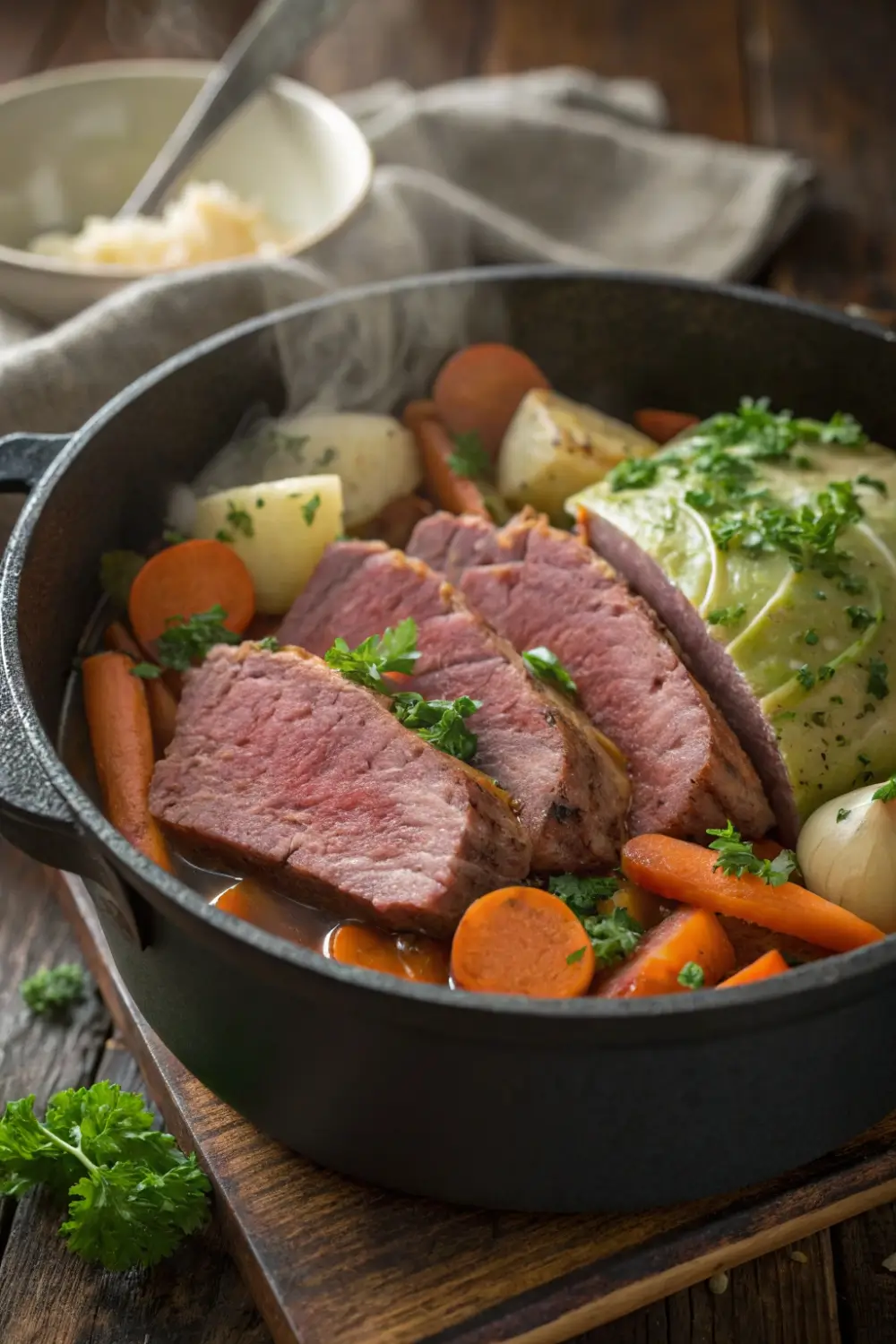
There’s something timeless about a meal that slowly cooks to perfection in a sturdy pot, filling your kitchen with warmth and rich, savory aromas. This Dutch oven corned beef and cabbage recipe embraces that tradition, offering a simple yet deeply satisfying way to prepare one of the most beloved comfort dishes.
Using a Dutch oven transforms the cooking process. Its heavy construction and tight-fitting lid create an ideal environment for even heat distribution and moisture retention. The result is corned beef that turns out incredibly tender and flavorful, along with vegetables that are soft, infused, and perfectly cooked.
This recipe is perfect for anyone who appreciates a hearty, no-fuss meal that delivers maximum flavor with minimal effort. Whether you’re cooking for a family dinner or preparing something special for a relaxed evening, this dish is a dependable choice that never disappoints.
Why Use a Dutch Oven for This Recipe
Superior Heat Retention
A Dutch oven maintains consistent heat, ensuring the corned beef cooks evenly from start to finish.
Moisture Locking
The tight lid traps steam inside, preventing the meat from drying out and keeping everything juicy.
One-Pot Convenience
Everything cooks in a single pot, making preparation and cleanup incredibly easy.
Enhanced Flavor Development
Slow, enclosed cooking allows flavors to blend and deepen over time, creating a richer final dish.
Ingredients
For the Corned Beef
1 (3–4 pound) corned beef brisket with spice packet
8 cups water or low-sodium broth
1 large onion, cut into wedges
4 cloves garlic, crushed
2 bay leaves
1 teaspoon black peppercorns
For the Vegetables
1 large green cabbage, cut into wedges
5 medium potatoes, halved
4 large carrots, peeled and cut into chunks
Optional Seasoning Additions
1 teaspoon garlic powder
1 teaspoon onion powder
Fresh parsley for garnish
Equipment Needed
Essential Tools
Dutch oven with lid
Sharp knife
Cutting board
Tongs or slotted spoon
Optional Tools
Ladle
Meat thermometer
Preparing the Ingredients
Rinse the Corned Beef
Remove the corned beef from its packaging and rinse it under cold water. This step helps reduce excess salt and ensures a more balanced flavor.
Prepare the Vegetables
Cut the cabbage into wedges, halve the potatoes, and chop the carrots into large pieces. Keeping the vegetables in larger chunks helps them hold their shape during cooking.
Building the Flavor Base
Layering the Ingredients
Place the onion wedges and crushed garlic at the bottom of the Dutch oven. These create a flavorful base and prevent the meat from sticking.
Set the corned beef on top, fat side up. This allows the fat to slowly render and baste the meat as it cooks.
Sprinkle the spice packet over the beef, along with black peppercorns and optional seasonings.
Adding Liquid
Pour in enough water or broth to nearly cover the beef. The liquid is essential for keeping everything moist and infusing the dish with flavor.
Cooking Process
Bringing It to a Simmer
Place the Dutch oven on the stovetop over medium heat and bring the liquid to a gentle simmer.
Once it begins to bubble lightly, cover the pot with its lid.
Slow Cooking in the Oven
Preheat your oven to 325°F (165°C).
Transfer the covered Dutch oven to the oven and cook for approximately 2.5 to 3 hours.
The slow, steady heat ensures the beef becomes tender while absorbing all the surrounding flavors.
Adding the Vegetables
Timing Is Key
About 1 hour before the beef is done, carefully remove the Dutch oven from the oven.
Add the potatoes and carrots around the beef. Return the pot to the oven and continue cooking.
Adding the Cabbage
During the last 20–30 minutes, add the cabbage wedges. This prevents them from becoming overly soft while still allowing them to soak up the flavorful broth.
Checking for Doneness
The corned beef is ready when it becomes fork-tender and can be easily pierced without resistance.
An internal temperature of around 195°F (90°C) indicates that the connective tissues have broken down properly.
Resting and Slicing
Let the Meat Rest
Remove the corned beef from the Dutch oven and let it rest for 10–15 minutes. This allows the juices to redistribute throughout the meat.
Slice Against the Grain
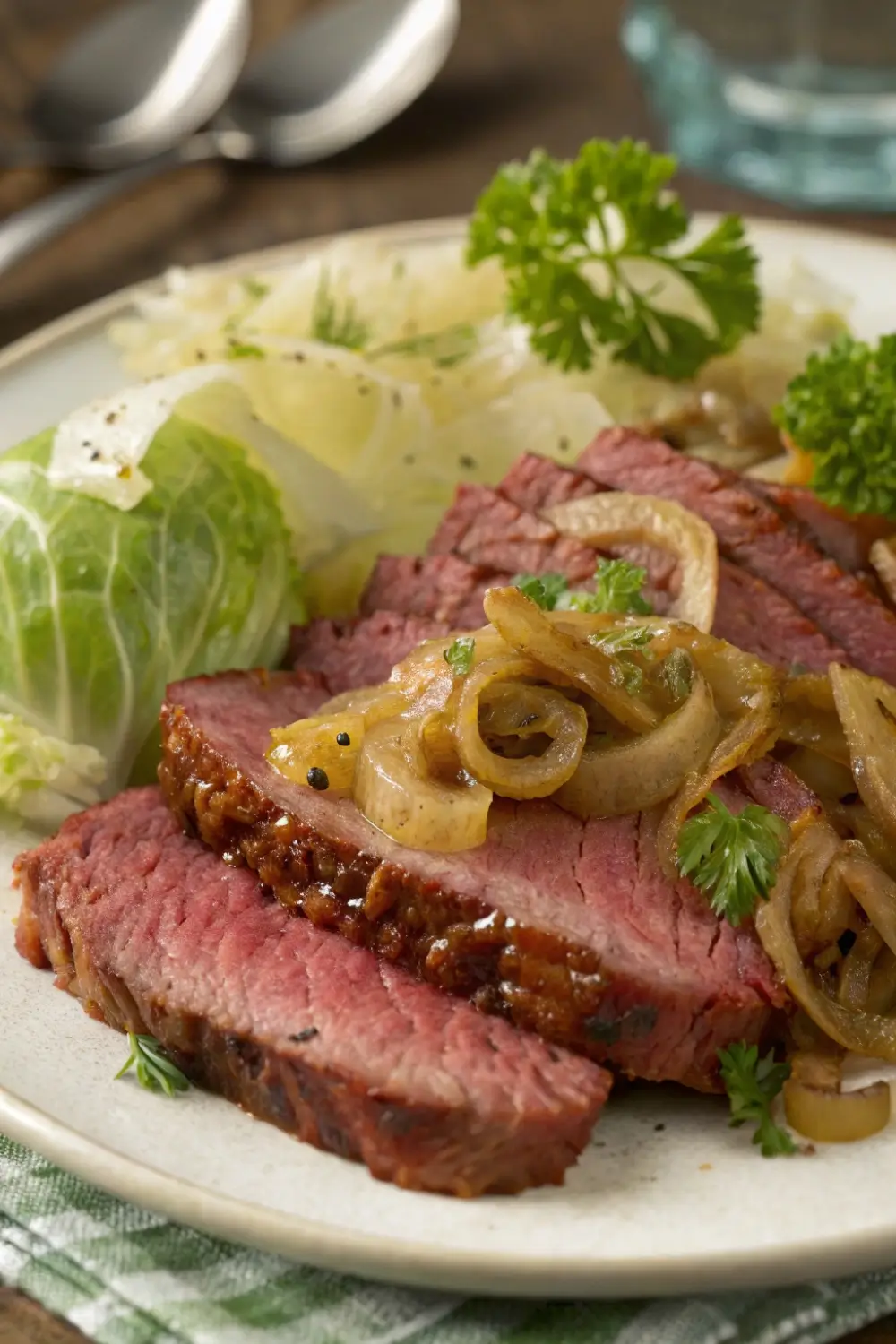
Identify the direction of the muscle fibers and slice across them. This ensures each piece is tender and easy to chew.
Serving the Dish
Plating
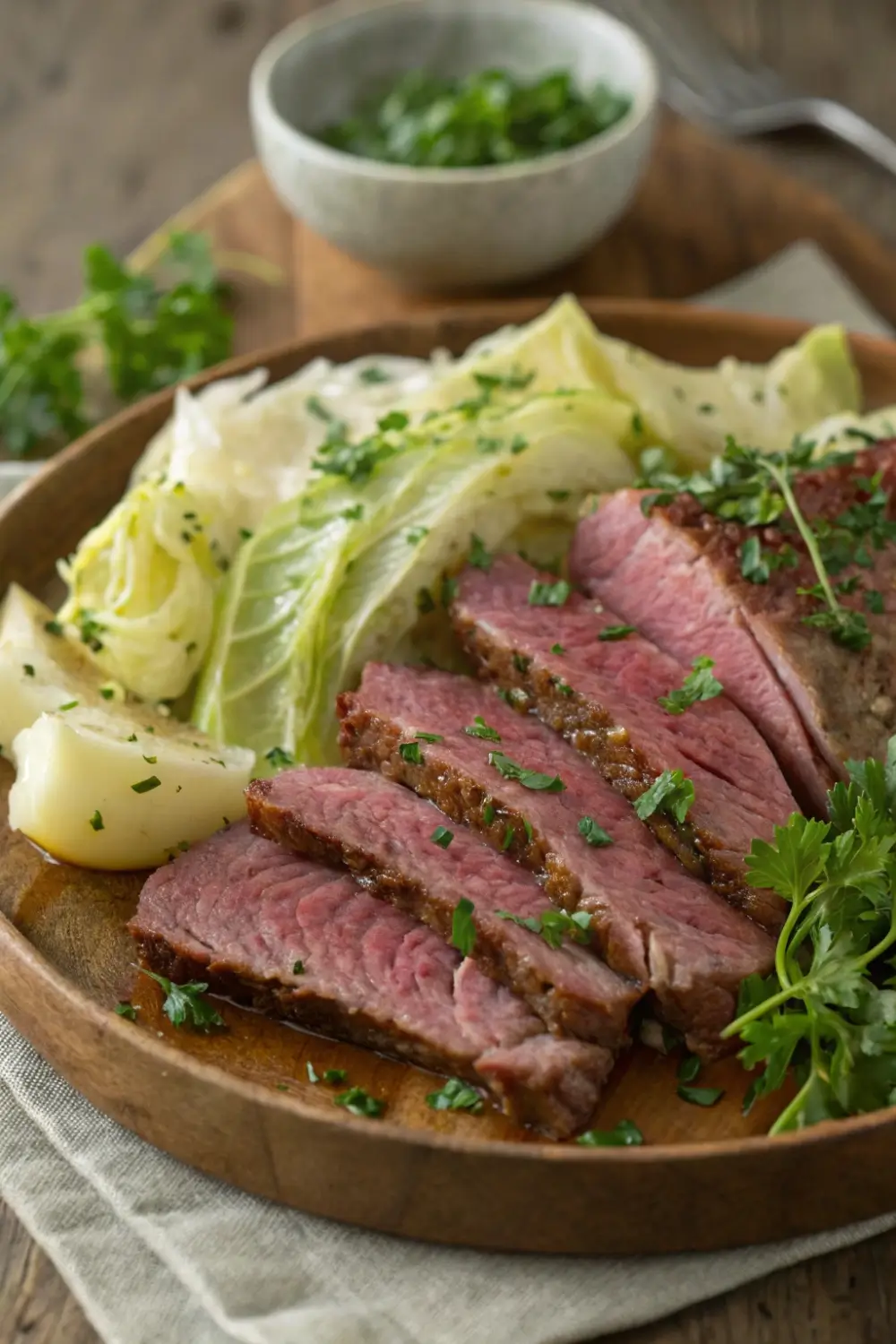
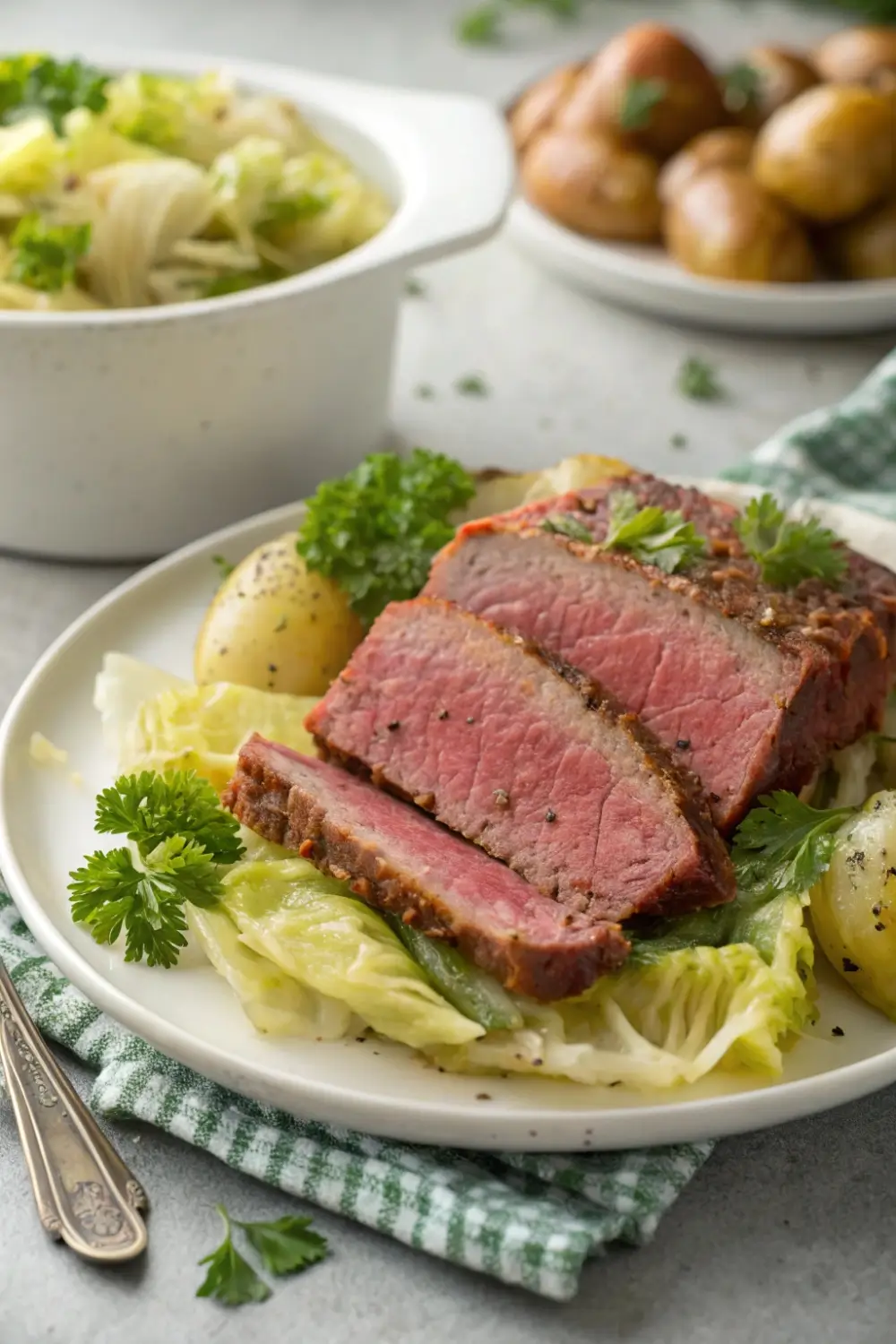
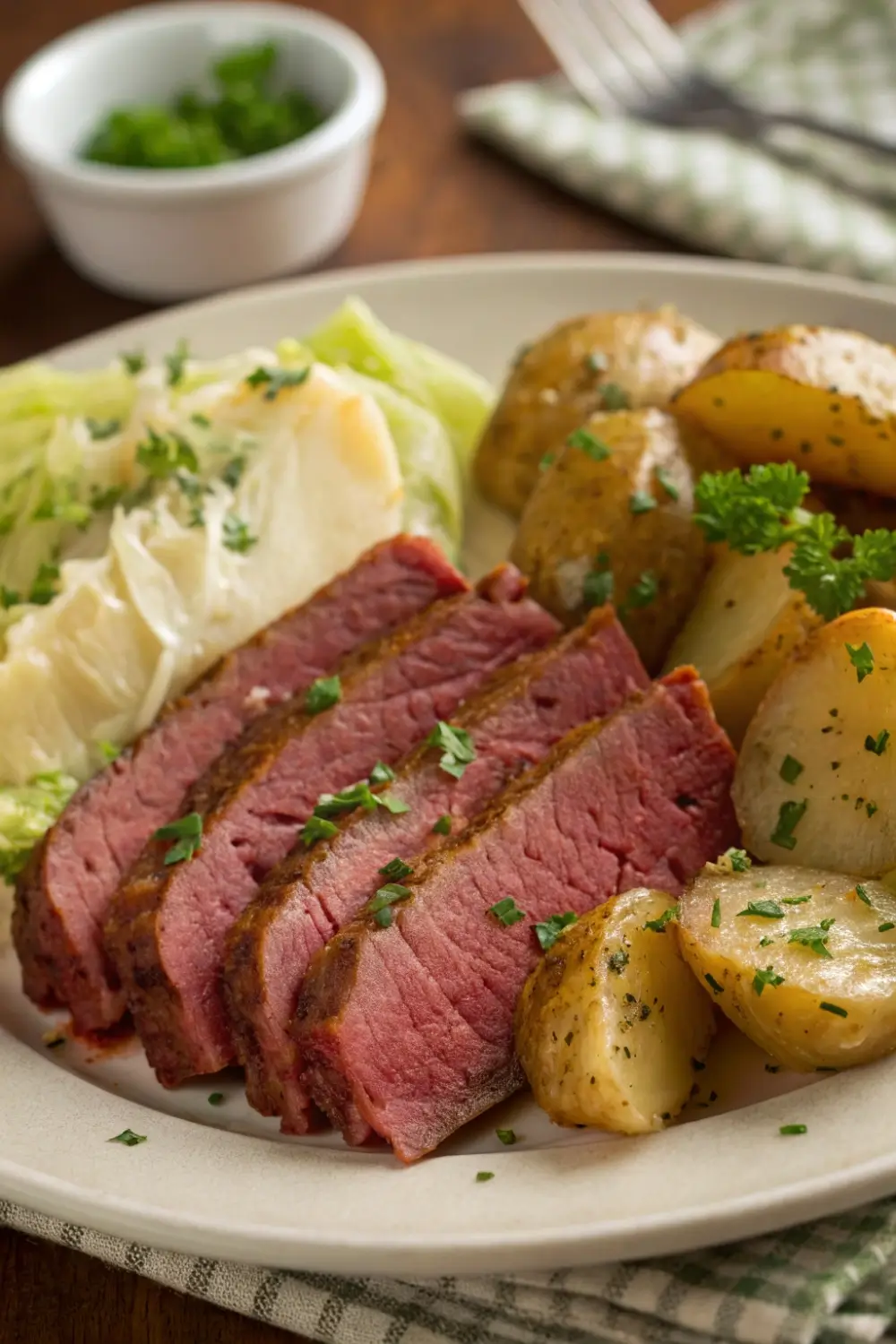
Arrange slices of corned beef on a large serving platter. Surround with cabbage, potatoes, and carrots.
Spoon some of the cooking liquid over the top to enhance flavor and keep everything moist.
Optional Garnish
Sprinkle fresh parsley over the dish for a touch of color and freshness.
Flavor Variations
Garlic Herb Infusion
Add fresh thyme or rosemary to the pot for an aromatic twist.
Slightly Sweet Option
Sprinkle a small amount of brown sugar over the beef during the last 30 minutes of cooking.
Mildly Spiced Version
Add a pinch of paprika or chili flakes for subtle warmth.
Tips for Perfect Results
Use the Right Size Pot
Ensure your Dutch oven is large enough to hold all ingredients comfortably without overcrowding.
Maintain Liquid Levels
Check occasionally to ensure there’s enough liquid in the pot. Add more if necessary.
Avoid High Heat
Cooking at too high a temperature can make the meat tough.
Keep the Lid Closed
Avoid opening the lid too often, as this releases heat and moisture.
Storage and Reheating
Refrigeration
Store leftovers in airtight containers in the refrigerator for up to 4 days.
Freezing
Corned beef can be frozen for up to 2 months. Wrap tightly to preserve quality.
Reheating
Reheat gently on the stovetop or in the oven with some broth to maintain moisture.
Nutritional Highlights
This dish provides a well-rounded meal with essential nutrients:
Corned beef offers protein and iron
Cabbage provides fiber and vitamins
Carrots contribute antioxidants
Potatoes supply energy and potassium
It’s a hearty option that satisfies both hunger and nutritional needs.
Common Mistakes to Avoid
Not Rinsing the Beef
Skipping this step can result in an overly salty dish.
Overcooking the Cabbage
Adding cabbage too early can make it mushy.
Using Too Little Liquid
Insufficient liquid can lead to uneven cooking.
Cutting Incorrectly
Always slice against the grain for the best texture.
Serving Suggestions
Side Dishes
Steamed green beans
Roasted asparagus
Fresh salad
Bread Pairings
Serve with crusty bread or soft rolls to soak up the flavorful broth.
Ideal Occasions for This Recipe
This Dutch oven corned beef and cabbage recipe is perfect for:
Family dinners
Weekend meals
Holiday gatherings
Meal prepping
Its versatility makes it a reliable favorite for many occasions.
Frequently Asked Questions
Can I cook this entirely on the stovetop?
Yes, you can simmer it gently on low heat, but oven cooking provides more even heat distribution.
How do I know when the beef is tender enough?
It should be fork-tender and easy to slice without resistance.
Can I prepare this dish ahead of time?
Yes, it reheats very well and often tastes even better the next day.
What type of cabbage works best?
Green cabbage is ideal due to its texture and flavor.
Can I add more vegetables?
Absolutely. Parsnips or turnips make excellent additions.
Do I need to sear the beef first?
It’s not necessary, but you can do so for added flavor if desired.
How do I prevent dryness?
Keep enough liquid in the pot and avoid overcooking.
Final Thoughts
This Dutch oven corned beef and cabbage recipe is a true celebration of simple, hearty cooking. With minimal effort and a single pot, you can create a meal that’s rich in flavor, tender in texture, and deeply satisfying.
The Dutch oven does most of the work, locking in moisture and allowing every ingredient to shine. The result is a dish that feels both traditional and timeless, perfect for any occasion where comfort and flavor are the priority.
Once you try this method, it’s likely to become your go-to way of preparing corned beef and cabbage—reliable, delicious, and always worth the wait.