Table of Contents
- 1 What You’ll Need to Make Creamy Tomato Basil Chicken Pasta
- 2 Your Step-by-Step Cooking Guide
- 3 Customize Your Perfect Pasta
- 4 Storage & Reheating Like a Pro
- 5 Common Mistakes Even Good Cooks Make Avoid these pitfalls for the best pasta experience:Overcooking Pasta: Mushy pasta ruins texture. Always cook al denteSkipping Pasta Water: That starchy liquid is magical sauce thickenerHigh Heat for Sauces: Dairy can separate if cooked too hotDried Herbs Instead of Fresh: Basil loses potency when driedNot Seasoning Layers: Season chicken, sauce, AND finished dishYour Burning Questions AnsweredCan I use milk instead of heavy cream? You can, but the sauce won’t be as rich. If substituting, whisk 2 tbsp cornstarch into cold milk first to help thicken it.What if my sauce seems too thin? Create a quick slurry: Mix 1 tsp cornstarch with 1 tbsp cold water. Stir into simmering sauce and cook 1 minute. Repeat if needed.Can I use frozen basil? Fresh is ideal, but frozen works in a pinch. Use 1/3 more than fresh (about 3/4 cup) since freezing diminishes flavor.How do I prevent cream sauce from curdling? Always cook cream sauces on low heat and avoid boiling vigorously. Adding cheese off the heat helps too.Is it okay to use pre-shredded parmesan? Block parmesan melts better, but pre-shredded works in a pinch. Avoid the shelf-stable kind – opt for refrigerator-section cheese.Can I make this in advance? It’s best fresh, but you can prep components separately. Cook chicken and sauce, store with plastic pressed on surface. Combine with freshly cooked pasta when ready.The Final Stir
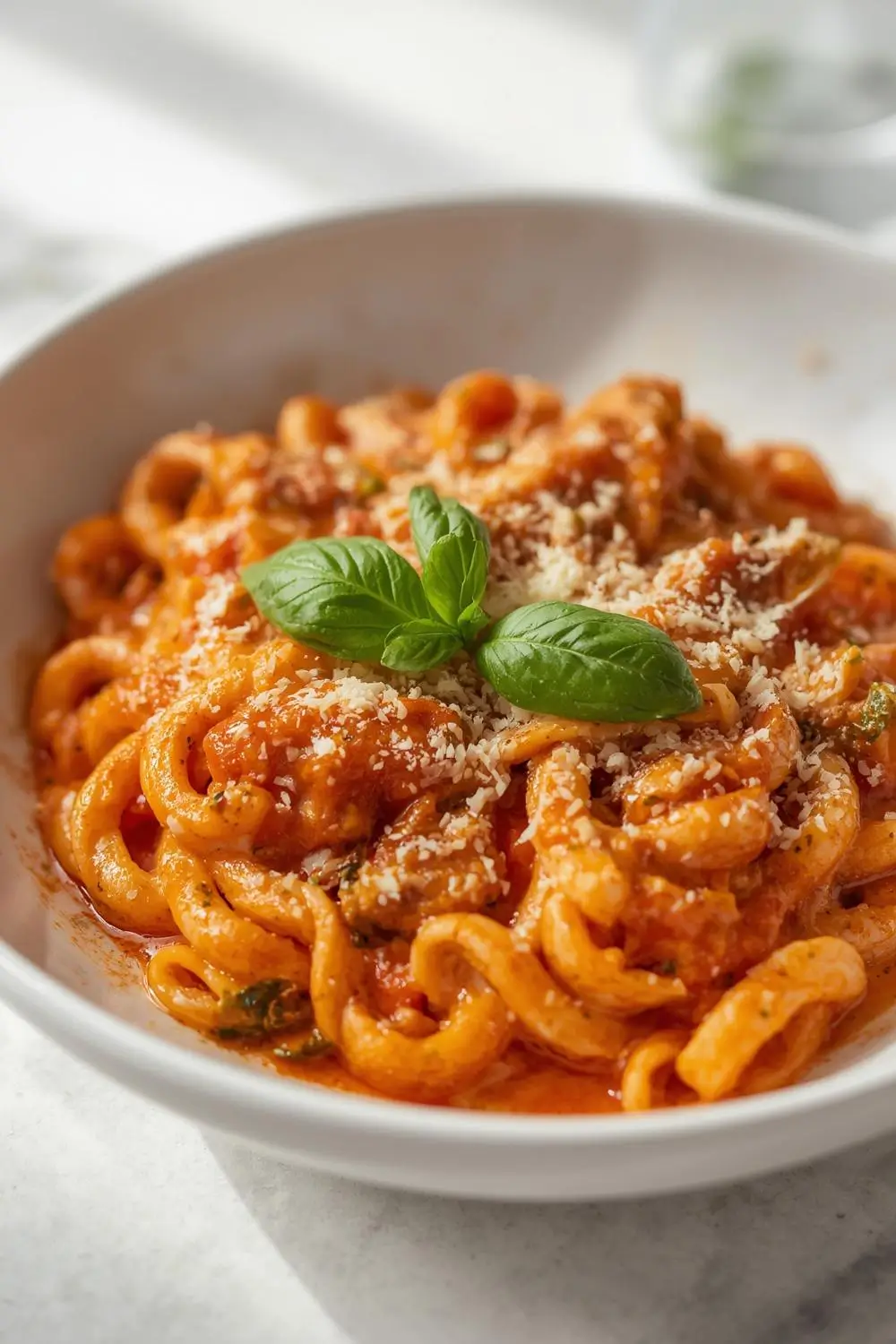
There’s something magical about the combination of tender chicken, sweet tomatoes, and fragrant basil swimming in a creamy sauce. Imagine coming home after a long day and smelling this rich, comforting aroma wafting from your kitchen – that’s exactly what this creamy tomato basil chicken pasta delivers. Perfect for those hectic evenings when you need something satisfying on the table fast, this recipe transforms basic pantry staples into a restaurant-worthy meal in just 30 minutes.
What makes this dish truly special is its balance of flavors and textures. Juicy chicken pieces mingle with al dente pasta, while the velvety sauce – made from real tomatoes and three types of cheese – coats every bite beautifully. Fresh basil adds that final bright note that lifts the whole dish. Plus, it’s naturally nut-free and uses ingredients you can find at any grocery store, making it accessible for everyone.
What You’ll Need to Make Creamy Tomato Basil Chicken Pasta
Before we dive into the cooking process, let’s talk about choosing your ingredients carefully. Quality matters here – each component plays a crucial role in creating that perfect harmony of flavors.
The Essential Ingredients
- Chicken breast (1.5 lbs): Look for plump, pink chicken breasts without discoloration. Cut into uniform 1-inch pieces for even cooking
- Penne pasta (12 oz): The ridges hold the sauce beautifully, but any short pasta works
- Fresh basil (1/2 cup chopped + extra for garnish): Fresh is non-negotiable here for that vibrant flavor
- Heavy cream (1 cup): Adds richness to the sauce (see substitutions for lighter options)
- Diced tomatoes (28 oz can): Opt for fire-roasted for extra depth if available
- Parmesan cheese (1/2 cup grated): Freshly grated melts better than pre-shredded
- Cream cheese (4 oz): Our secret weapon for ultra-creamy texture
- Yellow onion (1 medium): Sweetness balances the tomatoes’ acidity
- Garlic cloves (4 large): Freshly minced provides the best flavor punch
- Olive oil & butter: For cooking the chicken and building flavor
Pantry Staples You Probably Have
- 1 tsp dried oregano
- 1/2 tsp red pepper flakes (optional)
- Salt and freshly ground black pepper
- 1 tsp granulated sugar (balances acidity)
Your Step-by-Step Cooking Guide
Let’s break this into manageable steps – I promise it’s easier than it looks! Have all your ingredients measured and prepped before you start cooking (a chef’s trick called mise en place).
1. Pasta Preparation Perfection
- Bring 4 quarts of water to a rolling boil in a large pot
- Add 2 tablespoons kosher salt – yes, that much! Pasta water should taste like the sea
- Cook penne according to package directions minus 1 minute (it will finish cooking in the sauce)
- Reserve 1 cup pasta water before draining
Pro Tip: Time this with your chicken cooking – start pasta when chicken goes in the pan
2. Chicken That Stays Juicy
- Pat chicken pieces completely dry with paper towels
- Season generously with salt and pepper on all sides
- Heat 1 tbsp oil and 1 tbsp butter in a deep skillet over medium-high heat
- Sear chicken in single layer (don’t crowd!) for 2-3 minutes per side
- Remove chicken when golden but not cooked through – it will finish later
Watch Out: Overcooked chicken becomes tough. Remove at 160°F – carryover cooking will bring it to 165°F
3. Building the Flavor Base
- In same skillet, add 1 tbsp butter and sauté onions 3 minutes
- Add garlic and red pepper flakes (if using) – cook 60 seconds until fragrant
- Pour in diced tomatoes with their juices and sprinkle sugar
- Simmer uncovered 5 minutes to concentrate flavors
4. Creating the Velvety Sauce
- Reduce heat to medium-low. Add cream cheese in small dollops
- Stir constantly until completely melted into tomato mixture
- Slowly pour in heavy cream while stirring
- Gradually sprinkle in parmesan cheese, stirring until smooth
- Add reserved pasta water 1/4 cup at a time until sauce reaches silky consistency
5. Bringing It All Together
- Return partially cooked chicken to sauce
- Add drained pasta and toss to coat thoroughly
- Fold in fresh basil leaves just before serving
- Taste and adjust seasoning – add more salt/pepper as needed
Customize Your Perfect Pasta
This recipe is wonderfully adaptable. Here’s how to make it your own:
Dietary Adaptations
- Gluten-Free: Use your favorite GF pasta (corn/quinoa blends work well)
- Dairy-Free: Substitute heavy cream with full-fat coconut milk, use vegan cream cheese, and nutritional yeast instead of parmesan
- Vegetarian: Omit chicken and add 2 cups sautéed mushrooms or plant-based chicken
Flavor Variations to Try
- Spicy Lovers: Add 1 chopped jalapeño with the onions or 1 tbsp harissa paste with tomatoes
- Extra Veggies: Stir in 2 cups baby spinach or roasted red peppers last minute
- Italian-Inspired: Include 1/2 cup sliced black olives and 1 tsp Italian seasoning
Storage & Reheating Like a Pro
Leftovers? Lucky you! Here’s how to keep yours delicious:
Refrigeration Method
- Cool completely within 2 hours of cooking
- Store in airtight container with plastic wrap pressed directly on surface
- Keeps well for 3-4 days
Freezing Instructions
- Portion cooled pasta into freezer-safe containers, leaving 1-inch headspace
- Top with thin layer of olive oil to prevent freezer burn
- Label with date – best within 2 months
- Thaw overnight in refrigerator before reheating
Reheating Without Breaking Sauce
- Stovetop: Warm gently over low heat with 1-2 tbsp milk or broth, stirring frequently
- Microwave: Use 50% power in 1-minute intervals, stirring between each
- Oven: Cover with foil and bake at 325°F for 15-20 minutes
Common Mistakes Even Good Cooks MakeAvoid these pitfalls for the best pasta experience:
- Overcooking Pasta: Mushy pasta ruins texture. Always cook al dente
- Skipping Pasta Water: That starchy liquid is magical sauce thickener
- High Heat for Sauces: Dairy can separate if cooked too hot
- Dried Herbs Instead of Fresh: Basil loses potency when dried
- Not Seasoning Layers: Season chicken, sauce, AND finished dish
Your Burning Questions AnsweredCan I use milk instead of heavy cream?
You can, but the sauce won’t be as rich. If substituting, whisk 2 tbsp cornstarch into cold milk first to help thicken it.
What if my sauce seems too thin?
Create a quick slurry: Mix 1 tsp cornstarch with 1 tbsp cold water. Stir into simmering sauce and cook 1 minute. Repeat if needed.
Can I use frozen basil?
Fresh is ideal, but frozen works in a pinch. Use 1/3 more than fresh (about 3/4 cup) since freezing diminishes flavor.
How do I prevent cream sauce from curdling?
Always cook cream sauces on low heat and avoid boiling vigorously. Adding cheese off the heat helps too.
Is it okay to use pre-shredded parmesan?
Block parmesan melts better, but pre-shredded works in a pinch. Avoid the shelf-stable kind – opt for refrigerator-section cheese.
Can I make this in advance?
It’s best fresh, but you can prep components separately. Cook chicken and sauce, store with plastic pressed on surface. Combine with freshly cooked pasta when ready.
The Final Stir
Now that you’ve got all the secrets to making this incredible creamy tomato basil chicken pasta, it’s time to grab your apron and get cooking. Imagine sitting down to twirl those saucy noodles around your fork while the aroma of fresh basil fills your kitchen. This isn’t just food – it’s a warm hug in bowl form.
The best part? You’ll likely have most ingredients already waiting in your pantry. In the time it takes to decide on takeout, you could be savoring this homemade comfort food masterpiece. Don’t be surprised when everyone asks for seconds – and the recipe!
- Overcooking Pasta: Mushy pasta ruins texture. Always cook al dente
- Skipping Pasta Water: That starchy liquid is magical sauce thickener
- High Heat for Sauces: Dairy can separate if cooked too hot
- Dried Herbs Instead of Fresh: Basil loses potency when dried
- Not Seasoning Layers: Season chicken, sauce, AND finished dish
Can I use milk instead of heavy cream?
You can, but the sauce won’t be as rich. If substituting, whisk 2 tbsp cornstarch into cold milk first to help thicken it.
What if my sauce seems too thin?
Create a quick slurry: Mix 1 tsp cornstarch with 1 tbsp cold water. Stir into simmering sauce and cook 1 minute. Repeat if needed.
Can I use frozen basil?
Fresh is ideal, but frozen works in a pinch. Use 1/3 more than fresh (about 3/4 cup) since freezing diminishes flavor.
How do I prevent cream sauce from curdling?
Always cook cream sauces on low heat and avoid boiling vigorously. Adding cheese off the heat helps too.
Is it okay to use pre-shredded parmesan?
Block parmesan melts better, but pre-shredded works in a pinch. Avoid the shelf-stable kind – opt for refrigerator-section cheese.
Can I make this in advance?
It’s best fresh, but you can prep components separately. Cook chicken and sauce, store with plastic pressed on surface. Combine with freshly cooked pasta when ready.
The Final Stir
Now that you’ve got all the secrets to making this incredible creamy tomato basil chicken pasta, it’s time to grab your apron and get cooking. Imagine sitting down to twirl those saucy noodles around your fork while the aroma of fresh basil fills your kitchen. This isn’t just food – it’s a warm hug in bowl form.
The best part? You’ll likely have most ingredients already waiting in your pantry. In the time it takes to decide on takeout, you could be savoring this homemade comfort food masterpiece. Don’t be surprised when everyone asks for seconds – and the recipe!