Table of Contents
- 1 Why This Oven Recipe Stands Out
- 2 Ingredients
- 3 Equipment Needed
- 4 Preparing the Corned Beef for the Oven
- 5 Creating the Brown Sugar Glaze
- 6 Oven Roasting Process
- 7 Preparing and Roasting the Vegetables
- 8 How to Serve
- 9 Flavor Variations
- 10 Expert Tips for Success
- 11 Storage and Reheating
- 12 Nutritional Highlights
- 13 Common Mistakes to Avoid
- 14 Serving Ideas and Pairings
- 15 Frequently Asked Questions
- 16 Final Thoughts
Few meals deliver the same level of comfort and satisfaction as a beautifully cooked corned beef and cabbage dinner. This oven-baked version, enhanced with a rich brown sugar glaze, transforms a traditional favorite into something truly special. By slow roasting the beef in the oven instead of boiling it, you unlock deeper flavors, better texture, and a more concentrated taste that elevates every bite.
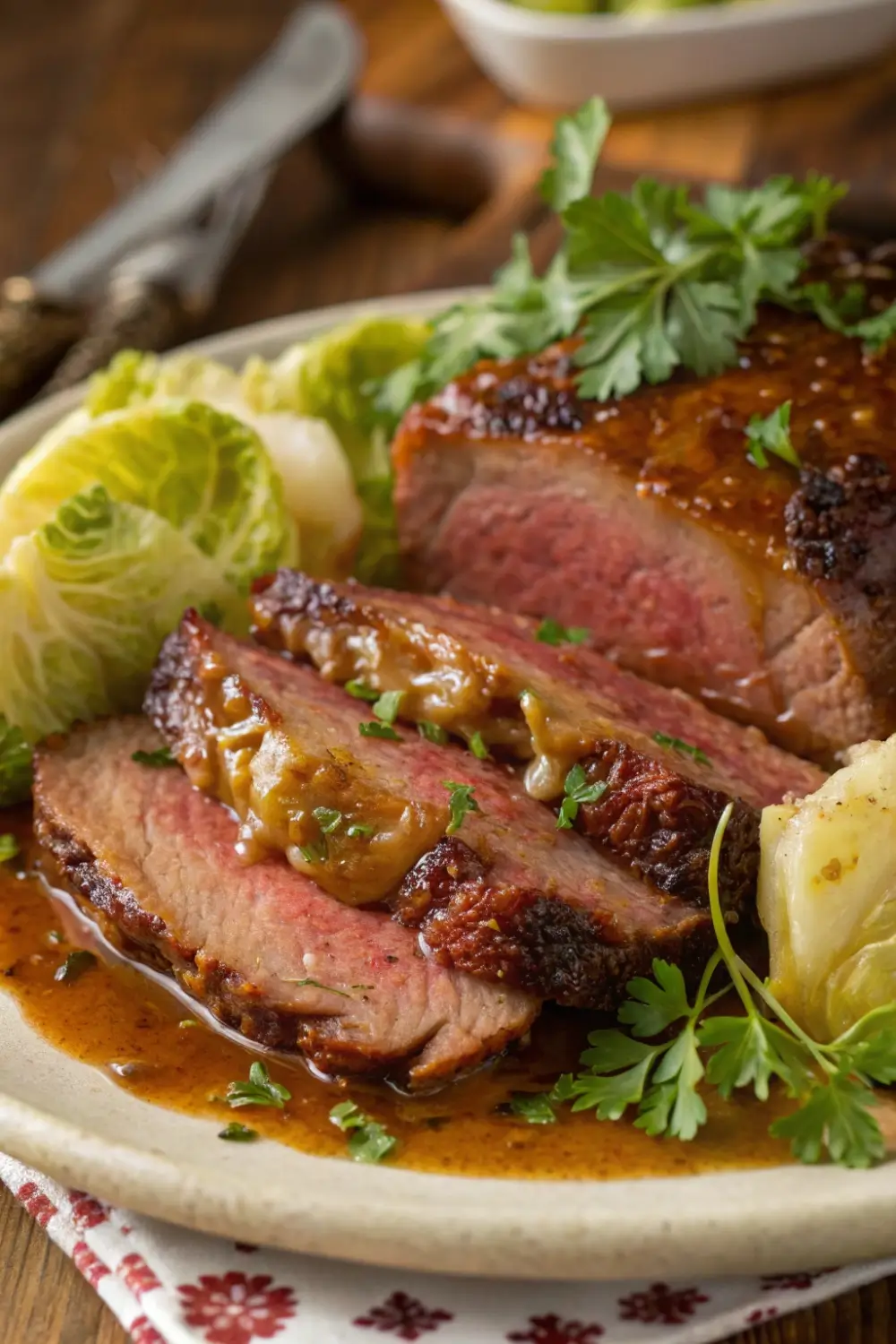
The gentle sweetness of brown sugar blends seamlessly with the savory spices of corned beef, forming a caramelized crust that seals in moisture and creates irresistible depth. Meanwhile, the cabbage, carrots, and potatoes roast alongside the meat, absorbing all the flavorful juices and developing a tender, slightly crisp texture.
Whether you’re preparing a cozy family dinner or looking for a centerpiece dish that feels both rustic and refined, this brown sugar corned beef and cabbage oven recipe delivers on all fronts. It’s simple enough for everyday cooking but impressive enough for special occasions.
Why This Oven Recipe Stands Out
Deep, Caramelized Flavor
Roasting allows the brown sugar glaze to develop a slightly crisp exterior on the corned beef, creating a contrast between the tender inside and the flavorful crust.
Hands-Off Cooking
Once everything is in the oven, there’s minimal effort required. This makes it ideal for busy days when you still want a homemade meal.
Perfectly Cooked Vegetables
Unlike boiling, roasting keeps vegetables from becoming overly soft. They retain their structure while soaking up rich, savory juices.
Balanced Sweet and Savory Notes
The brown sugar doesn’t overpower—it enhances the natural flavors of the beef and vegetables.
Ingredients
For the Corned Beef
1 (3–4 pound) corned beef brisket with spice packet
1 large onion, sliced
3 cloves garlic, minced
2 cups water or low-sodium broth
1 teaspoon black pepper
For the Brown Sugar Glaze
1/2 cup brown sugar (light or dark)
2 tablespoons Dijon mustard
1 tablespoon apple cider vinegar
1/2 teaspoon ground black pepper
1/2 teaspoon garlic powder
For the Vegetables
1 large green cabbage, cut into wedges
4 medium carrots, cut into thick pieces
5 small potatoes, halved
1 tablespoon olive oil
1/2 teaspoon salt
1/2 teaspoon black pepper
Equipment Needed
Essential Tools
Large roasting pan or Dutch oven
Aluminum foil or lid
Mixing bowl
Basting brush
Sharp knife
Optional Tools
Meat thermometer
Wire rack (for even heat circulation)
Preparing the Corned Beef for the Oven
Rinse and Prep
Remove the corned beef from its packaging and rinse it under cold water. This step helps reduce excess salt and ensures a balanced flavor.
Pat the meat dry with paper towels. This is important because it helps the glaze adhere better during roasting.
Build the Flavor Base
Preheat your oven to 325°F (165°C).
Place sliced onions and minced garlic at the bottom of your roasting pan. Set the corned beef on top, fat side up, so it bastes itself naturally as it cooks.
Sprinkle the included spice packet over the meat, along with black pepper. Pour water or broth into the pan to keep everything moist during cooking.
Creating the Brown Sugar Glaze
Mixing the Glaze
In a small bowl, combine brown sugar, Dijon mustard, apple cider vinegar, black pepper, and garlic powder.
Stir until the mixture forms a thick, spreadable paste. The consistency should be rich and slightly sticky.
Flavor Profile
This glaze brings together sweetness, tanginess, and a hint of spice, creating a balanced coating that enhances the beef without overpowering it.
Oven Roasting Process
Initial Cooking Phase
Cover the roasting pan tightly with foil or a lid. Place it in the preheated oven and cook for about 2.5 to 3 hours.
This slow roasting process allows the connective tissues in the beef to break down, resulting in a tender texture.
Adding the Glaze
After the initial cooking time, remove the pan from the oven and carefully uncover it.
Spread the brown sugar glaze evenly over the top of the corned beef.
Return the pan to the oven, uncovered this time, and increase the temperature to 400°F (200°C). Roast for an additional 20–30 minutes, allowing the glaze to caramelize.
Preparing and Roasting the Vegetables
Seasoning the Vegetables
While the beef is finishing, toss the cabbage, carrots, and potatoes with olive oil, salt, and pepper.
Roasting for Best Texture
You can either add the vegetables directly into the roasting pan during the last hour of cooking or roast them separately on a baking sheet for a slightly crisp texture.
Roast vegetables at 400°F (200°C) for about 25–35 minutes, turning once halfway through.
How to Serve
Resting the Meat
Once the corned beef is done, let it rest for at least 10–15 minutes. This helps retain juices and makes slicing easier.
Slicing Technique
Always slice against the grain. This shortens the muscle fibers and ensures each bite is tender.
Plating
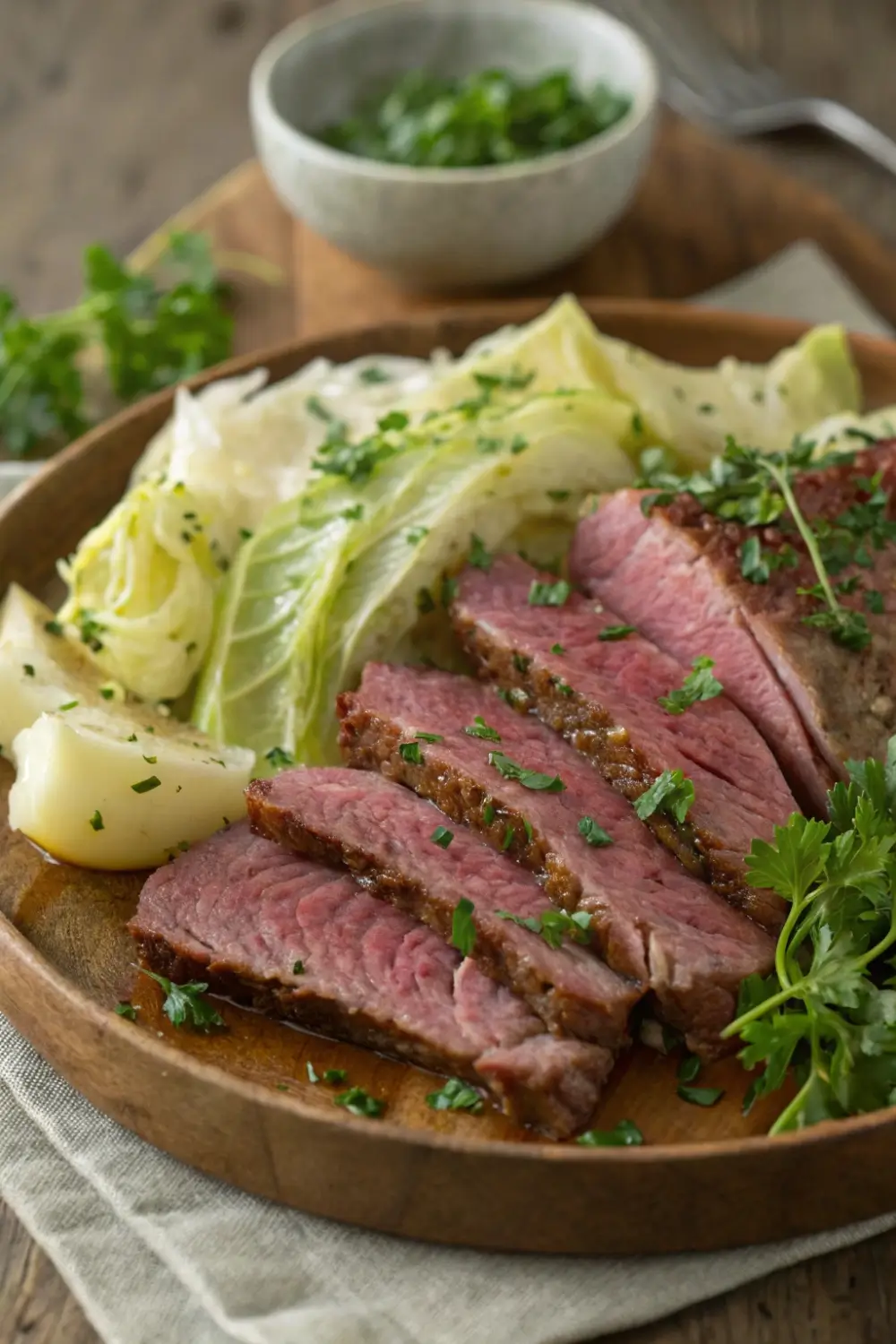
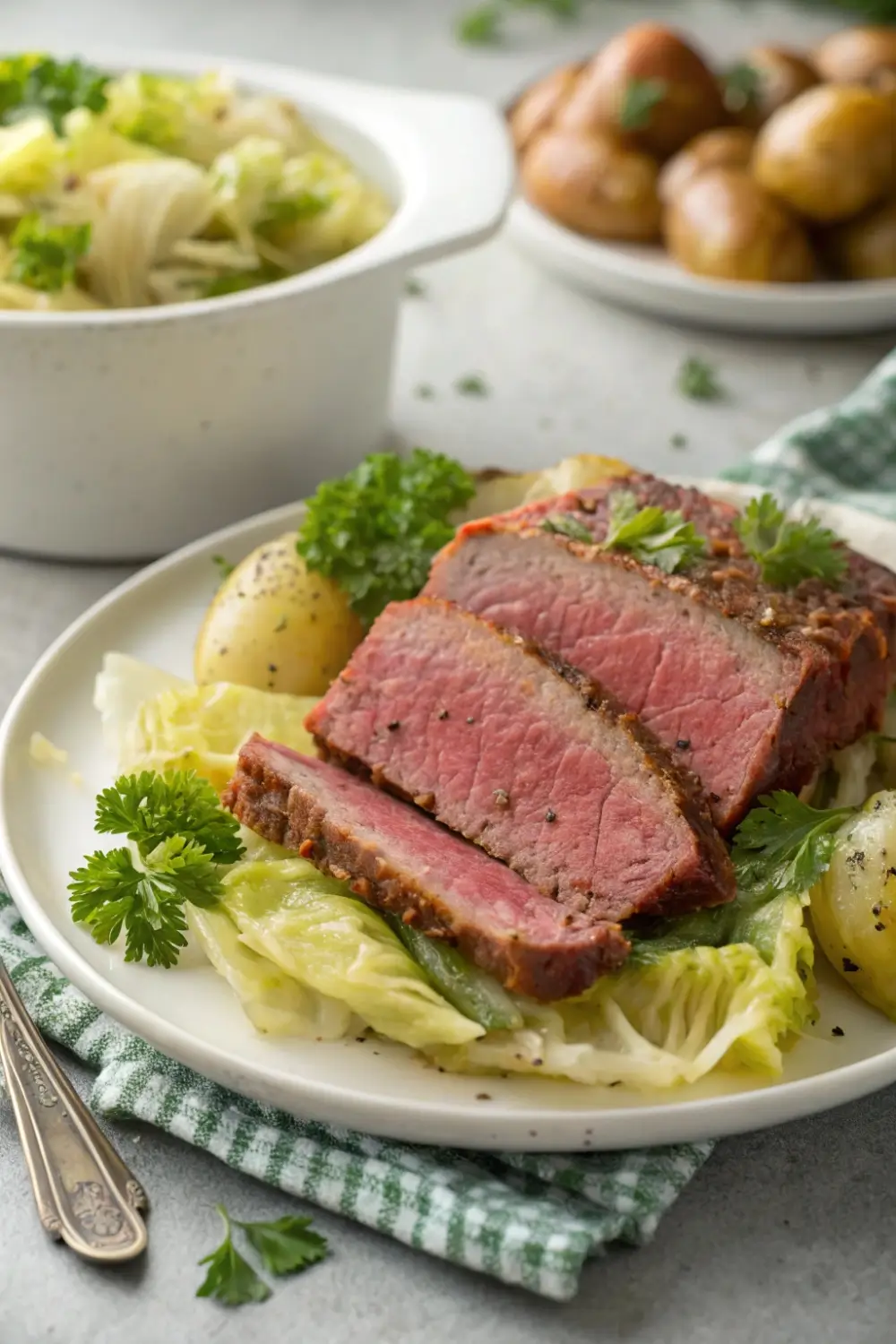
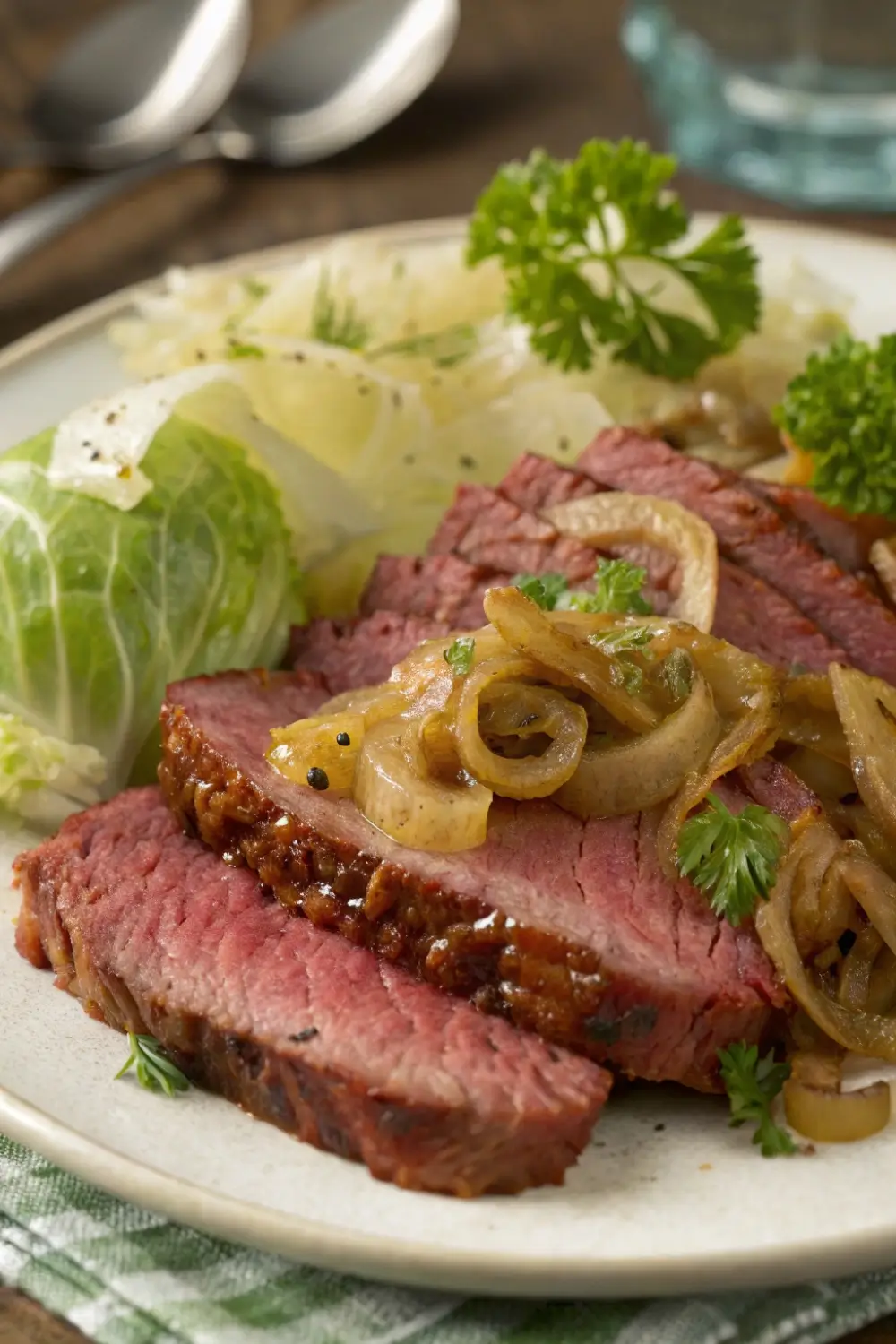
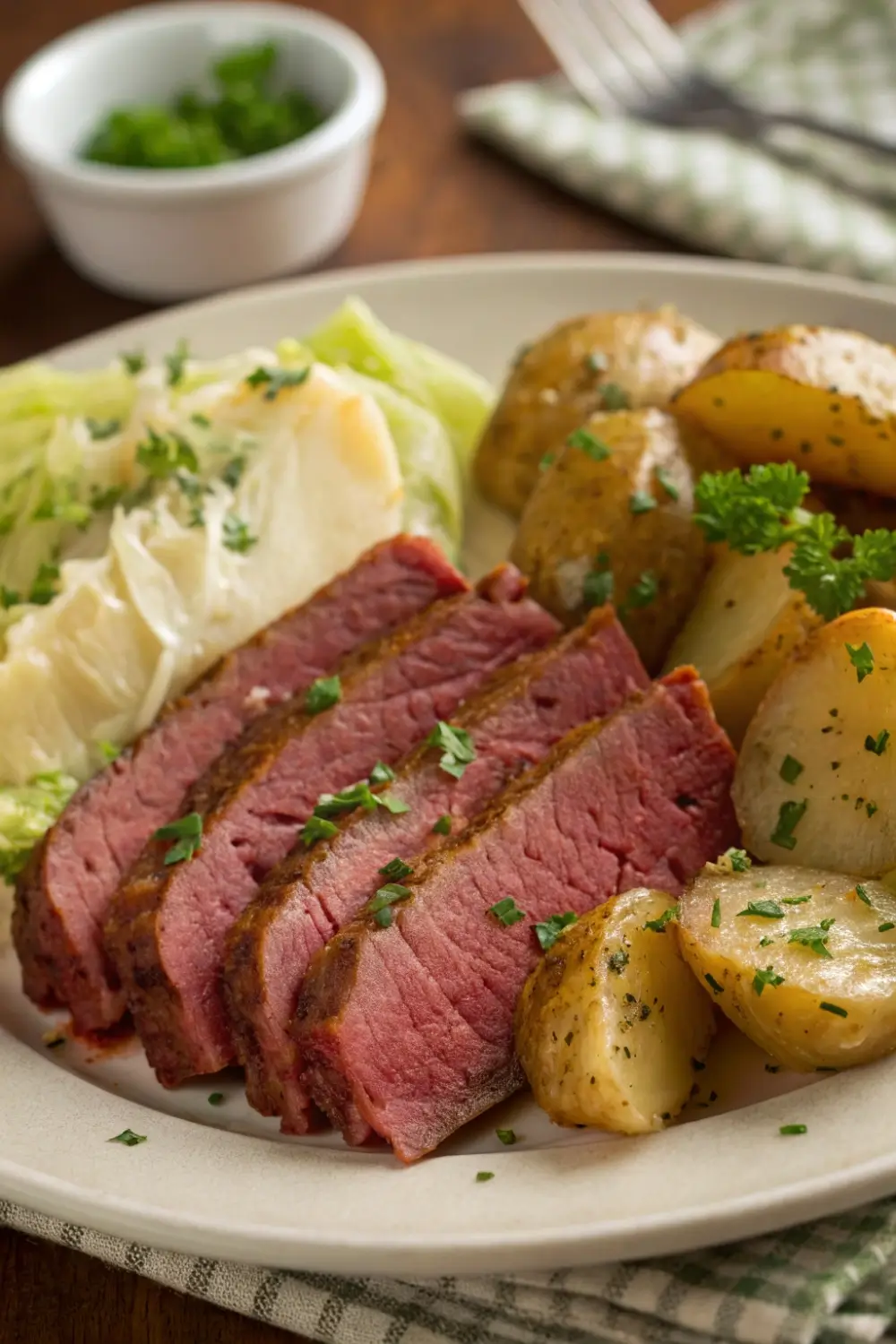
Arrange slices of corned beef on a large serving platter. Surround with roasted cabbage, carrots, and potatoes. Spoon some of the pan juices over the top for extra flavor.
Flavor Variations
Maple Brown Sugar Twist
Replace part of the brown sugar with maple syrup for a richer, more complex sweetness.
Spicy Kick
Add a pinch of chili flakes or a dash of hot sauce to the glaze for a subtle heat.
Herb-Infused Roast
Add fresh thyme, rosemary, or parsley to the roasting pan for aromatic depth.
Expert Tips for Success
Choose Quality Meat
Look for well-marbled corned beef for the best flavor and tenderness.
Don’t Skip the Resting Time
Cutting too early can cause juices to escape, leaving the meat dry.
Keep It Moist
Ensure there’s always some liquid in the pan during the initial cooking phase.
Watch the Glaze Carefully
Brown sugar can burn quickly at high temperatures, so keep an eye on the final roasting stage.
Storage and Reheating
Refrigeration
Store leftovers in airtight containers in the refrigerator for up to 4 days.
Freezing
Wrap tightly and freeze for up to 2 months. Thaw overnight in the refrigerator before reheating.
Reheating
Reheat in the oven at a low temperature with a splash of broth to maintain moisture.
Nutritional Highlights
This dish provides a satisfying combination of protein, carbohydrates, and essential nutrients.
Corned beef offers protein and iron
Cabbage provides fiber and vitamins
Carrots add natural sweetness and antioxidants
Potatoes contribute energy and potassium
Common Mistakes to Avoid
Overcooking the Meat
Even though slow roasting is forgiving, leaving it in too long can dry it out.
Not Using Enough Liquid
The moisture in the pan is essential for tender results.
Burning the Glaze
Always monitor the final roasting phase to prevent the sugar from scorching.
Cutting the Meat Incorrectly
Slicing with the grain leads to tough, chewy pieces.
Serving Ideas and Pairings
Side Dishes
Steamed green beans
Roasted asparagus
Simple cucumber salad
Bread Options
Serve with warm rolls or crusty bread to soak up the flavorful juices.
Frequently Asked Questions
Can I cook this recipe entirely uncovered?
It’s best to keep the beef covered during the initial roasting phase to retain moisture. Uncover only for the glazing step.
How do I know when the corned beef is done?
It should be fork-tender and easy to slice. An internal temperature around 195°F (90°C) is ideal.
Can I prepare this dish ahead of time?
Yes, you can cook the beef in advance and reheat it with the glaze just before serving.
What type of cabbage works best?
Green cabbage is the most traditional and holds up well during roasting.
Can I use pre-cut vegetables?
Absolutely. Pre-cut vegetables save time and work just as well.
Is this recipe very sweet?
The sweetness is subtle and balanced by savory and tangy elements.
Can I add other vegetables?
Yes, root vegetables like parsnips or turnips are excellent additions.
Final Thoughts
This brown sugar corned beef and cabbage oven recipe is a delicious upgrade to a classic comfort dish. The slow roasting method ensures tender, flavorful meat, while the caramelized glaze adds a rich and slightly sweet finish that makes every bite memorable.
With minimal hands-on time and maximum flavor payoff, this recipe is perfect for both weeknight dinners and special occasions. The combination of hearty ingredients, balanced seasoning, and beautiful presentation makes it a dish you’ll return to again and again.
Bring this warm, satisfying meal to your table and enjoy a comforting experience that blends tradition with a modern, flavorful twist.